Which option is right for you?

Households eating later

If you want to serve a portion of polenta later, weigh up keeping it hot in a controlled way against cooling it and reheating it thoroughly. The BfR offers guidance on keeping food hot, while the Verbraucherzentrale describes cooling and reheating later as an alternative.

Polenta cooks

When leaving polenta to stand after bringing it to the boil, easy-to-control low settings and time for occasional stirring are important. The Alnatura recipe describes this method.

Kitchens with limited space

If you need one extra cooking zone or two zones to use at the same time, consider how you actually cook and how much space you have available. TÜV SÜD explains the differences in how portable appliances and built-in hobs can be used.

What should you look for when buying?

Portable single-zone hob

Suitable if: you need an extra zone for your pan of polenta and won’t be cooking a side dish on the same hob at the same time.

Consider: there’s only one cooking zone, so you’ll need to make sure you have enough space and that your pan is the right size.

Portable double hob

Suitable if: you regularly want to cook polenta and another dish in a separate pan on the hob at the same time.

Consider: two zones take up more space; check the connection required by the specific model too.

Built-in hob

Suitable if: you’re planning a kitchen or replacing a hob and want to use several pans at the same time on a permanent basis.

Consider: the cut-out and electrical connection must be suitable for your kitchen and the model. Installation is more involved than simply setting up a portable hob.

What you need What to check before buying Who it matters most to
Keeping food hot to serve later The BfR recommends keeping food at a minimum of 60 °C throughout. Check the polenta itself; an appliance setting does not prove that it has reached this temperature. If I want to serve the polenta later, I need to be able to check the temperature of the food itself. Around 33% of consumers prioritise keeping food safely hot.
Low heat while the polenta stands Check that low heat settings are easy to control, and allow time for stirring. The Alnatura recipe recommends occasional stirring while the polenta stands over the lowest heat. If I want my polenta to stand after coming to the boil, I need low heat that’s easy to control and enough access to the pan to stir it. Around 27% of consumers prioritise gentle cooking.
Cooking zones and available space Decide whether you really need to use a second pan at the same time. For portable appliances, measure the available space; for built-in hobs, check the cut-out and connection. If I want to cook polenta and a side dish at the same time, I need enough zones without the appliance taking up too much of my kitchen space. Around 20% of consumers prioritise cooking zones and space.
A suitable pan for polenta Check the pan’s material and base size against the specifications for the specific hob. The Federal Office for Radiation Protection advises using suitable cookware material and an appropriate pan size. If I want to keep using my existing pan, I need to know before buying whether its base is suitable for the hob. Around 20% of consumers prioritise pan compatibility.

Common buying mistakes

  • Assuming a keep-warm setting will keep food safely hot

    A hob setting doesn’t measure the temperature throughout the polenta. This matters if you want to keep the food hot until it’s time to serve.

    Check the temperature of the food itself. If you can’t do that, cool it quickly, store it in a cool place and reheat it thoroughly before eating.

  • Comparing maximum power alone

    When leaving polenta to stand after bringing it to the boil, low settings that are easy to control and occasional stirring are important. A high maximum power rating won’t tell you what you need to know.

    Check how easy it is to use the low settings on the specific model, and remember to allow time for stirring.

  • Buying a second zone when you don’t need to use it at the same time

    A portable single-zone hob, a double hob and a built-in hob meet different needs in terms of space and cooking arrangements.

    Think about when you’ll actually be cooking polenta and a side dish at the same time, then measure the space available or the cut-out required for installation.

  • Assuming your existing pan will be suitable without checking

    Induction hobs require suitable cookware, so the material and size of the pan’s base may affect your choice of appliance.

    Check the base of your actual pan against the specifications for the specific model before choosing a hob.

Brands to consider

ROMMELSBACHER

Portable single and double hobs for one pan of polenta or two pans used at the same time.

  • The manufacturer lists ten power settings and a timer of up to 180 minutes for the CT 2010/IN. The CT 3430/IN has two cooking zones and additional setting increments.
  • Settings don’t measure the temperature of the polenta.

CASO Design

Portable single-zone hobs with different control and temperature features, including the COMFORT C2000 and TC 2400.

  • CASO advertises a keep-warm function of around 60 °C for the COMFORT C2000 and says the TC 2400 comes with a temperature probe.
  • An advertised appliance setting or a reading from a single probe does not prove that every part of a thick dish is at least 60 °C.

SEVERIN

Portable double induction hobs offer a way to cook polenta and a second dish at the same time.

  • SEVERIN lists two cooking zones, a total power output of 3400 W and a 180-minute timer with automatic shut-off for the DK 1033.
  • These specifications don’t tell you what temperature the polenta reaches while being kept hot.

Bosch

Built-in induction hobs for kitchens where you want several cooking zones permanently available.

  • Bosch lists four cooking zones and flexible zones for the PXX675DC1E.
  • The model requires a suitable cut-out and a connection without a plug, to be carried out by a qualified electrician. The PerfectFry frying sensor does not prove that polenta can be kept safely hot.

Miele

A built-in, independent induction hob to consider if you want several cooking zones on a permanent basis.

  • Miele lists four individual cooking zones and a surface-mounted installation for the KM 7361 FR.
  • When keeping food hot, the temperature of the food itself matters—not the number of cooking zones.

Induction hobs at Joybuy

The range includes built-in hobs as well as portable single and double hobs for extra cooking zones or for cooking several dishes at the same time.

Bosch PIE61RBB5E Series 4 built-in induction hob

Bosch PIE61RBB5E Series 4 built-in induction hob

For a kitchen where you want a built-in hob with several cooking zones.

According to the product description, installation should be carried out by a qualified electrician.

View at Joybuy
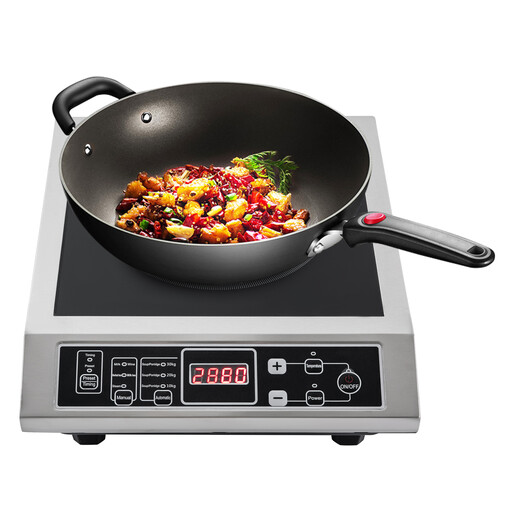
3500 W induction hob with IGBT technology

3500 W induction hob with IGBT technology

A portable single-zone hob for an extra pan when you don’t need a second cooking zone.

The product name lists eight temperature settings, a power range of 800–3500 W, a timer and overheat protection.

View at Joybuy
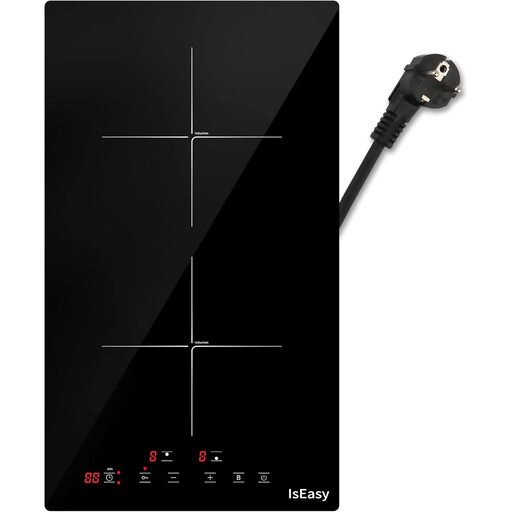
IsEasy Domino induction hob with two zones and 3400 W

IsEasy Domino induction hob with two zones, 3400 W

For two pans that you want to use at the same time on a double hob.

The product name lists nine power settings, a 1–99-minute timer and a child lock. It describes the appliance as both built-in and plug-in, so check that the installation type and connection are suitable for your kitchen.

View at Joybuy
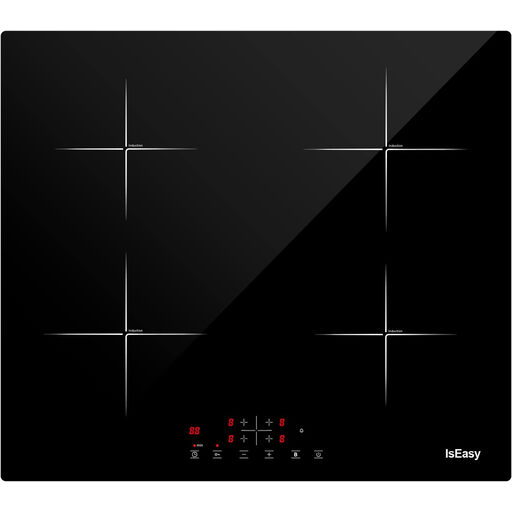
IsEasy built-in induction hob with four zones, 60 cm

IsEasy built-in induction hob with four zones, 60 cm

For a kitchen where you want to use several pans on a built-in hob.

The product name lists 6800 W, nine power settings, a 1–99-minute timer and a boost function.

View at Joybuy

Induction hob with two cooking zones and five temperature settings

Induction hob with two cooking zones and five temperature settings

For two pans that you want to use at the same time on a portable double hob.

The product name lists functions for keeping warm, boiling, simmering, frying and slow cooking over low heat. This description does not prove that the polenta reaches at least 60 °C throughout.

View at Joybuy

Frequently asked questions

Is a keep-warm setting labelled 60 °C enough for polenta served later?

No. When keeping food hot, the BfR recommends a minimum temperature of 60 °C throughout the heated food. A temperature set or advertised on the hob does not measure the temperature throughout the polenta. Check the food itself if you want to keep it hot.

What can I do if I won’t be eating the next portion for quite some time?

Cool the polenta quickly after cooking, store it in a cool place and reheat it thoroughly before eating. This helps you avoid leaving it out without controlling its temperature. It’s food hygiene advice, not a special hob function.

Do I still need to stir polenta when using a low heat setting?

Yes, make sure you allow time for occasional stirring. The Alnatura recipe leaves the polenta to stand over the lowest heat and recommends stirring; this recipe guidance is not a general instruction for appliances or cooking times.

Can I connect a built-in hob to the electricity supply myself?

Under Section 13(2) of the NAV, electrical installation work must generally be carried out by the network operator or an installation company listed in an approved installers’ register. Bosch says that connecting the PXX675DC1E, which has no plug, is a job for a qualified electrician. This is different from setting up a portable hob designed to plug into a socket.

Are the statutory warranty and an additional guarantee the same thing?

No. The statutory warranty is generally provided by the seller. A guarantee is an optional additional benefit, and its scope depends on its terms and conditions. Before buying, check what extra benefits are included with the specific offer.