A single portable hob may be enough just for the onion sauce, provided the pan and hob are compatible and you heat or prepare your side dishes elsewhere or one after another. If you want to cook the sauce and other dishes at the same time on the same hob, you’ll need several independently usable zones. With a built-in hob, you’ll also need to consider the cut-out, connection and installation. A temperature setting on the appliance does not tell you the actual temperature of the sauce.
Which type of hob is right for you?
Sauce cooks with an existing hob
If you’re mainly looking for an extra cooking zone to sauté the ingredients and then simmer the sauce, a portable single hob could be a good fit. CASO Design lists one cooking zone, ten power levels and compatible pan diameters of 12 to 24 cm for the Touch 2000. Keep an eye on the sauce as it simmers.
Cooking several dishes at once for a shared meal
If you want to heat the sauce and side dishes at the same time, check that the number of independently usable zones suits your pans. Rommelsbacher lists two independently controlled zones for the CT 3420/IN; Bosch and AEG offer built-in examples, each with four cooking zones.
Replacing a hob
If you’re replacing or planning a permanent cooking area, the cut-out, installation type and connection are all important. Bosch and AEG specify cut-out dimensions for particular four-zone models. For its 90 cm EX975LXC1E model, Siemens specifies an 880 mm-wide cut-out and connection by a qualified electrician.
What should you look for when buying?
Portable single hob
A good fit if: You need an extra cooking zone and will prepare side dishes elsewhere or cook them one after another. CASO Design lists one cooking zone for pans measuring 12 to 24 cm for the Touch 2000.
Things to consider: You can only heat one pan at a time on the appliance. Check the pan size and make sure you have a suitable place to position it.
Portable double hob
A good fit if: You want to heat the sauce and a side dish at the same time without a permanent installation. Rommelsbacher lists two independently controlled zones for the CT 3420/IN.
Things to consider: Check the space available and the electrical supply requirements for the specific model. For this example, Rommelsbacher lists dimensions of 56 × 36 cm and a connected load of 3400 W.
Built-in hob
A good fit if: You’re planning a permanent cooking area with several cooking zones. The Bosch PIE61RBB5E and AEG V64IOB00XB are examples of built-in hobs with four zones.
Things to consider: The overall width of the appliance and the cut-out dimensions are not the same. Check the connection type and installation diagram for the exact model too.
| Priority |
What to check when buying |
Who this matters most to |
| Turn the heat down from sautéing to simmering |
The power levels and controls on the specific appliance; keep an eye on the sauce as it simmers. |
If I want to sauté the onions first and then let the sauce simmer gently, I look for easy-to-use settings. Around 36% of consumers put control over the heat at the top of their list for this stage of cooking. |
| Cook the sauce and side dishes at the same time |
The number and layout of zones that can actually be used separately; space for the bases of your pans. |
If I want several dishes ready to serve together, I need enough independently usable cooking zones. Around 29% of consumers prioritise heating the sauce and other dishes at the same time. |
| Choose a hob, installation and connection that suit your kitchen |
For a built-in hob, check the cut-out, installation height, connection type and installation diagram. For a portable appliance, check the space available and power consumption. |
If I’m replacing an existing hob or want to set up a portable one, the solution needs to suit my kitchen and its existing electrical supply. Around 21% of consumers see fit with the installation or available space as a priority. |
| Keep using your existing sauce pan |
Check the pan manufacturer’s induction compatibility information and compare the base diameter with the hob’s specifications. |
If I want to keep using my current pan, I check that its base suits the usable cooking zone. Around 14% of consumers put finding a hob to suit their pan size at the top of their list. |
Common planning mistakes
-
Comparing only the overall width of a built-in hob
The overall width doesn’t tell you whether the appliance will fit the existing cut-out. Bosch and Siemens specify different cut-out dimensions for their respective models.
Before ordering, compare the installation diagram and connection details for the exact model with your kitchen. An unsuitable cut-out may require alterations. Appliances without a plug may also need to be connected by a qualified professional.
-
Counting the Bridge function as an extra cooking zone
A Bridge function links existing zones so you can use larger cookware. It doesn’t add another independently controlled cooking zone.
Plan the pans for your meal around the zones that can actually be used separately.
-
Assuming the temperature setting matches the temperature of the sauce
The setting on the appliance doesn’t show the temperature the food reaches throughout. The German Federal Institute for Risk Assessment recommends keeping heated food at a minimum of 60 °C throughout while hot-holding it until serving.
Keep an eye on the sauce as it simmers. If you need to keep the finished dish hot, check the temperature of the food rather than relying on the appliance setting alone.
Key brands to consider
Bosch
The PIE61RBB5E and PVS63KBB5E are examples of built-in hobs with four cooking zones.
- Bosch lists round cooking zones for the PIE61RBB5E and connectable zones for the PVS63KBB5E.
- A Combi Zone is mainly useful for compatible, longer cookware; it doesn’t increase the number of independently usable zones.
CASO Design
The Touch 2000 is a portable single hob, handy for an extra sauce pan without a permanent installation.
- The manufacturer lists ten power levels and compatible pan sizes of 12 to 24 cm.
- You can only heat one pan at a time on the appliance. A temperature setting does not measure the temperature of the food.
Rommelsbacher
The CT 3420/IN portable double hob is designed for two pans without a permanent installation.
- Rommelsbacher lists two independently controlled zones.
- Before setting it up, check that the specified width of 56 cm and connected load of 3400 W suit your available space and electrical supply.
AEG
The V64IOB00XB standalone built-in model is an example of a four-zone hob with a Bridge function.
- AEG lists four cooking zones and cut-out dimensions of 560 × 490 mm.
- The Bridge function links two zones for compatible cookware, but doesn’t create another independently controlled zone.
Siemens
The EX975LXC1E is a 90 cm built-in model with five cooking zones, for a suitably planned cooking area.
- Siemens lists three flexible areas and powerMove Plus.
- The manufacturer specifies an 880 mm-wide cut-out and a connected load of 11100 W. The model isn’t straightforward to install in a small existing cut-out, and connection by a qualified electrician is required.
Joybuy products for sauce and side dishes
This selection includes built-in hobs and portable double hobs that let you heat sauce and side dishes at the same time.
 No image available
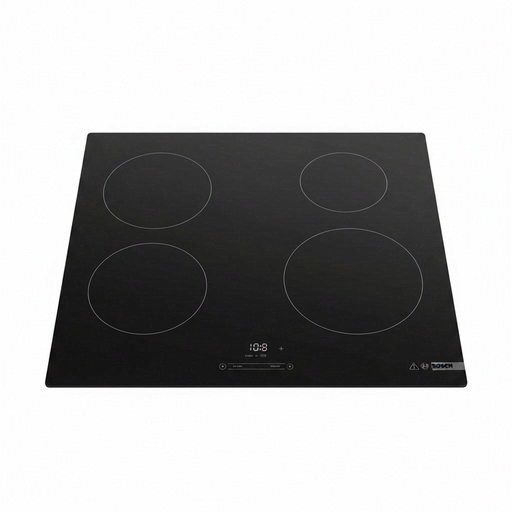
Bosch PIE61RBB5E Series 4 built-in induction hob
For a permanent cooking area where you want to heat the sauce and other dishes at the same time.
Four cooking zones, 17 power levels and a timer with automatic shut-off. Specified cut-out dimensions: 560 × 490–500 mm; the product description recommends installation by qualified professionals.
View at Joybuy
 No image available
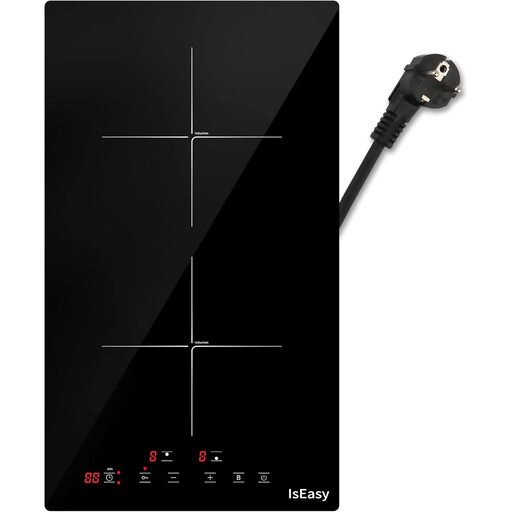
IsEasy Domino built-in induction hob with two zones
For a permanent cooking area where you want to heat two pans at the same time.
3400 W, nine power levels and a separate timer for each zone. The specified cut-out dimensions are 270 × 490 mm, with a 16 A fuse; check the requirements for your kitchen before installation.
View at Joybuy
 No image available
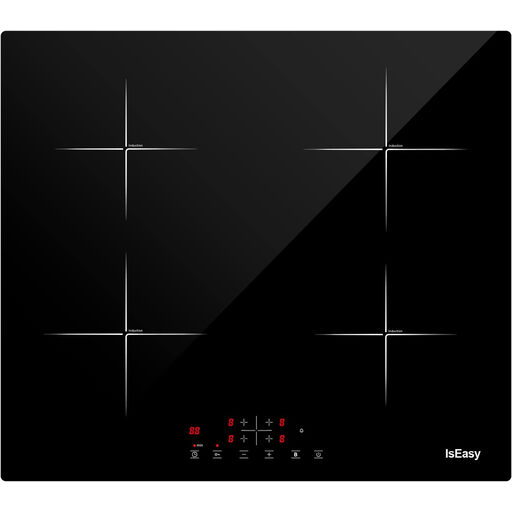
IsEasy 60 cm built-in induction hob with four zones
For a permanent cooking area where you want to use several pans at the same time.
6800 W, nine power levels and a timer from 1 to 99 minutes. The product description specifies a 32 A fuse; check the connection requirements against your kitchen before installation.
View at Joybuy
 No image available
Portable double induction hob with two zones
For a portable cooking area where you can heat the sauce and a side dish at the same time.
The description lists two independently controlled zones and a width of 48 cm; the product title specifies five temperature settings. A setting doesn’t tell you the temperature of the food.
View at Joybuy
 No image available
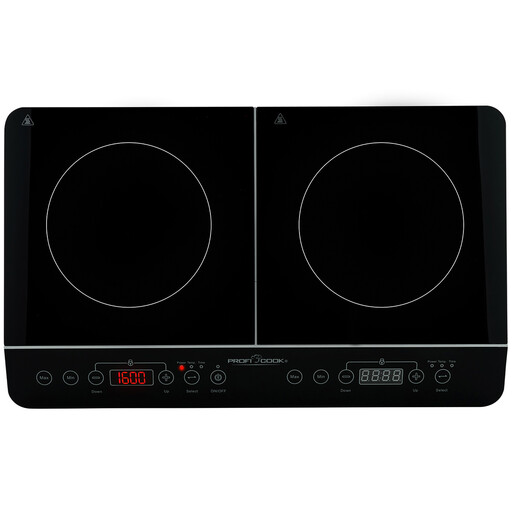
ProfiCook DKI 1067 double induction hob
For a portable cooking area with room to heat sauce and a side dish at the same time.
Two cooking zones, ten power levels, a timer with automatic shut-off and a maximum connected load of 3500 W.
View at Joybuy
Frequently asked questions
Can I use my existing sauce pan?
Yes, provided the manufacturer says the pan is suitable for induction and its base fits the cooking zone. For the CASO Touch 2000, the manufacturer lists compatible pan diameters of 12 to 24 cm; this specification doesn’t automatically apply to other hobs.
Is a keep-warm setting enough if the food will be served later?
An appliance setting doesn’t tell you the temperature throughout the food. The German Federal Institute for Risk Assessment recommends keeping heated food at a minimum of 60 °C throughout while hot-holding it until serving. This is advice about the food, not a statement about the performance of any particular hob.
Who should connect a hob that needs to be hardwired?
For the Bosch and Siemens models mentioned that don’t have a plug, the manufacturers specify connection by a qualified electrician. Under section 13(2) of the German Low Voltage Connection Ordinance (NAV), work on a fixed electrical installation may only be carried out by the network operator or an installation company listed in a network operator’s register of approved installers.
If something goes wrong, what’s the difference between statutory rights and a guarantee?
Your statutory rights for faulty goods apply against the seller; a guarantee is an additional voluntary promise that is subject to its own terms. The Verbraucherzentrale (German consumer advice centre) notes that the first step in the event of a fault is to seek a remedy, such as a repair or replacement.


