Batch-cooking soup for several lunches
If you’re making a pot for several portions, make sure the pan and cooking zone are a good match. Plan how you’ll cool and store the soup for later meals separately from your choice of hob.


If you usually make a pot of soup for several lunches, a portable single hob should be enough, provided the hob size and controls suit your pan. To cook soup and a side dish at the same time, you’ll need two usable cooking zones. A built-in hob is a better choice if you regularly use several cooking zones and have checked the cut-out and electrical connection in advance. For later meals, a keep-warm setting is no substitute for cooling the soup promptly and storing it in the fridge.
If you’re making a pot for several portions, make sure the pan and cooking zone are a good match. Plan how you’ll cool and store the soup for later meals separately from your choice of hob.
A portable single hob is worth considering if you usually heat just one pan and don’t need a permanently installed cooking appliance. Check the pan size, available space and the type of plug required.
If you want to have two pans on the hob at once, compare models with two separate cooking zones and check how much space they need. Options include a portable double hob or a built-in appliance with several zones.
A good fit if: You usually use one soup pan and want to put the hob away after cooking.
The trade-off: You’ll need another cooking zone to prepare a side dish at the same time.
A good fit if: You want to cook soup and a side dish at the same time on two portable cooking zones.
The trade-off: It takes up more space than a single hob. The stated total power doesn’t mean both zones can reach their individual maximum power at the same time.
A good fit if: You regularly use several cooking zones and your kitchen is suitable for the specific model.
The trade-off: The cut-out size and overall width are not the same; the installation and connection need to be planned for the appliance.
| What matters to you | What to check when buying | Who is this important to? |
|---|---|---|
| A suitable soup pan | Check the pan size against the cooking zone on the specific model. If you’re making several portions, plan how you’ll portion and chill the soup afterwards. | If you’re cooking several portions in a suitably sized pan, it’s especially important to check that it matches the usable cooking zone. Around 33% of consumers put pan size and batch-cooking capacity first. |
| Adjustable simmering | Compare the model’s power settings, controls and timer. Don’t assume a keep-warm setting measures the temperature of the food. | If you want to continue cooking the soup gently and in a controlled way after bringing it to the boil, look at the available controls. Around 27% of consumers prioritise controllable boiling and simmering. |
| Two cooking zones | Check the number and layout of the zones and, for a double hob, the stated total power. | If you’re preparing soup and a side dish at the same time in separate pans, two usable cooking zones are essential. Around 20% of consumers prioritise this. |
| Positioning and connection | For portable appliances, check the dimensions and plug type; for built-in appliances, check the recess measurements and connection requirements. | If space or your kitchen layout limits your options, compare the exact dimensions and required connection. Around 20% of consumers prioritise these considerations. |
An appliance setting doesn’t prove that every part of the soup has reached at least 60 °C, or that it will keep safely until a later day.
Portion the soup for later lunches and cool it promptly. For keeping food hot, the German Federal Institute for Risk Assessment (BfR) recommends at least 60 °C throughout the food (2024).
Built-in appliances can have different cut-out dimensions and connection requirements. According to the manufacturers’ specifications, the Electrolux and Siemens models have no mains plug.
Check the cut-out and installation requirements against the full model number, and confirm the electrical connection before ordering. Under § 13 of the Low Voltage Connection Ordinance (NAV), work on the electrical installation may only be carried out by the network operator or an installation company listed in a network operator’s register of installers.
A different worktop cut-out may need to be adjusted. If a built-in hob has no plug, you’ll also need to arrange for it to be connected correctly.
A bridge function is designed for suitably large cookware. It isn’t automatically a deciding factor if you’re using one standard-sized soup pan.
First check that your existing pan suits the cooking zone, then choose extra features based on whether you’ll actually use them.
Portable single hobs for cooking with one pan, without a permanent installation.
Portable single and double hobs, depending on whether you need one or two cooking zones.
Built-in hobs for a permanent cooking setup with several zones.
Wide built-in hobs for households that use several pans at the same time.
Built-in hobs with cooking zones in different sizes.
This selection includes portable single and double hobs, as well as built-in hobs for batch-cooking soup and, if needed, preparing a side dish at the same time.
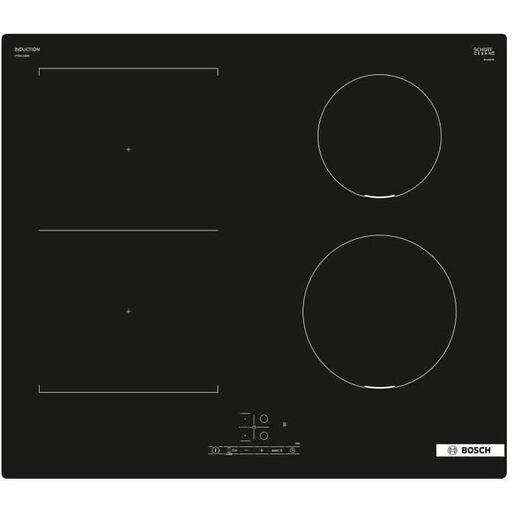 No image available
For a permanent kitchen setup with several cooking zones. According to the product title, this built-in hob has four heating zones and is rated at 60 cm and 6900 W. The product description also mentions a timer and installation by a qualified electrician.
 No image available
For one portable soup pan. The product description specifies nine heat settings and magnetic cookware measuring 12–26 cm in diameter. The product title also lists an 8-hour timer and a 28 cm hob.
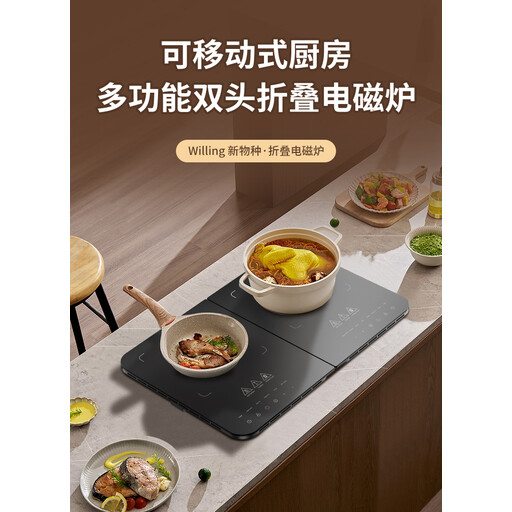 No image available
If you want to cook soup and a side dish at the same time, this portable double hob has two independently controlled zones according to the product description. It also folds away for storage.
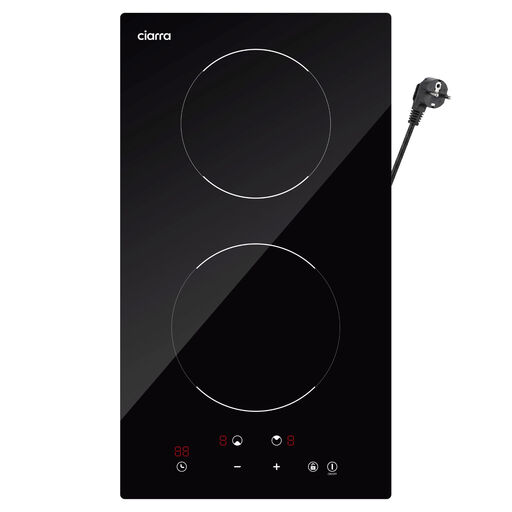 No image available
For a permanent cooking setup with two zones, if you want to prepare soup and a side dish at the same time. The product description specifies nine power levels and a timer of up to 99 minutes. The stated reference ranges for suitable pan sizes are 120–260 mm and 120–200 mm. According to the description, installation by a qualified electrician is required.
 No image available
For one pan on a portable cooking zone. The product description specifies ten heat settings and a soup function. The product title gives a power rating of 2000 W.
For lunches on later days, you should chill the soup rather than leave it on the hob for a long time. The German Federal Institute for Risk Assessment (BfR) recommends cooling leftovers to below +7 °C within a few hours, storing them in the fridge and eating them within two to three days (2023). If reheated soup is kept hot until serving, the BfR recommends at least 60 °C throughout the food (2024). A keep-warm setting alone doesn’t confirm that the food has reached this temperature.
Not the built-in models mentioned here, the Electrolux EIV634I and Siemens EX975LXC1E: according to the manufacturers, neither comes with a mains plug. Siemens specifies that the appliance must be connected by a qualified electrician. Section 13 of the Low Voltage Connection Ordinance (NAV) states that work on the electrical installation may only be carried out by the network operator or an installation company listed in a network operator’s register of installers. This is different from simply plugging in a portable hob with the appropriate plug.
No. According to the manufacturer, the CASO S-Line 2100 lets you set a temperature from around 60 °C. The German Federal Institute for Risk Assessment (BfR), however, recommends keeping food at a minimum of 60 °C throughout (2024). What matters is the temperature of the soup, not just the target temperature set on the appliance.