For carrot and lentil soup when mealtimes are staggered, your choice first depends on whether you have a suitable space and connection for a built-in hob, and whether you need cooking zones beyond the one used for the soup pot. If so, a built-in multi-zone hob could work; if you can’t install one, consider a portable single-zone hob. Look for controls and power levels that let you adjust the heat once the soup has come to the boil; a timer only switches off the heating. To keep food hot, the Federal Institute for Risk Assessment (BfR) recommends maintaining at least 60 °C throughout. If you want to store the soup, chilling it and reheating it later is another option.
Who should consider this buying decision?
Households with staggered mealtimes
If you’re making a pot of soup but not everyone is eating at the same time, safe storage and easy serving later matter more than extra convenience features. The BfR sets out recommendations for keeping food hot and chilling it.
Cooks with limited space for a built-in hob
First check whether a built-in hob and its connection will fit in your kitchen, or whether a portable single-zone hob would better suit your space.
Cooks with a large soup pot
Compare the base diameter of your induction-compatible pot with the cooking zones on the specific hob, rather than judging by the appliance’s overall width alone.
What should you look for when buying?
First decide between a built-in hob and a portable single-zone model, then consider how you’ll manage the gap between mealtimes. To keep food hot, the BfR recommends maintaining at least 60 °C throughout; chilling slows or stops the growth of most bacteria.
| What you need |
What to check when buying |
Who is this important for? |
| Serving soup at different times |
Check the difference between the timer and keep-warm setting on the specific model; don’t assume a feature name means it measures food temperature. |
If I’m not serving every portion at the same time, I want to know whether I should keep the soup hot or chill it and reheat it later. Around 36% of consumers prioritise serving food safely at different times. |
| Bringing soup to the boil and simmering |
Check the controls, power levels and, where applicable, individual zone timers. |
If I’m bringing the soup to the boil before letting it simmer, I need controls that let me adjust the heat. Around 29% of consumers focus mainly on controlled boiling and simmering. |
| Hob type and connection |
Check the installation dimensions and connection requirements, and make sure the hob type is right for your kitchen. |
If I’m not sure whether I have the space and connection for a built-in model, I want to be able to choose between a fixed hob and a portable single-zone model. Around 21% of consumers prioritise space and connection requirements. |
| Soup pot and cooking zones |
Check that the pot is suitable for induction and compare its base diameter with the zone sizes. |
If I’m using a large soup pot and want to cook something else alongside it, the pot base and cooking zone need to be a good match, with room for other pans too. Around 14% of consumers focus mainly on pot size and extra cooking zones. |
Common buying misconceptions
-
Confusing an automatic shut-off timer with safe food warming
A timer switches off a cooking zone after a set time. The BfR, on the other hand, bases safe hot holding on the temperature of the food throughout.
Think separately about when the heating should stop and how to keep later portions hot or store them safely.
-
Assuming a built-in hob connects like a plug-in single-zone model
NEFF says the T46SBE1L0 is supplied without a plug and is intended to be connected by a qualified electrician. A built-in hob and a portable hob therefore don’t use the same type of connection.
Before buying, check the installation dimensions and connection requirements for the specific model.
If the installation space or electrical setup needs adapting, you may need to allow for extra planning and installation work.
-
Comparing the hob’s width or bridge function instead of checking whether your pot fits
Induction requires suitable cookware. Linking cooking zones doesn’t automatically solve a fit problem with a round soup pot.
Check that your pot is suitable for induction, then compare its base diameter with the details for the cooking zones.
If your current pot isn’t suitable for induction, you’ll need cookware that is.
Key brands to consider
Bosch
Bosch’s German range includes built-in induction hobs. The PIE61RBB5E is one example, with four round cooking zones and an automatic shut-off timer.
- Bosch home appliances lists TouchSelect, Power Boost and a timer with automatic shut-off for the PIE61RBB5E.
- PerfectFry is explicitly not available on this model. The timer doesn’t monitor the soup’s temperature.
NEFF
The T46SBE1L0 is a 60 cm built-in option with four round zones for standard cookware.
- NEFF lists TouchControl, a timer and zone diameters of 14.5 cm, 18 cm and 21 cm.
- NEFF doesn’t list a keep-warm setting for the T46SBE1L0. The model is supplied without a plug and is intended to be connected by a qualified electrician.
AEG
The standalone KI66SMFMM is a 60 cm built-in option with linkable cooking zones.
- According to AEG, the Bridge function links two zones; the model also has a child lock.
- A bridge function isn’t automatically an advantage when using a round soup pot. AEG lists a cut-out size of 560 × 490 mm for this model.
Siemens
The iQ500 ED61AHSC1E is a 60 cm built-in option with combinable zones and touchSlider controls.
- Siemens lists a frying sensor and combinable zones for this model.
- The frying sensor isn’t evidence of automatic temperature control for soup. The value of extra features depends on how you cook.
Miele
The KM 7999 FR, which can be installed independently of an oven, is a wider built-in option for using several pots and pans.
- Miele lists a width of 942 mm and flexible cooking areas for up to five pots and pans on this model.
- This width and range of features aren’t essential for every situation involving a single soup pot.
Joybuy products for built-in and portable use
The products below include built-in multi-zone hobs and portable induction hobs for making soup.
 No image available
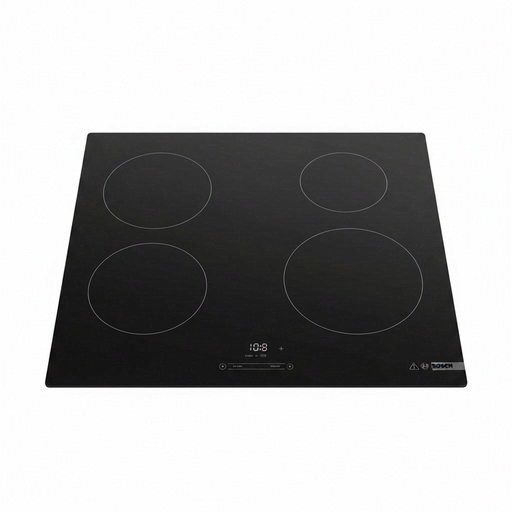
Bosch PIE61RBB5E Series 4 built-in induction hob
An option for a fixed cooking space with several zones and a heating period that you can set to end after a certain time.
Four round cooking zones, 17 power levels and a zone timer with automatic shut-off. The timer doesn’t guarantee that the soup is kept at a safe temperature throughout.
View at Joybuy
 No image available
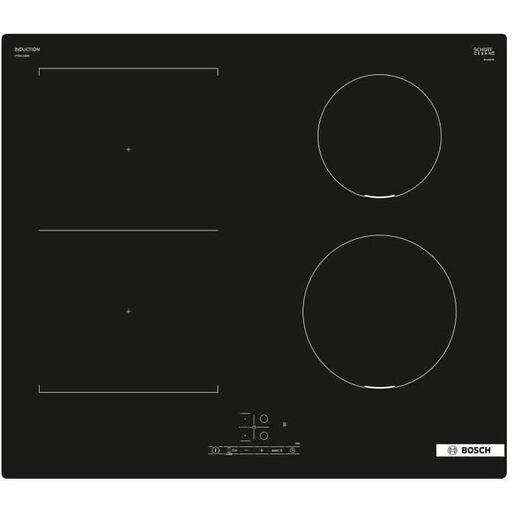
Bosch PVS611BB6E Series 4 induction hob, 60 cm, 6900 W, four cooking zones
A built-in option if you need several cooking zones at your fixed cooking space.
Listed in the product name: 60 cm, 6900 W, four cooking zones and a timer. The timer switches the hob off; it doesn’t measure the soup’s temperature throughout.
View at Joybuy
 No image available
IsEasy portable induction hob, 2100 W, 28 cm
A portable single-zone hob if you don’t want to use a built-in model.
Listed in the product name: 2100 W, 28 cm glass surface, nine heat settings and an 8-hour timer. Check that your pot is suitable for induction and fits the cooking surface.
View at Joybuy
 No image available
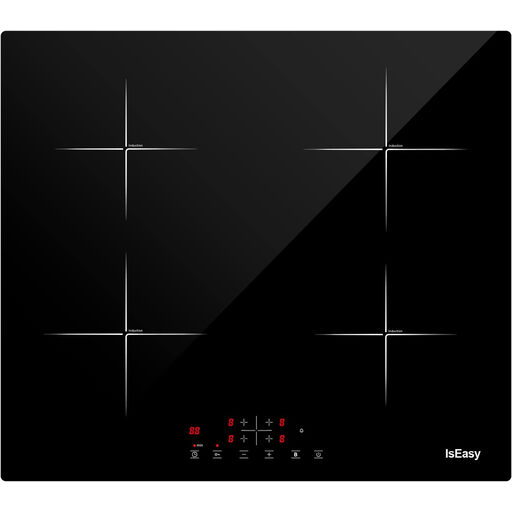
IsEasy built-in induction hob, four zones, 60 cm
A built-in option if you want several cooking zones at your fixed cooking space.
Listed in the product name: 6800 W, nine power levels, a timer from 1 to 99 minutes and a boost function. You’ll need cookware that’s suitable for induction.
View at Joybuy
 No image available
Induction hob with two cooking zones
A portable option if you want to make soup on one zone and use another zone at the same time.
Listed in the product name: two cooking zones, five temperature settings, plus keep-warm, simmering and slow-cooking functions. The keep-warm function doesn’t guarantee a temperature of at least 60 °C throughout the soup.
View at Joybuy
Frequently asked questions
Is a keep-warm function enough to keep soup safe until the next meal?
No. The feature name alone doesn’t guarantee that the soup is at a safe temperature throughout. For heated food kept hot, the BfR recommends maintaining at least 60 °C throughout; this recommendation also applies as a guide for home use.
What should I do if the next portion won’t be eaten until later?
If you want to store the soup, chill it appropriately rather than leaving it on the hob after switching it off. The BfR explains that chilling slows or stops the growth of most bacteria. How long the soup can be stored and how it should be reheated afterwards depends on how it’s handled.
Can I keep using my existing soup pot?
Only if its base is suitable for induction and fits the hob. Bosch says that magnetic pots are required; you should also check the pot base against the cooking zones on the specific appliance.
Can I connect a built-in induction hob to the electricity supply myself in Germany?
For work on the electrical installation beyond the main house fuse, § 13 NAV generally requires the work to be carried out by the network operator or an installation company listed in its register of installers; the requirements depend on the work involved. Bosch recommends having a qualified professional connect the hob. A portable hob and a built-in appliance that needs a fixed connection aren’t the same.
What should I check about installation and cookware before buying?
Check that your pot is suitable for induction and that its base diameter matches one of the cooking zones. For a built-in appliance, also check the dimensions and connection requirements for the specific model against your kitchen.


