What should you look for when buying?
The percentages below relate to consumers choosing an induction hob for regular batch cooking.
| Priority |
What to look for when buying |
Who is this important for? |
| Pot and portion compatibility |
Check that the pot has a flat, induction-compatible base, then compare its base diameter and, where applicable, its weight when filled with the specifications for the particular model. |
If I cook several portions of lunch in one large pot, the base needs to match the cooking zone and the filled pot must stay within the hob’s weight limit. Around 36% of consumers consider pot and portion compatibility their top priority. |
| Controlled simmering |
Check the power settings, controls and whether the timer actually switches the hob off. |
Once the soup has come to the boil, I want to keep cooking it with easy-to-use controls, rather than focusing only on the highest wattage. Around 29% of consumers say simmering and control over cooking are their main priorities. |
| Space and cooking zones |
Consider how many pots you’ll use at once, the available worktop or installation space, and the type of connection required. |
If I regularly cook another dish alongside the soup, I need enough space and the right number of cooking zones. Around 21% of consumers prioritise space and the ability to cook more than one dish at a time. |
| Cleaning and servicing |
Check the cleaning instructions and whether a repair service is listed for the specific model. |
If I cook regularly, I want to know how to clean the surface and who to contact if the hob needs servicing. For around 14% of consumers, care and servicing are the main priorities. |
Induction hobs at Joybuy
The Joybuy products below include induction hobs for a soup pot and options for cooking with several zones. For each listing, check that the required conformity documents and instructions for use and safety information in German are available.
 No image available
3500W induction hob with IGBT technology
For a pot on the worktop; the product description lists cast iron and stainless steel cookware.
8 temperature settings and 8 power settings; stated power range: 800–3500 W.
The description lists a timer and temperature settings from 80–270 °C.
View at Joybuy
 No image available
IsEasy portable induction hob, 2100 W, 28 cm
For one pot on a portable cooking surface; the stated compatible cookware size is 12–26 cm.
The description lists 9 heat settings and a timer that runs for up to 8 hours.
Dimensions according to the description: 35 × 28 × 4,4 cm.
View at Joybuy
 No image available
Induction hob with two cooking zones
For households that want to cook another dish alongside the soup; the description lists two independently controlled zones.
Five temperature settings; stated dimensions: 48 × 23,5 × 7,5 cm.
View at Joybuy
 No image available
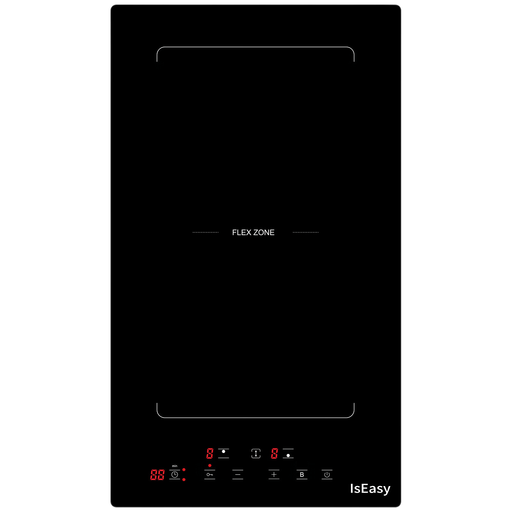
Induction hob with flexible cooking zones
The flexible zone may suit anyone who wants to match their pot size to the cooking surface; the description lists compatible cookware from 12–28 cm.
Two cooking zones and a maximum power of 3400 W; the description also lists touch controls, a child lock and a residual heat indicator.
Magnetic cookware is listed as suitable.
View at Joybuy
 No image available
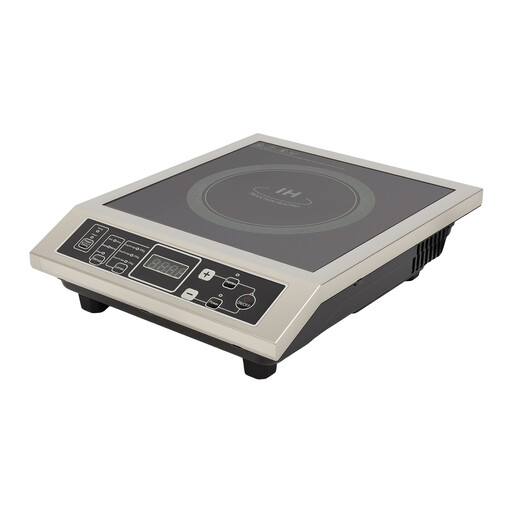
3500W tabletop induction hob with 10 power settings
For a pot on the worktop; the product title specifies an EU plug.
The description lists 10 power settings and a timer with automatic shut-off.
View at Joybuy
Frequently asked questions
Can I use my existing soup pot on an induction hob?
Only if the base is suitable for induction; a magnet that sticks to it is a useful first test. Then check the base diameter and, for a large, full pot, compare its weight with the specifications for the particular hob.
Can I plug in a portable hob in the same way as a built-in hob?
No, connection requirements vary by model. Caso describes the ProMenu 2100 as a model for use with a socket; Bosch states that its NIF645CB5E built-in hob can only be operated with a suitable built-in oven and must be connected by a qualified electrician. Check the requirements for the specific appliance before buying.
How should I store soup made ahead for the working week?
The German Federal Institute for Risk Assessment recommends dividing larger quantities into shallow portions so they cool quickly, then refrigerating them. According to the BfR, leftovers should be eaten within two to three days; if you’re saving them for later in the working week, plan to freeze them. Keep the soup chilled during transport and while storing it at work, too.
How can I tell whether a mains-powered induction hob comes with the required documentation?
For an appliance covered by the Low Voltage Directive, check that the specific product has the required EU conformity documentation, including CE marking. The German Federal Network Agency also highlights the need for accompanying documents and safety instructions in German. The CE mark is the manufacturer’s declaration, not an independent assessment of quality.
What should I know about using an induction hob with a pacemaker?
The German Federal Office for Radiation Protection recommends that people with an active implantable medical device consult a doctor about whether the electric or magnetic fields from household appliances could affect their particular implant. This does not mean that induction hobs are generally approved or generally prohibited.


