Batch cooks with a large soup pot
If you want to cook a large batch in one go, check that the pot base, the weight when full and the usable cooking zone are all compatible.


Start with the soup pot you already own. Its base must be suitable for induction, and its diameter and weight when full must fall within the specifications for the hob you choose. A portable single-zone hob is ideal if you cook with one pan and want to put the hob away afterwards; if you want to cook with two pans at once, consider a two-zone model. A built-in hob may offer a larger cooking zone, but you’ll need to check the cut-out dimensions and arrange a professional electrical connection.
If you want to cook a large batch in one go, check that the pot base, the weight when full and the usable cooking zone are all compatible.
If you want to put the hob away after cooking, consider whether a portable single- or double-zone model best suits your needs.
If you regularly use other pans alongside your soup pot, consider the number and usable dimensions of the zones, as well as any requirements for a built-in hob.
A good fit if: you cook soup in one pan and want to put the hob away afterwards.
Consider: There’s only one cooking zone, and your pan size and its weight when full must meet the model’s specifications.
A good fit if: you regularly use a second pan at the same time as your soup pot.
Consider: Both pans must be suitable for their respective zones, and the hob takes up more worktop space than a single-zone model.
A good fit if: you’re planning a permanent cooking area and the large zone and installation dimensions suit your pan and kitchen.
Consider: The cut-out and electrical connection must be suitable for the specific model. A fixed connection needs to be planned and carried out professionally.
| Buying criterion | What to check | Who it matters most to |
|---|---|---|
| Pan fit and weight limit | Check that the pan is induction-compatible, then compare its base diameter and weight when full with the specifications for the model. ROMMELSBACHER lists pans up to 230 mm for the CT 2010/IN; CASO Design lists 12–24 cm and a 6 kg weight limit for the ProMenu 2100. | If I want to cook a large batch in my existing pan, its base and weight when full need to be suitable for the hob. Around 36% of consumers prioritise the fit and weight limit for their large cooking pot. |
| Heat control for simmering | Check the power levels and timer for the specific model. ROMMELSBACHER lists ten levels and a 180-minute timer for the CT 2010/IN; CASO Design lists twelve levels and a timer of 1–180 minutes for the ProMenu 2100. | If I want my soup to simmer for longer, I need good control over the heat and a clear idea of how the timer works. Around 29% of consumers focus on heat control for longer cooking. |
| Number of cooking zones | Think about how many pans you’ll want on the hob at once, then check the specifications for each zone. The CT 2010/IN has one zone; according to the manufacturer, the Bosch PXE875DC1E built-in hob has four, including a round zone with a diameter of 28.0 cm. | If I need another pan alongside my soup pot, I want to be able to use both at once. Around 21% of consumers prioritise being able to cook with more than one pan at a time. |
| Space and connection | For portable models, check the space available and the model’s requirements. For a built-in hob, check the recess dimensions and electrical connection. Bosch lists the PXE875DC1E as 80 cm wide and says it must be connected without a plug by a qualified electrician. | If I have limited free space in my kitchen or need to plan an electrical connection, I want to understand what’s involved before choosing. Around 14% of consumers prioritise space and connection requirements. |
An induction-compatible base alone doesn’t guarantee that the pan’s diameter and weight when full are suitable for the hob you’ve chosen.
Compare the pan’s base diameter and induction compatibility with the instructions for the specific hob. If the manufacturer gives a weight limit, include the weight of the pan and its planned contents.
If your chosen pan doesn’t meet the appliance specifications, you may need a different pan or hob.
For the Bosch PXE875DC1E, the manufacturer specifies particular recess dimensions and a connection without a plug. Built-in installation and connection therefore involve different requirements from using a portable hob designed to plug in.
Check the recess dimensions and connection requirements before buying. Arrange for a registered installation company to carry out the fixed connection; section 13 of Germany’s Low Voltage Connection Ordinance sets out the requirements for work on electrical installations.
The installation dimensions, worktop and electrical system all need to be compatible. A professional connection is another step to factor into your plans.
The number of zones doesn’t tell you whether a large soup pot and a second pan will both fit the intended cooking areas.
Check the cookware requirements in the instructions for the specific double hob and compare them with the bases of both pans.
A timer with an automatic shut-off ends the cooking process, but it doesn’t replace keeping an eye on your food while it cooks or cooling the soup afterwards.
Plan cooking and cooling as separate steps. The German Federal Institute for Risk Assessment recommends rapidly cooling hot food intended for longer storage to below 7 °C.
The portable CT 2010/IN single-zone hob may appeal if you want to check the pan size, heat settings and timer against the soup pot you already own.
The portable ProMenu 2100 single-zone hob is an option if you want to consider a published weight limit as well as pan size.
The PXE875DC1E built-in hob may suit a kitchen that needs a larger round zone as well as additional flexible zones.
The EX975LXC1E built-in hob is designed for kitchens with room for a wide hob and a need for several cooking zones.
The following Joybuy options include portable single-zone hobs, a two-zone hob and a model with flexible cooking zones.
 No image available
Described as a portable single-zone hob; before use, check that your pan falls within the stated cookware size range.
The specifications list a cookware diameter of 12–26 cm, nine heat settings and an 8-hour timer. The stated 28 cm glass surface shouldn’t be confused with the diameter of the cooking zone.
 No image available
The two independently usable zones are designed for cooking with two pans at once. Check that each pan fits by consulting the product instructions.
The product description lists five temperature settings, as well as simmering and slow cooking on a low heat.
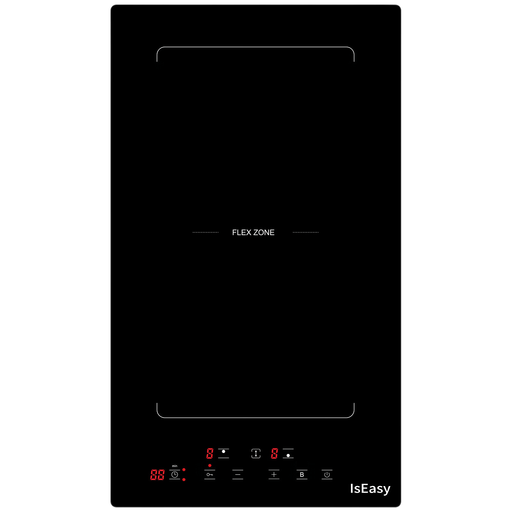 No image available
The flexible cooking area and two zones described may be useful for pans of different sizes. Check your pan’s base against the appliance specifications.
The stated cookware size range is 12–28 cm. The product description also lists touch controls and a child lock.
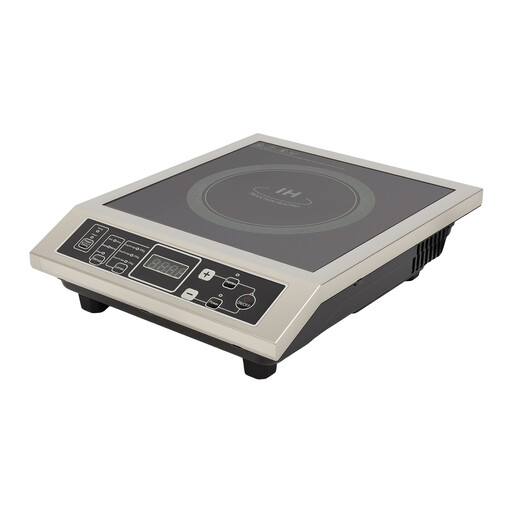 No image available
Described as a tabletop model with a stated weight limit of 50 kg. Compare this with the total weight of your soup pot when full.
The specifications list ten power levels, timer and reservation functions, and an EU plug.
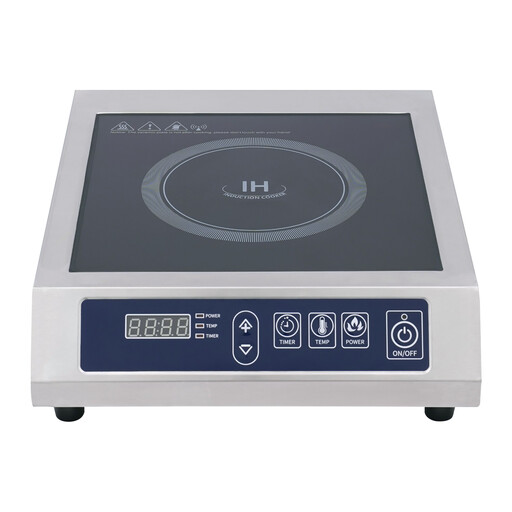 No image available
Described as a worktop model for a single pan. Check that the pan’s base and weight when full are within the stated limits.
The specifications list cookware measuring 4.7–11.8 inches, a weight limit of 165 lb, eleven power levels and a 24-hour timer.
Only if the base is induction-compatible and its dimensions meet the hob’s specifications. ROMMELSBACHER lists a ferromagnetic base and pans up to 230 mm in diameter for the CT 2010/IN. For the CASO ProMenu 2100, the manufacturer lists 12–24 cm and a weight limit of 6 kg.
In Germany, section 13 of the Low Voltage Connection Ordinance generally requires work on electrical installations to be carried out by an installation company registered in a network operator’s installers’ register. The regulation includes an exception for certain maintenance work. HEA also says that a fixed connection for an electric hob should be carried out by a suitably registered electrician. This is different from plugging in a portable hob designed for that purpose.
For the TILLREDA, the manufacturer recommends removing stains and food residue after each use with a cloth, warm water and mild detergent, then wiping the surface dry with a soft cloth. Avoid steel wool and abrasive or sharp utensils. For other models, follow the instructions provided.
The German Federal Institute for Risk Assessment recommends rapidly cooling hot food intended for longer storage to below 7 °C. Plan cooling and freezing as separate steps after cooking; the number of cooking zones doesn’t affect how food should be stored.
When monitoring the market for electrical products, Germany’s Federal Network Agency checks matters including the CE marking, product identification and correct manufacturer details. These checks don’t confirm that any model mentioned here complies with the relevant requirements, so consider them in relation to the specific product listing.