Cooking for several people
If you’re making a larger pot of pearl barley and vegetable soup, the magnetic base of the pot needs to be compatible with the cooking zone. With portable appliances, the weight of the filled pot can also be a factor.


First, check that the magnetic base of your soup pot is compatible with the cooking zone. Then consider whether you need a second zone for anything you’re cooking alongside the soup. A portable single-zone hob is enough for one compatible pot; a double hob gives you space for another pan. A built-in hob is suited to a permanent kitchen installation, but the cut-out dimensions must be right and it must be connected professionally.
If you’re making a larger pot of pearl barley and vegetable soup, the magnetic base of the pot needs to be compatible with the cooking zone. With portable appliances, the weight of the filled pot can also be a factor.
A portable single-zone hob may suit you if you only need to heat one pot at a time and want to put the hob away after your meal. Check first that the pot and the surface you’ll place it on are compatible with the specific model.
If you want to keep a second pan on the hob while the soup simmers, you’ll need two usable cooking zones. With portable double hobs, you should also check the shared power limit.
A good fit if: You’re cooking with one pot, have a suitable surface to place it on and want to put the hob away after your meal.
Bear in mind: There’s only one cooking zone; the pot base and, where applicable, the weight limit need to be compatible with the model.
A good fit if: You want to have soup and a side dish on the hob at the same time and have enough worktop space.
Bear in mind: Check the shared maximum power and the space available; CASO’s figures for the pot size of the S-Line 3500 are inconsistent.
A good fit if: You’re fitting out a permanent kitchen and regularly want to use other cooking zones alongside your soup pot.
Bear in mind: The worktop cut-out and electrical connection must be compatible with the model you choose. Any work required on the electrical installation must be carried out professionally.
| What matters | What to check | Who is this especially important to? |
|---|---|---|
| Pot and cooking zone | Measure the diameter of the magnetic base and compare it with the instructions for the specific model. For portable hobs, check the stated weight limit too. | If I’m using a large pot to make several portions, I want to know whether its base will be detected and whether the hob can support the filled pot. Around 31% of consumers are likely to see pot compatibility as their most important buying consideration. |
| Controlled simmering | Check the power settings and controls on the specific model. Turn the heat down after bringing the soup to the boil and keep an eye on it as it simmers. | If I want my soup to simmer after it comes to the boil, I need to be able to select a suitable lower setting. Around 25% of consumers are likely to prioritise control while simmering. |
| Two cooking zones | Compare the number of zones, the space available and the total power available when both are in use. | If I’m making a side dish in a second pan while the soup cooks, I need another usable cooking zone. Around 25% of consumers are likely to consider cooking two dishes at once their most important requirement. |
| Positioning and connection | For portable appliances, check where you’ll put the hob and how it connects. For built-in models, check the worktop cut-out and connection requirements before buying. | If I’m setting up or installing a hob in my kitchen, I want to know in advance whether the dimensions and connection are right. Around 19% of consumers are likely to place particular importance on positioning and connection. |
REWE gives a cooking time of 20–30 minutes for the soup. So, as well as enough power to heat it up, consider how easy the hob is to use when you turn it down to a simmer.
The diameter at the top of a pot may differ from the diameter of its base. AEG points out that a magnetic base that’s too small may not be detected; if the base is much too large, the part outside the cooking zone will only be heated indirectly.
Measure the base of your soup pot and compare it with the instructions for the hob you’re considering.
If your existing pot isn’t compatible, you may need a different soup pot that’s suitable for induction.
For the CASO S-Line 3500, the manufacturer specifies a maximum of 2,100 W per zone and a shared maximum power of 3,500 W.
If you’re using two pans at once, check the total power and how it’s distributed rather than assuming each zone’s individual rating is available at the same time.
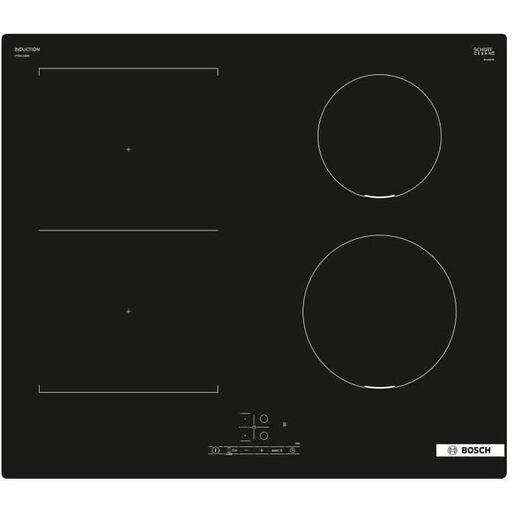
The Bosch PIF64RBB5E is 583 mm wide, while the specified cut-out dimensions are 560 × 490–500 mm. The model doesn’t have a plug and, according to the manufacturer, must be connected by a qualified electrician.
Before ordering, check the cut-out, installation instructions and connection type against your kitchen and with a qualified professional.
A suitable cut-out and professional connection may require additional work to your kitchen and electrical installation.
CASO gives different maximum pot base sizes for the S-Line 3500 in different places: 22 cm and 24 cm.
If your pot base is larger than 22 cm, check the relevant figure in the instructions or with the manufacturer directly before assuming it will fit.
Worth considering if you’re choosing between a portable single or double hob and a model for freestanding or built-in use.
The portable CTA 1800/IN and CT 2010/IN single-zone hobs may suit you if one zone is enough for your soup pot.
Built-in hobs such as the PIF64RBB5E are an option for a permanently equipped kitchen.
The EH645BFB6E built-in hob is designed for households that want to cook soup and other dishes on a fixed hob.
The freestanding TO64IA0FXB built-in hob is an option for a permanently equipped kitchen.
The Joybuy products below include built-in hobs and a portable single-zone hob for making soup on its own or alongside other dishes.
 No image available
An option for a permanently equipped kitchen with a built-in hob.
Use induction-compatible cookware with a magnetic base; have the installation carried out professionally.
 No image available
An option if you’re looking for a built-in hob for soup and other dishes.
Four cooking zones; 60 cm; 6900 W; timer with switch-off function. Allow for magnetic, induction-compatible cookware and professional installation.
 No image available
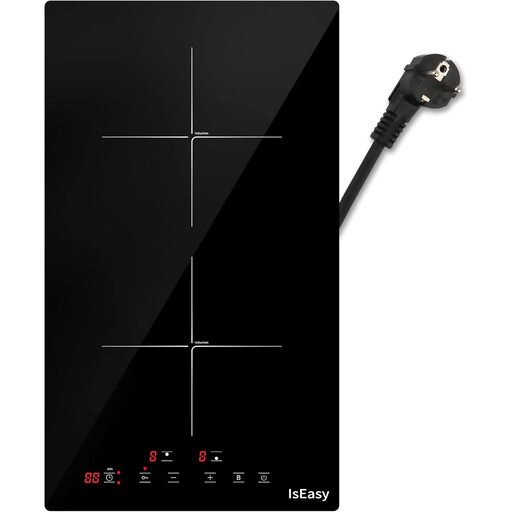
An option if you’re looking for a built-in hob with two cooking zones for soup and a second pan.
3400 W; 29.5 cm; timer; child lock; nine power settings. A suitable worktop cut-out is required for installation.
 No image available
A portable single-zone hob for a compatible soup pot if you don’t need a second cooking zone.
One cooking zone; 2100 W; 28 cm; nine heat settings; timer up to 8 hours. Magnetic cookware with a diameter of 12–26 cm is listed as suitable.
 No image available
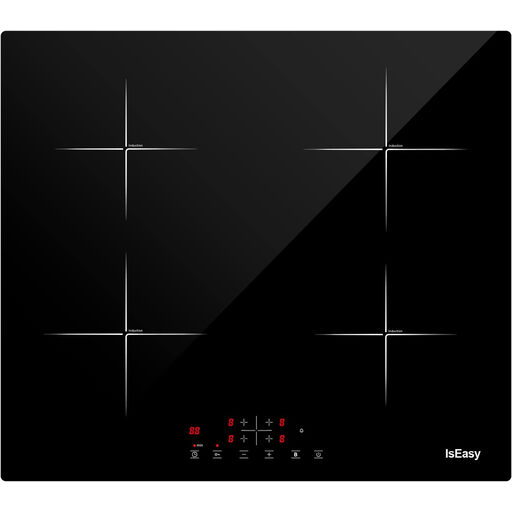
An option for a permanently equipped kitchen if you want to cook soup and other dishes on several cooking zones.
Four zones; 60 cm; 6800 W; nine power settings; timer from 1–99 minutes. A cut-out of 560 × 490 mm is specified for installation; the product information also specifies a 32 A fuse. Check the connection requirements with a qualified professional beforehand.
The base of the pot must be magnetic or explicitly marked as suitable for induction. Measure the diameter of the base and compare it with the range given in the instructions for the specific hob; the diameter of the pot rim isn’t what matters.
REWE gives a simmering time of 20–30 minutes for the recipe. Once the soup has heated up, choose a suitable lower setting and keep an eye on the pot; a timer isn’t a reason to leave the soup unattended.
Section 13 of the NAV sets out who is permitted to carry out work on an electrical installation. The Bosch PIF64RBB5E doesn’t have a plug and, according to the manufacturer, must be connected by a qualified electrician. Check the connection requirements for your chosen model with a qualified professional.
No. According to the Bundesnetzagentur, the manufacturer uses the CE marking to confirm on its own responsibility that the relevant EU requirements have been met. It isn’t an independent comparative test of how well an appliance simmers soup. When buying in Germany, also check that the required instructions for use and safety information are available in German.
If a product is faulty, the statutory consumer rights for defective goods give you a claim against the seller; an additional guarantee is voluntary and subject to its terms. The Verbraucherzentrale identifies the right to have the problem put right, for example by repair or replacement, as the first step.
Follow the cleaning and storage instructions for the specific model. According to the manufacturer, the ROMMELSBACHER CT 2010/IN has a glass-ceramic surface and a residual heat indicator; the indicator doesn’t mean the surface will be cool straight after cooking.