If you cook with several pans
If you’re blanching vegetables while cooking other food, the usable space on the hob and the distance between your pans matter. Siemens, Bosch and CASO offer different zone layouts for cooking several things at once.


If you’re heating water for blanching alongside other food, first compare the usable cooking zones with the bases of your pans and the space available. For short, staggered cooking steps, it’s also worth checking whether a timer simply reminds you or switches off the selected zone. A portable double hob can give you two extra cooking zones, but the CASO S-Line 3500 shares a maximum output of 3500 W between them. Built-in hobs need a suitable cut-out and the right connection.
If you’re blanching vegetables while cooking other food, the usable space on the hob and the distance between your pans matter. Siemens, Bosch and CASO offer different zone layouts for cooking several things at once.
For short, staggered cooking steps, check whether the timer simply reminds you or switches off the selected cooking zone. The German Federal Centre for Nutrition also describes cooling blanched food in iced water afterwards.
If you’re weighing up a built-in hob against extra portable cooking zones, the cut-out, connection and suitable pan sizes are all important considerations. Siemens and CASO offer different types of appliance for these needs.
A good fit if: you want to keep several pans on the hob at once and have a suitable space for installation.
Things to consider: the cut-out, connection and space for your pans all need to be right. A higher number of zones alone doesn’t guarantee enough room between your pans.
A good fit if: you occasionally need two extra cooking zones and there’s a suitable socket where you plan to use it.
Things to consider: according to CASO, the two zones on the S-Line 3500 share a maximum total output of 3500 W.
| What you’re looking for | What to check when buying | Who this matters most to |
|---|---|---|
| Space for several pans | Compare the number, layout and dimensions of the zones with the bases of the pans you’ll use at the same time. | If you’ll have several pans on the hob at once, their bases need to fit comfortably. Around 33% of consumers say having enough space to cook several things at once is their top buying priority. |
| Keeping short cooking steps on track | Check the instructions to see whether you can set a timer for each zone, and whether it gives a reminder, switches the zone off or does both. | If you’re timing blanching water and other food to finish at different times, the timer function is important. Around 27% of consumers prioritise timers for managing short cooking steps. |
| Installation space and connection | Compare the existing cut-out with the manufacturer’s measurements and make sure any required electrical work is planned and carried out professionally. | If you’re replacing an existing built-in hob or want to add portable cooking zones, the dimensions and connection need to suit the available space. Around 20% of consumers put installation or positioning first. |
| Pans and power when cooking at the same time | Check that your pans are suitable for induction and measure their base diameter. For double hobs, also check how the power is shared. | If you want to keep using your existing pans or run two zones at once, pan compatibility and available power both matter. Around 20% of consumers prioritise these considerations. |
According to CASO, the CASO S-Line 3500 has a shared maximum output of 3500 W. This total figure doesn’t tell you how much power is available to both zones at the same time.
If you’re heating water alongside other food, check the specifications for running both zones together rather than looking only at the highest wattage figure.
A timer can switch off a cooking zone, but it won’t take the vegetables out of the water. The blanching process described also includes cooling them in iced water.
Remember to plan when you’ll remove and cool the vegetables, and check what timer functions the specific model offers.
A built-in hob needs to fit the cut-out and the planned connection. Siemens’ product information gives specific cut-out dimensions for built-in hobs and notes that they are supplied without a plug.
Measure the existing cut-out and ask a suitably qualified electrical installer about any work needed on the electrical system. Section 13(2) NAV generally requires such work to be carried out by the network operator or an installation company listed in an installers’ register.
Induction hobs require compatible cookware. CASO’s product page for the S-Line 3500 gives different figures for the permitted pan diameter.
Check that your pans are suitable for induction and compare the size specifications with the instructions for the exact model version.
If your existing pans aren’t suitable for induction, you may need to buy new cookware.
According to Siemens Home Appliances, the EU611BEB6E is a 60 cm built-in hob with four round zones, while the EX975LXC1E has five zones across a 90 cm width.
Bosch describes the PIE61RBB5E as a 60 cm built-in induction hob with four round zones for standard cookware.
The portable S-Line 3500 double hob is one way to add two cooking zones without needing a permanent hob cut-out.
According to NEFF, the T66YYY4C0 is a 60 cm built-in hob with four zones and two extendable FlexZones.
Miele describes the KM 7361 FR as an independent built-in hob with four individual cooking zones of different sizes and an appliance width of 626 mm.
Each of these built-in induction hobs has four cooking zones for preparing several things at once. Timer functions and other features vary by model.
 No image available
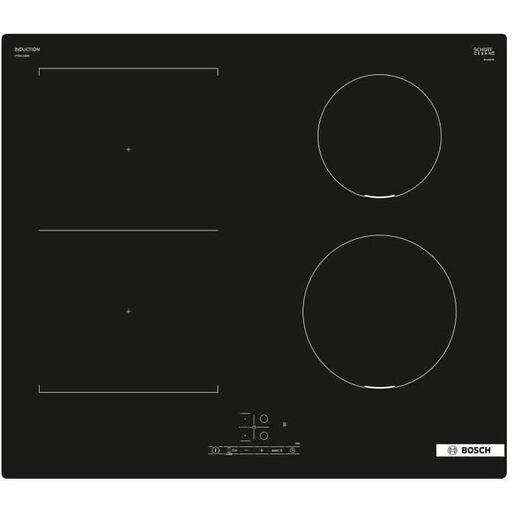
Designed for using several pans at once, this model has four round cooking zones and a timer that switches off the selected zone, according to Bosch.
Power Boost is also listed for this model. Use induction-compatible cookware with a magnetic base.
 No image available
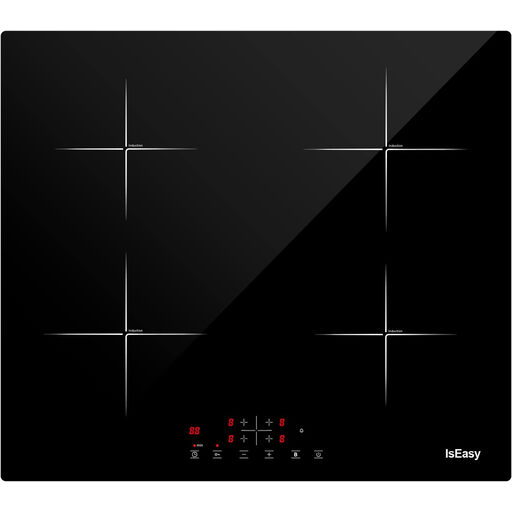
This built-in hob is designed for cooking several things at once, with four cooking zones. The product information also lists a timer with automatic switch-off.
The product name specifies 6900 W. Use induction-compatible cookware with a magnetic base.
 No image available
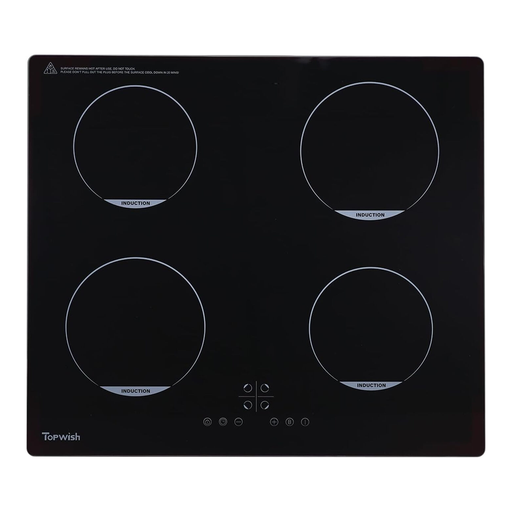
The four cooking zones give you separate spaces for several pans. A timer from 1 to 99 minutes is listed to help you manage your cooking times.
The product name specifies 6800 W, nine power levels and a boost function. Use induction-compatible cookware.
 No image available
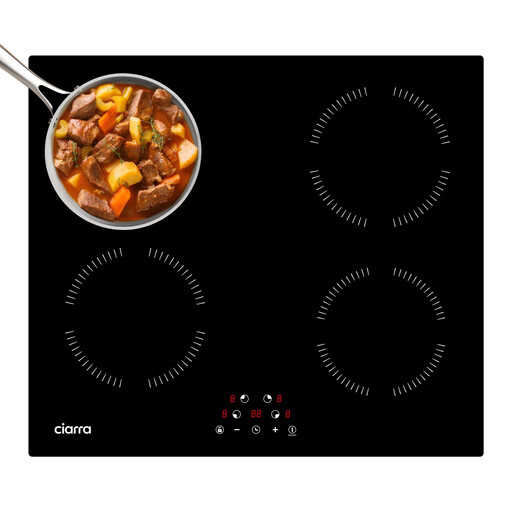
Four cooking zones give you room to spread several pans across the hob. A timer is also listed in the product information.
The product name lists a boost function, touch controls and a residual heat indicator. The hob is designed to be connected to the mains by a qualified professional. Use induction-compatible cookware.
 No image available
This built-in hob is designed for cooking several things at once, with four cooking zones. The product information lists individual timers.
Nine power levels are listed for this model. Use induction-compatible cookware. According to the product description, installation should be carried out by a qualified electrician.
Not all timers work in the same way. Siemens lists a reminder function and a timer that switches off the zone for the EU611BEB6E. Bosch says the PIE61RBB5E switches off the selected zone. You’ll still need to take the vegetables out of the water yourself and, if it’s part of your blanching method, cool them in iced water afterwards.
For the Siemens built-in hobs described here, the manufacturer specifies a connection without a plug by a qualified electrician. Section 13(2) NAV states that, apart from the network operator, work on the electrical system must generally be carried out by an installation company listed in an installers’ register. This is different from simply plugging in a portable hob designed for that purpose.
Check that the manufacturer says your cookware is suitable for induction, then compare the base of each pan with the cooking zone. CASO’s product page for the S-Line 3500 gives different figures for the permitted diameter, so check the instructions for the exact version if you’re using larger pans.
No. The Federation of German Consumer Organisations points out that hobs don’t have an EU energy label like ovens do. For a cooker set, any energy class shown applies to the oven, not the hob.
According to the European Commission, the manufacturer uses CE marking to declare that the product meets the relevant requirements for CE marking. It isn’t an independent quality mark or a comparative test of cooking performance. The regulations that apply depend on the specific product version.