
Lieferung heute & morgen

Qualitätsgarantie

Willkommens-Angebote freischalten: KOSTENLOSE Lieferung | Bis zu 80 % RABATT | Kostenlose 30-Tage-JoyPlus-Testphase
App herunterladen
As a Joybuy Product Recommendation Officer, I often see well-intentioned purchases end in disappointment. There are several pitfalls, especially when switching to a Bialetti moka pot for induction. Many coffee lovers appreciate the ritual and taste of a traditional Italian coffee maker, but face the problem that their old aluminium classic no longer works on their new induction hob.
Before you invest, you should know the three most common problems that lead to frustration and unnecessary expense:
To avoid these problems, you should pay attention to two technical features. These define the durability and functionality of your moka pot on an induction hob.
The heart of any moka pot for induction is its base. It must be made of a ferromagnetic material so the induction hob can detect and heat it. High-quality models like the Bialetti Moka Induction series use a bi-layer technology:
Look for a solid, thick-walled stainless steel base. A base that is too thin can warp under high heat and lose contact with the hob.
Forget your standard idea of a "cup." The capacity of an induction moka pot is specified in espresso-sized servings. A simple guide:
A model like the Bialetti 4-cup induction is a popular choice for daily use by one or two people.
Based on these objective criteria, we have identified several models that are suitable for different needs.
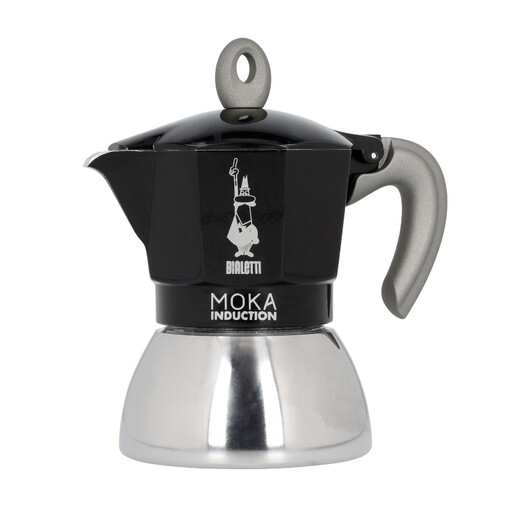
Why This Fits Their Persona: Ideal for individuals or couples who want to enjoy authentic moka coffee daily. The 4-cup size is the perfect compromise between a single serving and enough coffee for two.
It bypasses the "pseudo-induction" trap with its proven bi-layer design, featuring a solid stainless steel boiler that ensures reliable detection and heat distribution.
Combines the classic octagonal aluminium top with a modern base suitable for all hobs. Proven Bialetti quality and easy to use.
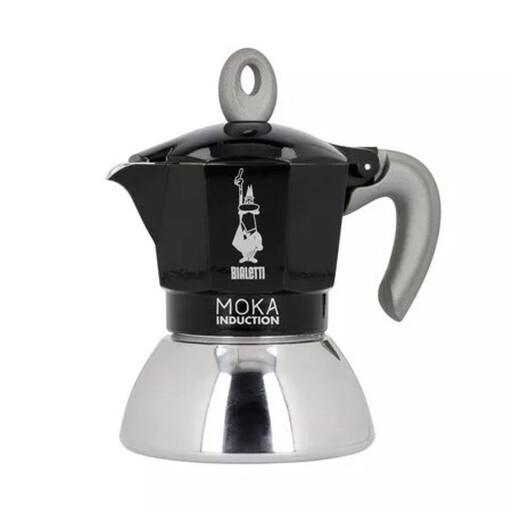
Why This Fits Their Persona: Perfect for families, the home office, or when entertaining guests. The capacity of approx. 300 ml is enough for several people or two large mugs of coffee.
Solves the "wrong size" problem. Anyone who regularly drinks more than one small cup of coffee will be better served by this model, avoiding the frustration of a pot that's too small.
Offers the same reliable brewing process and material quality as the smaller model, but with significantly more volume. Suitable for all hobs, including induction.
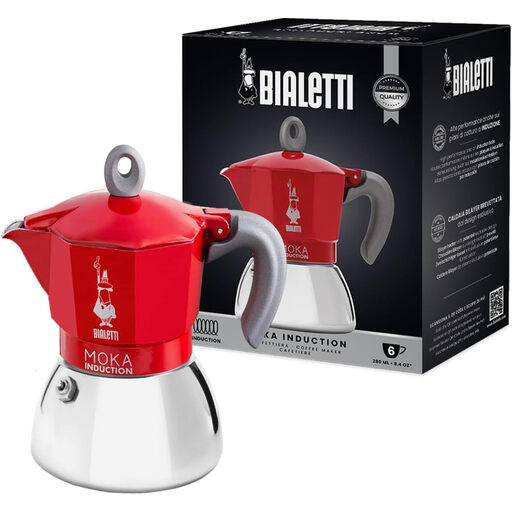
Why This Fits Their Persona: For users who see their kitchen appliances not just as tools, but as part of their interior design. The red colour adds a stylish accent to modern kitchens.
Debunks the myth that design must come at the expense of function. This model uses the exact same reliable induction technology as the standard versions and is not just for show.
Combines proven functionality and a generous 6-cup capacity with a striking aesthetic. A functional statement piece for the kitchen.
We have compiled a complete, up-to-date list of products that fully meet these strict selection criteria.
Traditional Bialetti moka pots are made entirely of aluminium. Aluminium is not magnetic and therefore cannot be heated by the electromagnetic field of an induction hob. Only cookware with a ferromagnetic base (usually made of stainless steel or cast iron) is induction-compatible.
Cleaning is crucial for longevity. According to the manufacturer, the Bialetti Moka Induction should only be rinsed by hand with clean water and then dried thoroughly. Do not use detergents and never put the pot in the dishwasher. Chemicals and high temperatures can attack the aluminium top, damage the seals, and affect the taste of the coffee.
The brewing principle—water is heated, rises through the coffee grounds, and collects in the top chamber—is identical for all moka pots. The heat source (gas, electric, or induction) has no direct influence on the taste when used correctly. More important for the aroma are the quality of the coffee beans, the grind size, and the freshness of the water. Induction technology simply provides a different, often faster, method of heating.