
Lieferung heute & morgen

Qualitätsgarantie

Willkommens-Angebote freischalten: KOSTENLOSE Lieferung | Bis zu 80 % RABATT | Kostenlose 30-Tage-JoyPlus-Testphase
App herunterladen
The search for the right non-stick pan for induction can quickly become overwhelming. Many models promise effortless handling, but in practice, weaknesses often appear after a short time: the coating loses its effectiveness, the pan base warps, or food cooks unevenly. These problems are not only frustrating but also lead to unnecessary expenses.
As your Joybuy Product Recommendation Officer, I'll help you identify the crucial features and avoid common marketing traps. This guide focuses on the three most common pitfalls and shows you what to look for when choosing a durable and functional coated frying pan for your induction stove.
To avoid the problems mentioned above, you should carefully check three technical aspects before buying. These are the primary determinants of your new pan's performance and lifespan.
The choice of coating affects cooking results, durability, and maintenance. The two most common types are PTFE and ceramic.
For a non-stick induction pan, the construction of the base is the most important criterion. An induction cooktop generates heat through a magnetic field that acts directly on the pan's base.
Practical details complete a pan's functionality and should match your cooking habits.
Based on the criteria above, we have identified several models that offer a suitable solution for specific user profiles.
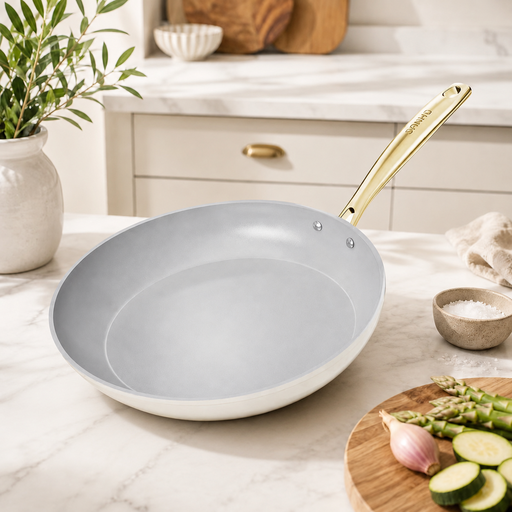
Why This Fits Their Persona: Ideal for users who value a non-toxic kitchen. The pan is explicitly designated as PFAS-, PFOA-, and PTFE-free, and its ceramic coating is perfect for healthy, low-fat cooking in daily family life.
The diamond and titanium-reinforced ceramic coating addresses the durability weakness of earlier ceramic pans. The solid base ensures even heat distribution on induction stovetops.
Completely free of PFAS, PFOA, PTFE, lead, and cadmium. High oven-safe temperature up to 260°C, making it very versatile.
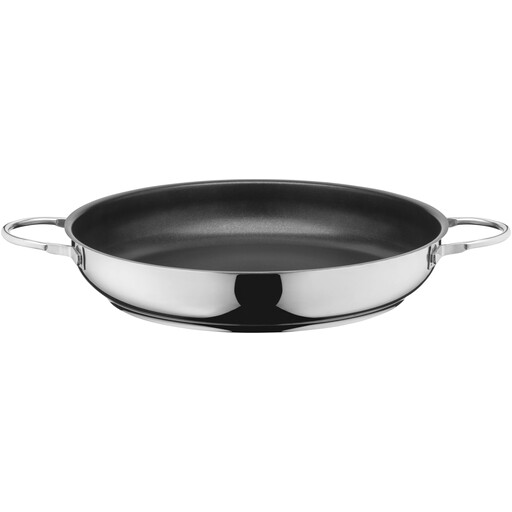
Why This Fits Their Persona: For cooks who need a robust, large, and versatile pan for sophisticated dishes. The stainless steel body and high oven-safe temperature allow it to be used for a wide range of recipes, from high-heat searing to braising in the oven.
The SiliTherm universal base ensures optimal heat conduction on induction and prevents warping. The durable Silitan PTFE coating from an established brand stands for reliable non-stick performance.
Robust body made of 18/10 stainless steel, high heat resistance up to 260°C, and a large 32 cm diameter for family-sized portions.
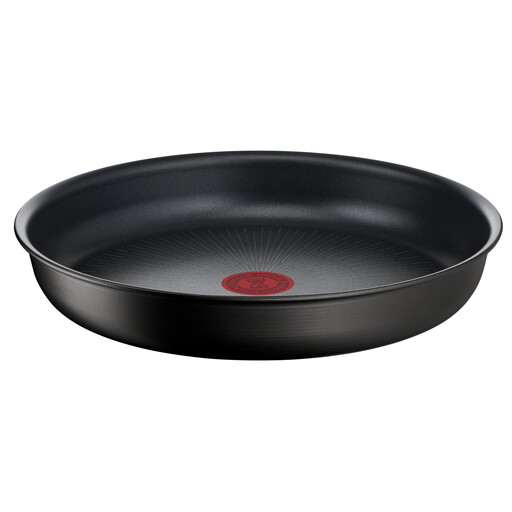
Why This Fits Their Persona: Perfect for kitchens with limited storage space. The concept with a removable handle allows multiple pans and pots to be stacked inside each other to save space. Its versatility from stove to oven to fridge is another major plus.
The Thermo-Signal technology indicates the ideal frying temperature, helping to prevent overheating and damage to the coating. The high-quality Titanium 6X non-stick coating is designed for durability.
Extremely space-saving, stackable design. The removable handle (sold separately) allows for use in the oven and for serving at the table.
We have compiled a complete, up-to-date list of products that fully meet these strict selection criteria and German safety regulations.
The lifespan heavily depends on the quality of the coating and how it's cared for. With proper handling—avoiding overheating, using wooden or silicone utensils, and gentle cleaning—a high-quality pan can provide good service for several years. Models with reinforced ceramic or multi-layer PTFE coatings often show greater longevity.
No, as a rule, this is strongly discouraged. Metal utensils can scratch the non-stick coating and permanently impair its function. Instead, use kitchen tools made of wood, bamboo, silicone, or heat-resistant plastic to protect the surface.
For a pan to work on an induction cooktop, its base must be magnetic (ferromagnetic). Pans made of pure aluminium, copper, or glass are not magnetic and therefore will not heat up. You can easily test this: if a magnet sticks to the bottom of the pan, it is generally induction-compatible.