
Lieferung heute & morgen

Qualitätsgarantie

Willkommens-Angebote freischalten: KOSTENLOSE Lieferung | Bis zu 80 % RABATT | Kostenlose 30-Tage-JoyPlus-Testphase
App herunterladen
A modern kitchen with an induction hob promises fast, efficient, and precise cooking. But that joy can quickly fade when a newly purchased induction pan fails to deliver the expected performance. Many home cooks and families invest in cookware that loses its functionality after just a few months or proves to be unsuitable. As your Joybuy Product Recommendation Officer, I'm here to help you identify the common pitfalls and make an informed decision.
Marketing promises often sound tempting, but the devil is in the details. Pay attention to these three points to avoid buyer's remorse:
To find the right induction frying pan, you should focus on three core technical features instead of advertising slogans.
The base is the most critical component of an induction pan. It must be ferromagnetic for the hob's magnetic field to generate heat. Look for the following characteristics:
The choice of coating affects not only the cooking experience but also the pan's longevity and health safety.
The right size and shape depend on your cooking habits.
Here are some product recommendations that are tailored to specific needs and meet the quality criteria mentioned.
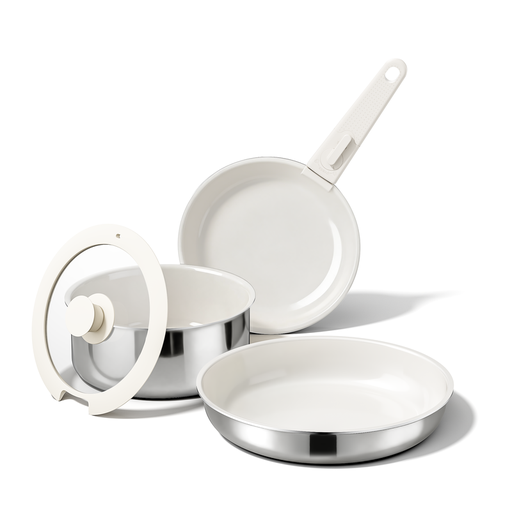
Why This Fits Their Persona: Ideal for small kitchens, RVs, or anyone looking to maximise storage space. The detachable handle allows for space-saving stacking of pots and pans.
The robust diamond-titanium ceramic coating is designed for longevity and resists rapid wear and tear. The three-ply stainless steel base ensures excellent performance on induction hobs.
The detachable handle saves up to 70% of space. The entire set is oven-safe (up to 250°C) and dishwasher-safe.
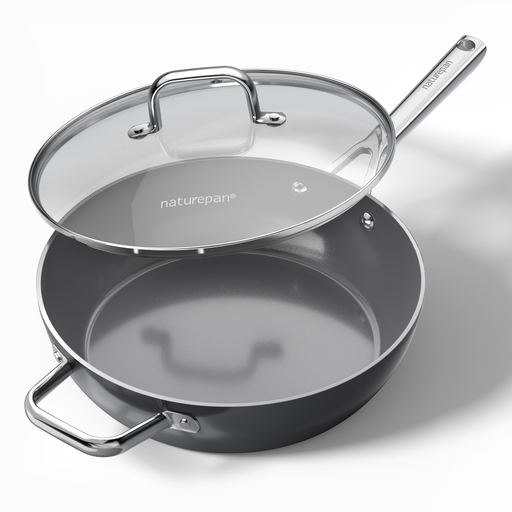
Why This Fits Their Persona: Perfect for families who prioritise healthy cooking. The large, deep pan with a lid is ideal for stews, sauces, and one-pot meals. The explicitly toxin-free coating provides peace of mind.
The coating is explicitly declared as PTFE/PFOA/PFAS-free, going beyond vague "toxin-free" promises. Reinforcement with diamond and titanium particles aims for high durability.
Very high oven-safe temperature up to 260°C for maximum flexibility. The high sides prevent splatters, making it the ideal sauté pan with a lid.
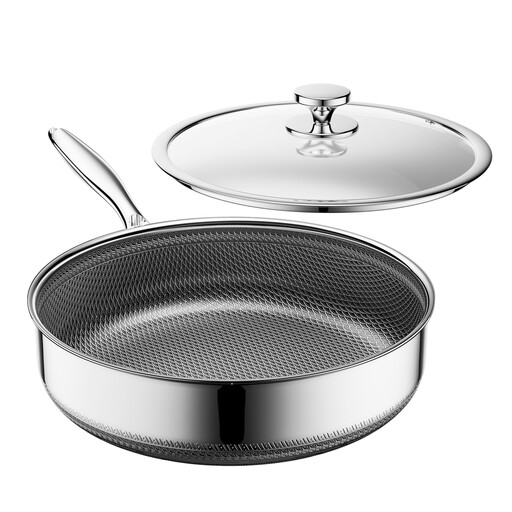
Why This Fits Their Persona: For cooks who appreciate the durability and searing capabilities of stainless steel but don't want to sacrifice the convenience of a non-stick surface. An investment in lasting performance.
The hybrid technology, with its laser-etched stainless steel and ceramic coating, is mechanically more robust than conventional sprayed-on layers, solving the problem of rapid wear.
Combines the heat distribution of a three-ply construction with a PFAS-free ceramic non-stick surface. The pan is oven-safe up to 260°C and dishwasher-safe.
We have compiled a complete, up-to-date list of products that fully meet these strict selection criteria and comply with German safety standards.
1. How can I spot a good induction pan at first glance? Pay attention to the weight and the base. A good induction pan feels substantial and solid. The base should be thick and completely flat. Perform the magnet test: a magnet that sticks strongly across the entire surface of the base is an excellent sign of efficient heat transfer.
2. How do I properly care for a coated pan to extend its lifespan? Avoid metal utensils; use wood or silicone instead. Clean the pan by hand with a soft sponge and mild washing-up liquid, even if it's labelled as dishwasher-safe. Allow the pan to cool down after cooking before exposing it to cold water to prevent thermal shock, which can damage the coating.
3. Is a more expensive induction pan automatically better? Not necessarily. The price should reflect the quality of the materials, the base construction, and the type of coating. An expensive pan with features you don't need (e.g., extreme oven-safe temperatures) isn't automatically the better choice. Focus on finding a model that meets the core parameters mentioned here and fits your cooking style.