
Lieferung heute & morgen

Qualitätsgarantie

Willkommens-Angebote freischalten: KOSTENLOSE Lieferung | Bis zu 80 % RABATT | Kostenlose 30-Tage-JoyPlus-Testphase
App herunterladen
Buying a new pan for your induction hob seems straightforward, but the market is flooded with promises that often go unkept. As a Joybuy Product Recommendation Officer, I see daily how well-intentioned purchases lead to disappointment due to misleading marketing. Before you invest, you should know the typical pitfalls that can render a supposedly high-quality pan useless after just a few months.
Many consumers invest in a new pan only to find it doesn't deliver the expected performance. Watch out for these three common problems:
To avoid a bad purchase, focus on the technical fundamentals that define a good induction pan.
A ferromagnetic base is essential for optimal performance on an induction hob. Magnetism is the prerequisite for the hob to transfer energy to the pan at all.
The choice of surface depends directly on your cooking habits and priorities.
Depending on the intended use, other features are relevant:
Based on these objective criteria, we have identified some models that represent a considered choice for specific user profiles.
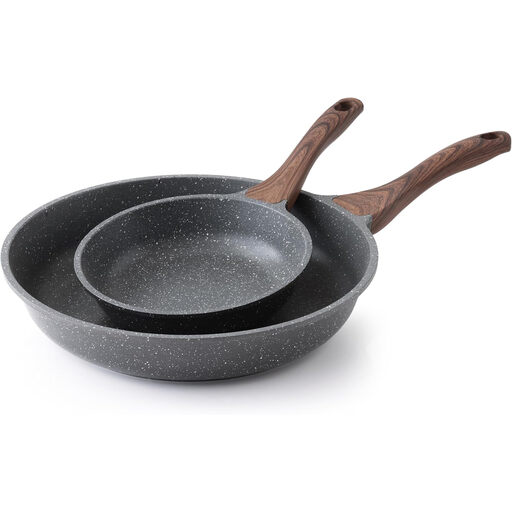
Why This Fits Their Persona: This set offers two common sizes for daily use at an attractive price. It's a pragmatic solution for a first kitchen or for replacing old pans without a large budget.
The highly conductive stainless steel base ensures solid and efficient performance on induction hobs, thus bypassing the trap of inefficient heat distribution.
The Swiss granite coating is PFOA-free according to the manufacturer and allows for low-fat cooking. The Bakelite handle stays cool during cooking.
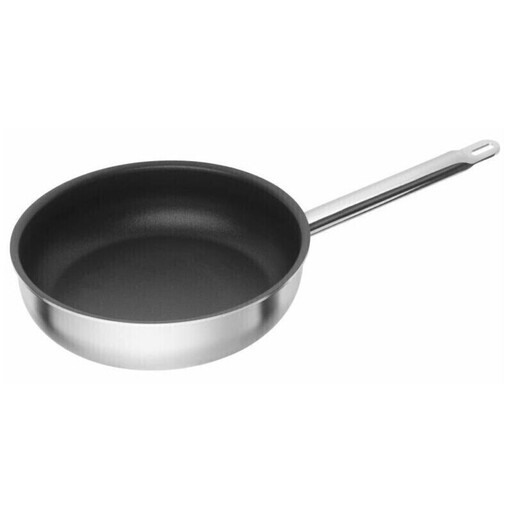
Why This Fits Their Persona: For home cooks who value durability, even cooking results, and brand quality. An investment in versatile and robust cookware for daily use.
The SIGMA Clad 3-ply construction with an aluminium core ensures fast and perfectly even heat distribution right to the rim and avoids the short-lived coating trap with a robust Duraslide Ultra PTFE seal.
The pan is oven-safe up to 230°C, making it highly versatile. The solid stainless steel handle stays cool on the hob for a long time and is riveted for lasting stability.
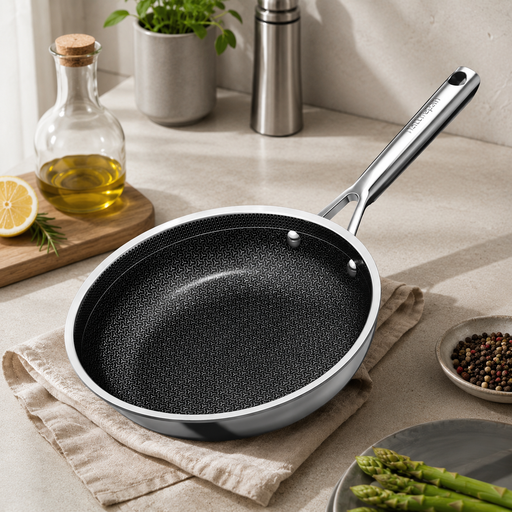
Why This Fits Their Persona: Ideal for cooks who want to combine toxin-free cooking (without PTFE/PFOA/PFAS) with the performance and durability of stainless steel. Perfect for high-heat searing and versatile cooking applications.
Directly addresses the confusion around harmful substances, as it is free of PFAS, PFOA, and PTFE according to the manufacturer. The hybrid structure of stainless steel ridges and ceramic valleys resists scratches better than pure coatings.
Combines the heat resistance and searing performance of stainless steel with functional non-stick properties. High oven-safe temperature up to 260°C and dishwasher safe.
We have compiled a complete, up-to-date list of products that fully meet these strict selection criteria and UK safety regulations.
1. How do I know if my old pan is suitable for induction? Hold a standard magnet to the bottom of the pan. If the magnet sticks firmly, the pan is ferromagnetic and suitable for induction hobs. If it doesn't stick at all or only very weakly, the pan will not work or will work very inefficiently.
2. What does "PFOA-free" mean, and is it the same as "PTFE-free"? No, they are not the same. PFOA (Perfluorooctanoic acid) is a chemical formerly used in the manufacturing of PTFE coatings (known by the brand name Teflon). The use of PFOA is now banned in the EU. Therefore, a "PFOA-free" pan usually still has a PTFE coating. A "PTFE-free" pan, such as a ceramic or stainless steel pan, contains no polytetrafluoroethylene at all.
3. How do I properly care for a non-stick pan to extend its lifespan? Avoid extreme heat and never preheat the pan empty on the highest setting. Only use cooking utensils made of wood, silicone, or plastic. Although many pans are listed as dishwasher-safe, washing by hand with a soft sponge and mild detergent is recommended, as harsh cleaning agents can damage the coating. Always let the pan cool down completely before washing to avoid thermal shock.