
Lieferung heute & morgen

Qualitätsgarantie

Willkommens-Angebote freischalten: KOSTENLOSE Lieferung | Bis zu 80 % RABATT | Kostenlose 30-Tage-JoyPlus-Testphase
App herunterladen
The search for the right pan for induction can quickly become overwhelming. Promises of "revolutionary" coatings and designs make the decision difficult. But often, behind the marketing, lie costly weaknesses that only reveal themselves in daily use: uneven heat distribution, a non-stick effect that quickly fades, or a coating that peels off after just a few months.
As your Joybuy Product Recommendation Officer, I'll help you navigate these pitfalls. We will focus on the crucial, objective features that define a good induction pan, so you can make an informed and long-lasting choice for your kitchen.
Before we look at the solutions, let's identify the problems that frequently lead to disappointment.
To avoid a bad purchase, you should focus on three core technical aspects that determine the performance and longevity of your non-stick pan for induction.
A ferromagnetic base is essential for induction hobs. The quality of this base determines how efficiently the hob's energy is converted into heat.
The coating is crucial for the cooking experience and for cleaning. There are clear differences here in material and durability.
Not every pan is suitable for every task. Choosing the right shape and material will optimise your cooking results.
Here are some recommendations tailored to specific needs and cooking habits that avoid the pitfalls mentioned above.
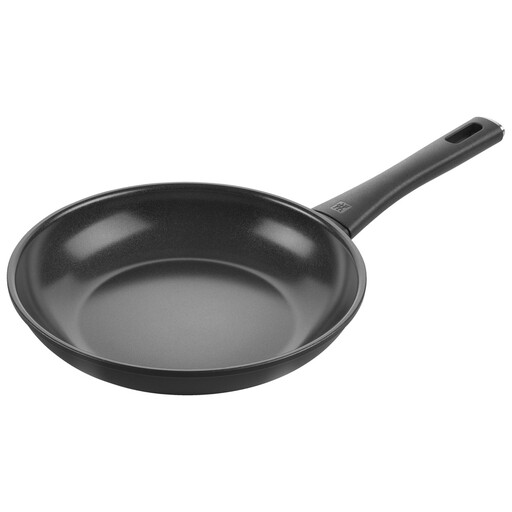
Why it's a great fit: Ideal for daily use when health-conscious cooking and durability are priorities. The pan combines a toxin-free coating with high-quality construction for versatile cooking applications.
The forged aluminium body and solid induction base ensure fast, even heat distribution, avoiding the "hot spot" trap. According to the manufacturer, the CeraForce granite-ceramic coating is PTFE- and PFOA-free, addressing concerns about short-lived or questionable coatings.
Oven-safe up to 250°C thanks to its stainless steel handle, which significantly expands its versatility. The high-quality construction promises a long service life.
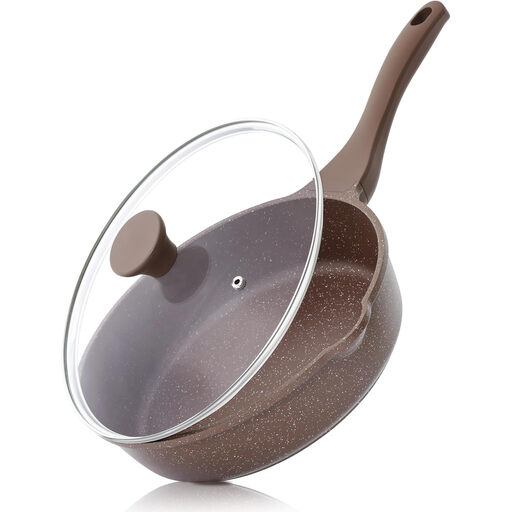
Why it's a great fit: With its 30 cm diameter, high sides, and glass lid, this pan is perfect for larger portions, stews, and one-pot meals. It's a versatile sauté pan for everyday family cooking.
The highly magnetic stainless steel base is explicitly designed for all hob types, including induction, ensuring excellent performance. The durable granite coating is manufactured without PFOA and is designed for a long lifespan, according to the manufacturer.
The combination of high sides and an included lid makes it extremely versatile—it functions as both a frying and a sauté pan. The rivet-free interior makes cleaning easier.
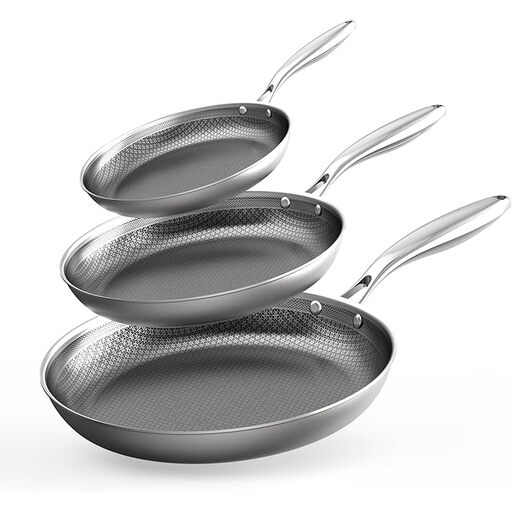
Why it's a great fit: This set provides a complete starter kit for first-time buyers or those on a budget. With three different sizes (20, 25, 30 cm), you're equipped for most everyday cooking tasks.
Instead of relying on a single, overpriced pan with a questionable coating, this induction pan set offers a solid foundation of proven stainless steel. The material is robust and its induction suitability is ensured by its construction, avoiding the most common pitfalls.
Excellent value for money for a 3-piece set. According to the manufacturer, the pans are oven- and dishwasher-safe, making them low-maintenance and versatile.
We have compiled a complete, up-to-date list of products that fully meet these strict selection criteria and German safety regulations.
1. How can I identify a truly good pan for induction? A simple test: Hold a magnet to the base of the pan. The stronger it sticks and the larger the magnetic area, the better its suitability for induction generally is. Also, look for a thick, flat base that won't warp when heated.
2. How long does a ceramic pan last, and how do I care for it properly? The lifespan depends heavily on its care. To maximise it, you should follow these points: Avoid extreme heat (don't preheat it empty on the highest setting), use wooden or silicone utensils, and do not subject the hot pan to thermal shock (don't run it under cold water). Even if many pans are declared dishwasher-safe, gentle hand washing significantly extends the life of the non-stick coating. With proper care, a high-quality ceramic pan can last for several years.
3. Is a PFOA-free pan automatically safe for your health? The "PFOA-free" label is an important step, as PFOA is considered potentially harmful and is already heavily regulated in the EU. For a higher degree of safety, many health-conscious consumers also look for a "PTFE-free" label or opt directly for a ceramic pan or uncoated alternatives like stainless steel or cast iron.