
Lieferung heute & morgen

Qualitätsgarantie

Willkommens-Angebote freischalten: KOSTENLOSE Lieferung | Bis zu 80 % RABATT | Kostenlose 30-Tage-JoyPlus-Testphase
App herunterladen
Switching to an induction hob promises fast, energy-efficient cooking. However, that excitement can quickly fade when a newly purchased induction pan fails to deliver the expected performance. Many buyers are frustrated to find their pan heats unevenly, food sticks to the surface, or the coating becomes useless after just a few months.
Before you make a decision, it's crucial to understand the most common pitfalls often hidden behind tempting marketing promises:
To avoid a poor purchase, you should carefully examine three technical features. These are the primary determinants of your new pan's performance, longevity, and safety.
The most critical criterion for a pan for an induction hob is its base. It must be ferromagnetic to convert the energy from the induction field into heat.
The non-stick coating not only prevents food from sticking but also makes cleaning easier. However, the differences in quality are enormous.
Additional features can significantly expand your pan's versatility.
Based on these objective criteria, we have identified several models suitable for different needs and cooking habits.

Why This Fits Their Persona: Ideal for daily use and for those seeking a reliable, basic pan for their new induction hob without a large investment. The 26 cm size is versatile for one to three-person households.
The aluminium alloy body and induction-ready base ensure fast, even heat distribution, avoiding the problem of uneven heating zones.
The heat-insulating wooden handle offers a comfortable and secure grip. Its light weight makes it easy to handle for everyday use, especially for quick meals.
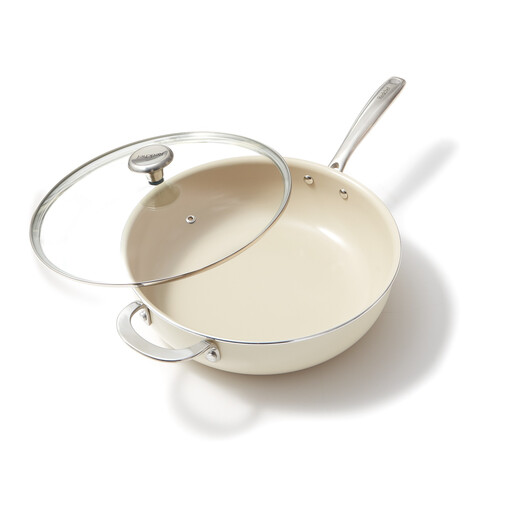
Why This Fits Their Persona: With its large capacity, extreme oven-safe temperature, and robust ceramic coating, this pan is designed for demanding recipes, high-heat searing, and cooking for multiple people.
The heavy-duty cast aluminium construction prevents warping at high temperatures. The ceramic coating, explicitly declared PFOA-, PFAS-, and PTFE-free, addresses concerns about durability and health.
Extremely versatile: according to the manufacturer, the pan is oven-safe up to 450°C. The included tempered glass lid expands its use to braising and steaming.
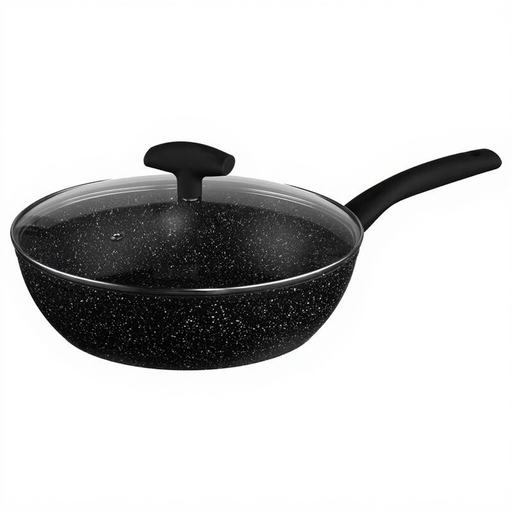
Why This Fits Their Persona: A classic all-rounder in the popular 28 cm size. With its matching lid, this pan is suitable for a wide range of everyday dishes, from searing meat to steaming vegetables.
The forged aluminium body and stainless steel induction base ensure robust performance and even heat, unlike flimsy pans that warp easily.
Comes complete with a glass lid to retain moisture and heat. The ergonomic plastic handle ensures a secure and comfortable grip.
We have compiled a complete, up-to-date list of products that fully meet these strict selection criteria and safety standards.
You can identify a high-quality induction pan by its thick, perfectly flat, and fully magnetic base. The pan body should be made from a material with good thermal conductivity, such as cast aluminium or multi-ply stainless steel. A multi-layer, PFOA-free non-stick coating and a securely attached, ideally heat-resistant handle are other key quality indicators.
To maximise the coating's lifespan, you should follow a few basic rules. Only use utensils made of wood, silicone, or plastic. Avoid overheating the empty pan. Although many pans are listed as dishwasher-safe, washing by hand with a soft sponge and mild detergent is recommended, as harsh machine detergents can damage the coating. Always let the pan cool down completely before washing to prevent thermal shock and material warping.
Yes, ceramic non-stick coatings are made using a mineral-based sol-gel process and naturally do not contain PTFE, and therefore no PFOA or PFAS. They are considered a safe and healthy alternative to traditional PTFE coatings. Their scratch resistance and high heat tolerance make them a popular choice for health-conscious cooking.