
Lieferung heute & morgen

Qualitätsgarantie

Willkommens-Angebote freischalten: KOSTENLOSE Lieferung | Bis zu 80 % RABATT | Kostenlose 30-Tage-JoyPlus-Testphase
App herunterladen
The search for the right induction pan can quickly become overwhelming. The market is filled with promises of eternal durability and perfect searing results. Yet, it often turns out after just a few months that the expensive purchase fails to live up to expectations. Certain marketing traps and hidden defects consistently lead to frustration in the kitchen. This guide will show you what to look for to make an informed decision.
Before we turn to the important features, let's address the two most common problems that lead to bad purchases:
The Illusion of the Indestructible Coating: Many manufacturers advertise their products as "scratch-resistant." In practice, however, this often just means increased resistance to wooden or plastic utensils. Using metal cutlery or overly aggressive cleaning can quickly cause damage even to high-quality models, ruining the non-stick properties. A scratch-resistant pan is more durable, but not indestructible.
Inefficient Induction Performance: Not every pan labelled "induction-compatible" works efficiently. Models with a base that is too thin or only partially ferromagnetic heat unevenly, leading to burnt spots in the centre and undercooked food at the edges. This not only wastes energy but also significantly compromises the cooking results.
To avoid these problems, you should check three core aspects before buying. These define the longevity, safety, and performance of your new pan.
The material is the foundation of a pan's performance. For coated models, the ceramic pan has established itself as a popular choice for health-conscious cooks. High-quality ceramic coatings are often free of potentially harmful substances like PFOA and PFAS. A PFOA-free coated pan is therefore an important criterion for many households. For greater longevity, models with particle reinforcement (e.g., titanium or diamond) are worth considering, as they offer a more robust surface.
Uncoated stainless steel pans are an alternative for high-heat searing, but they require more skill and fat to prevent sticking.
For an induction frying pan, the construction of the base is the most critical feature. A thick, fully-clad base made of ferromagnetic material is essential. This is the only way for the hob's magnetic field to distribute heat quickly and, most importantly, evenly across the entire cooking surface. A simple test: if a magnet holds firmly to the entire base of the pan, the basic requirement for good induction performance is met. A solid base also prevents the pan from warping at high temperatures.
Consider what dishes the pan will primarily be used for.
Based on the criteria mentioned, we have identified some products that are particularly suitable for specific user profiles.
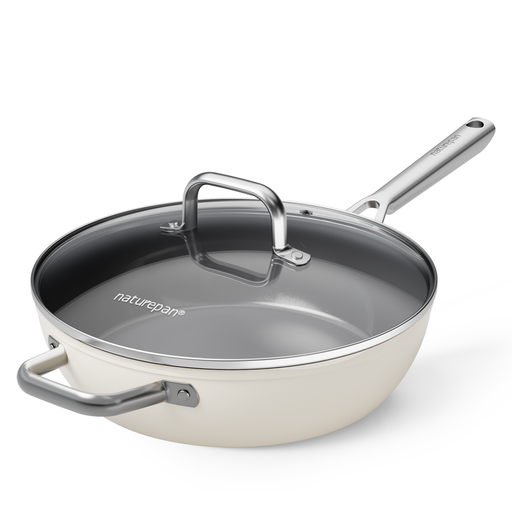
Why This Fits Their Persona: Ideal for daily, low-fat cooking. The PTFE/PFOA/PFAS-free ceramic coating meets high standards for a health-conscious diet. The high sides and included lid make the pan versatile for both frying and braising.
The ceramic coating, reinforced with diamond and titanium particles, offers greater mechanical resilience and longevity than conventional non-stick surfaces.
Free of PTFE/PFOA/PFAS. The pan is also oven-safe up to 260°C, allowing for flexible cooking methods from the hob straight to the oven.
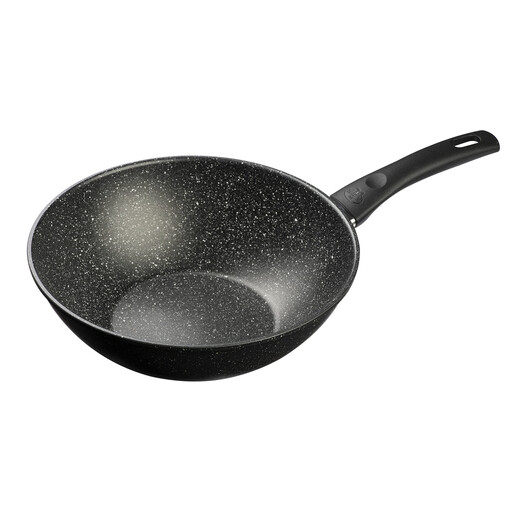
Why This Fits Their Persona: The special shape and rapid heat-up are optimised for preparing authentic Asian dishes. Ideal for home cooks who value the right tool for specific techniques like stir-frying.
According to the manufacturer, the patented bimetallic base was specifically designed for fast and even heat distribution on induction hobs, thus avoiding the problem of hot spots.
Features a four-layer Nerolite non-stick coating, which is considered particularly scratch-resistant. The ergonomic handle stays cool to the touch even during extended cooking times.
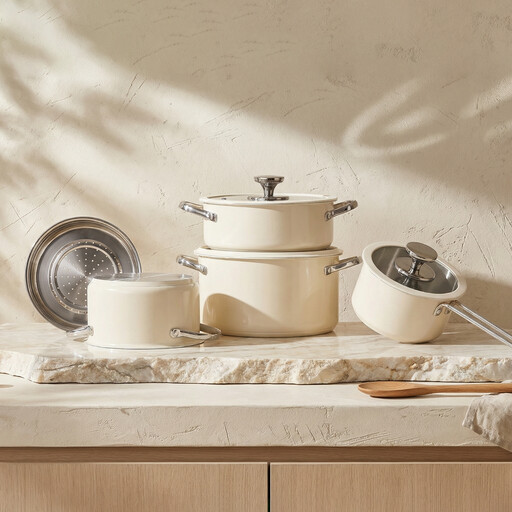
Why This Fits Their Persona: This comprehensive induction cookware set covers all of a family's basic cooking needs with various sizes, from a milk pot to a large stockpot. The combination of durable stainless steel inside and an easy-to-clean ceramic exterior is practical for daily use.
Instead of combining mismatched individual pieces, this set offers a consistently induction-compatible solution. The 304 stainless steel interior is robust and non-reactive, while the ceramic exterior coating simplifies cleaning.
A complete set (1.5L, 2L, 2.5L, 5L) for all hob types. According to the manufacturer, the inner stainless steel is heat-resistant up to 870°C, making it extremely durable.
We have compiled a complete, up-to-date list of products that fully meet these strict selection criteria and UK safety regulations.
The most reliable method is the induction symbol (a stylised coil) on the packaging or the pan's base. Alternatively, you can hold a magnet to the base. If it is strongly attracted, the pan is ferromagnetic and therefore suitable for induction.
Ceramic coatings are harder and more resistant to scratches than traditional PTFE coatings. However, the term "scratch-resistant" does not mean they are immune to damage. They withstand normal use with non-metallic kitchen tools very well but can be scratched by sharp objects or metal cutlery.