
Lieferung heute & morgen

Qualitätsgarantie

Willkommens-Angebote freischalten: KOSTENLOSE Lieferung | Bis zu 80 % RABATT | Kostenlose 30-Tage-JoyPlus-Testphase
App herunterladen
An induction pan needs to do more than simply work on an induction hob. Its size, base, material, handle and ease of cleaning all affect how practical it is for everyday use. If you focus only on a non-stick coating or eye-catching product description, it’s easy to overlook important details.
A pan may be suitable for induction in principle and still not be a good match for your hob. If its magnetic base is significantly smaller than the cooking zone, heat may not be distributed efficiently. So when choosing a small pan, check not only the diameter of the rim but also the base diameter.
Before you buy, check:
A coated pan can make it easier to release food and clean the pan. However, a coating isn’t automatically suitable for high temperatures, metal utensils or abrasive cleaning. For ceramic-coated models, use low to medium heat and utensils made from wood, silicone or plastic.
Another common mistake is heating an empty pan on a high setting. This can damage the coating. Let the pan cool after cooking before washing it with cold water.
A pan with a lid is useful for soups, rice dishes and stews. The lid should fit securely and have an easy-to-grip knob. A heavy cast iron pan also has considerable weight of its own: once filled, a model weighing 5 kg or more can only be moved safely if you have a secure grip and enough room.
Saucepans with long handles also need careful consideration. A long handle makes it easier to work with sauces, but can take up space on smaller hobs. For longer cooking times, follow the manufacturer’s guidance on handle temperature.
The right size depends on the portions you usually cook:
You won’t be able to use the full stated capacity, as liquids can rise as they cook. Leave some space below the rim when making soup or pasta.
An stainless steel pan is generally uncoated and doesn’t affect the flavour of food. A multi-layer or encapsulated base can improve heat distribution on an induction hob. Stainless steel needs a little more attention when searing, as food can stick if the temperature isn’t right.
Aluminium heats up quickly and is often combined with a non-stick or ceramic coating. It’s particularly important to follow the manufacturer’s care instructions for coated pans.
An enamelled cast iron pan retains heat for a long time and is well suited to stews. It is considerably heavier, though, and should be protected from sudden changes in temperature.
Look for clear cleaning instructions:
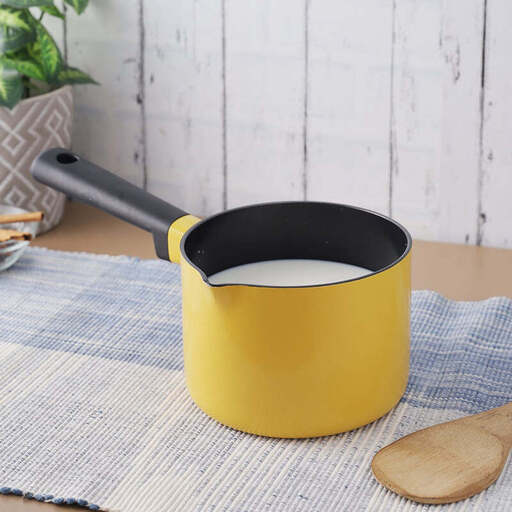
Why it suits this profile: This compact saucepan is ideal for milk, sauces and small portions. The 14 cm aluminium body is listed as suitable for induction, gas, electric and ceramic hobs.
The compatible hob types are clearly listed. However, use the ceramic coating inside and out only on low to medium heat and with soft utensils.
Compact size, Bakelite handle and ceramic coating for easier cleaning.
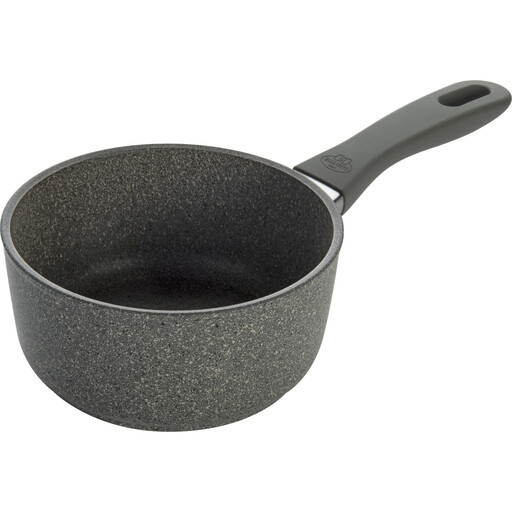
Why it suits this profile: With a 1.5-litre capacity, this saucepan is well suited to soups, side dishes, desserts and smaller household portions.
The product details specify the diameter, capacity, coating type and compatible hob types. A lid is not included.
Forged aluminium, five-layer GRANITIUM-Extreme coating and stated dishwasher suitability.
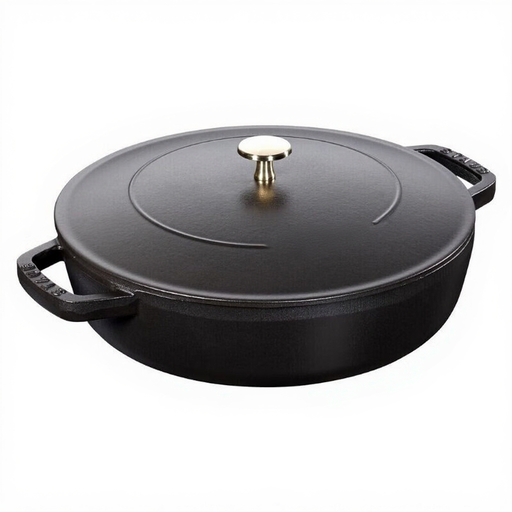
Why it suits this profile: This 3.7-litre cast iron pot is designed for households that want to cook stews, soups and larger portions on a range of hob types.
The material, capacity, weight and maximum temperature are specified. At around 5.4 kg, the pot is considerably heavier than aluminium or stainless steel models.
Enamelled cast iron, a lid, suitability for all hob types and oven use up to 260 °C, according to the product details.
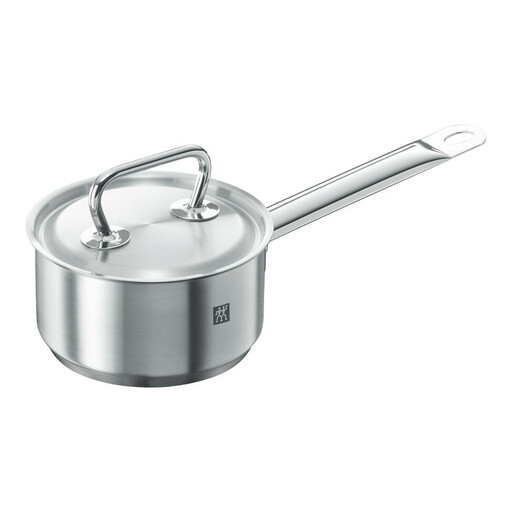
Why it suits this profile: This 1-litre saucepan is made from 18/10 stainless steel and designed for sauces, soups and small quantities. It also has an integrated measuring scale.
The uncoated stainless steel surface is listed as suitable for metal utensils. The encapsulated SIGMA-Classic base supports use on induction hobs.
18/10 stainless steel, lid, pouring rim, measuring scale and stated dishwasher and induction suitability.
We’ve put together a complete, regularly updated list of products that meet these strict selection criteria and fully comply with the safety regulations in force in the EU.
A 14 to 16 cm pan is often enough for milk and sauces. For two or three portions, 18 to 20 cm is a practical choice. For family meals or soups, a larger stockpot of around 24 cm or more is a good option. The key is to make sure the magnetic base matches the cooking zone.
Look for “suitable for induction” in the technical details, or check the list of compatible hob types. A magnet test on the base can give you an initial indication, but it doesn’t replace the manufacturer’s information. If a pan has an induction disc, make sure it is firmly attached and sits flat.
Its lifespan depends on the heat you use, your cooking utensils and how you clean it. Avoid heating it empty, using metal utensils and cleaning it with abrasive products. An uncoated stainless steel pan is more resistant to scratches, while a non-stick or ceramic coating can help prevent food from sticking if you care for it properly.