
Lieferung heute & morgen

Qualitätsgarantie

Willkommens-Angebote freischalten: KOSTENLOSE Lieferung | Bis zu 80 % RABATT | Kostenlose 30-Tage-JoyPlus-Testphase
App herunterladen
An induction pan needs to do more than just work on an induction hob. The right pan base, a suitable coating and a size that fits your household are all crucial. If you only focus on colour, discounts or marketing claims, you could easily end up with a pan that heats unevenly, is difficult to clean, or loses its non-stick performance after a short time.
This buying guide from the Joybuy Product Recommendation Officer shows what cooking enthusiasts and households in the UK should look for before making a purchase.
With induction hobs, the pan base is heated directly by the hob. If the base is significantly smaller or larger than the marked heating zone, heat distribution can be less even. A 20 cm pan, for example, is suitable for smaller portions, while a 28 cm pan offers more surface area for vegetables, meat or several eggs.
So pay attention to:
The Silit Belluna 20 cm is designed for a hob with a 14.5 cm diameter, according to the product information. For the 24 cm version, an 18 cm hob ring is recommended.
A coated pan can be made with PTFE, ceramic or other materials. The properties differ when it comes to heat, cleaning and care. A PTFE coating, such as that used on the Silit Belluna or WMF PermaDur, is designed for low-fat frying and easy cleaning, according to product information. It should not be heated empty or on a high setting for extended periods.
With a ceramic pan or a ceramic-coated aluminium pan, the Naturepan models advertise reinforcement with diamond and titanium particles. This is a material specification and does not replace individual testing of the coating in everyday use. Regardless of the coating type, it's best to use kitchen utensils made of wood, silicone or plastic.
Terms like PFAS-free pan, PTFE-free or PFOA-free should be checked directly in the product details. Not every "granite-style" or "ceramic" surface is automatically PFAS-free. For the relevant Naturepan and COOKER-KING models, such information is listed in the respective product details.
"Dishwasher-safe" does not mean that every wash cycle has no effect on the lifespan of the coating. Manufacturers often recommend hand washing with a soft sponge, even when a dishwasher-safe pan is advertised.
Equally important is the maximum temperature:
A plastic or Bakelite handle may stay cool on the hob, but it is not automatically suitable for high oven temperatures.
For a one- to two-person household, a 20 to 24 cm pan is often sufficient. A 28 cm frying pan is suitable for larger portions and daily use. High sides are practical for sauces, stews and vegetables. A sauté pan with a lid offers more volume than a flat frying pan.
For Asian dishes or larger quantities, a wok pan of 30 to 32 cm can be useful. However, with induction, pay particular attention to the base diameter: a wide rim does not necessarily mean an equally large heated surface area.
A non-stick pan often allows frying with little oil. This is a product feature and not a medical claim. For the longest possible lifespan, you should:
A pan with a lid is suitable for braising, steaming and keeping food warm on a low heat. A removable handle can save space, while a fixed plastic handle is usually straightforward for daily use.
A pan set with 20, 24 and 28 cm covers several portion sizes. It is particularly interesting if you regularly need multiple pans at the same time. However, check that you have enough storage space and that all sizes have the same temperature and care specifications.

Why this product fits the profile: The compact 20 cm size is ideal for smaller portions, omelettes and gentle frying. According to the product information, the pan is suitable for induction, gas, electric and ceramic hobs.
The specific hob recommendation of 14.5 cm makes size selection easier. The stated Silitan PTFE coating should still be protected from overheating and metal utensils.
Aluminium body, lightweight, even heat distribution according to product information, and a 5-year manufacturer's warranty on materials, workmanship and non-stick performance.
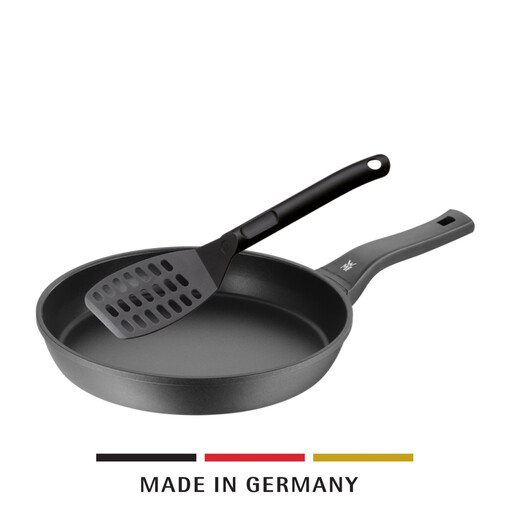
Why this product fits the profile: The 28 cm pan is designed for larger portions in daily use and comes with a suitable turner. The high rim helps with pouring off liquids.
The product information specifies the induction hob type, maximum heat resistance and a specific care instruction: use the high setting only for preheating, then fry on a medium setting.
Coated cast aluminium body, three-layer PermaDur coating according to product information, induction compatibility and a 5-year manufacturer's warranty.
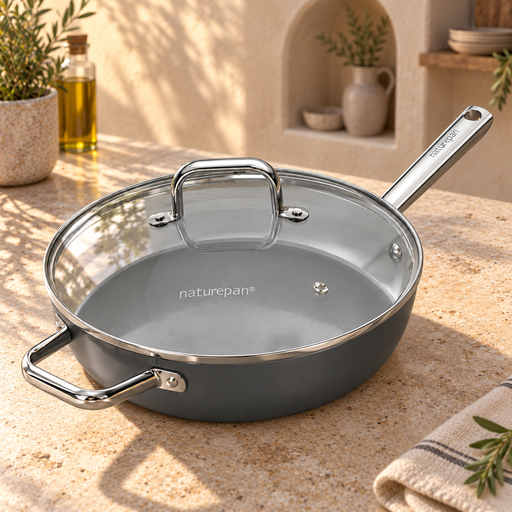
Why this product fits the profile: The high sides and included lid support sautéing, braising, steaming and one-pan meals. According to the product information, the ceramic-coated aluminium pan is suitable for induction.
The product details specify a body height of 7.5 cm, a lid, induction compatibility and an oven limit of 260 °C without the lid. This makes it easier to plan usage and temperature.
Ceramic coating with diamond and titanium reinforcement according to product information, lid included, dishwasher-safe; hand washing is recommended to preserve the coating.
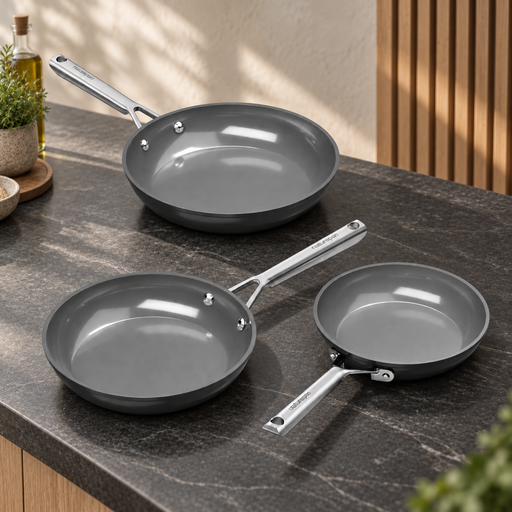
Why this product fits the profile: Three diameters allow you to choose according to portion and dish. The product description mentions a ceramic coating reinforced with diamond and titanium, as well as suitability for induction.
Instead of using one oversized universal pan for every task, you have 20, 24 and 28 cm available. This can make heat and portion selection easier in daily use.
Three sizes, PFAS-, PTFE- and PFOA-free coating according to product information, oven-safe up to 260 °C and dishwasher-safe.
We have compiled a complete, regularly updated list of products that fully meet these strict selection criteria and the safety regulations in force in the EU.
The key factor is the base diameter in relation to the heating zone. For small portions, 20 or 24 cm is practical. A 28 cm pan is better suited to multiple portions, provided the hob ring is large enough.
It is not possible to give a reliable fixed lifespan. It depends on heat, cooking utensils, cleaning and frequency of use. Low to medium heat, avoiding dry heating and gentle cleaning can help preserve the coating in daily use. Visible scratches or diminishing non-stick performance are signs that it's time to replace the pan.
No. In addition to the coating specification, you should check induction compatibility, base size, handle material, temperature limit and cleaning instructions. A PFAS-free pan may be unsuitable for your cooking habits if, for example, it does not have the right base diameter or a suitable lid.