
Lieferung heute & morgen

Qualitätsgarantie

Willkommens-Angebote freischalten: KOSTENLOSE Lieferung | Bis zu 80 % RABATT | Kostenlose 30-Tage-JoyPlus-Testphase
App herunterladen
An induction pan needs to do more than just work on an induction hob. The base area, material, coating, temperature limits and how easy it is to clean afterwards are all crucial factors. If you only look out for terms like "scratch-resistant" or "suitable for all hob types", you risk missing important details.
This buying guide from the Joybuy Product Recommendation Officer shows you which specifications really matter before buying a frying pan, and which models suit different households and cooking habits.
A 28 cm frying pan does not automatically have a 28 cm contact surface with the hob. The top diameter usually refers to the rim. For heat transfer on induction, however, the base diameter is what counts. The product data can reveal significant differences: a pan with a 28 cm rim may, for example, have a smaller base area and therefore be used less effectively on a large hob zone.
Many models are made from aluminium or stainless steel with a ceramic coating. That is different from a fully ceramic body. For your buying decision, concrete details about the base material and coating are what matter. A coated pan should also not be heated empty on a high setting for long periods. High temperatures, sudden temperature changes and metal utensils can all put stress on the surface.
A dishwasher-safe pan may be allowed in the machine according to the product information, but for many coated models, hand washing with mild washing-up liquid and a soft sponge is still recommended. Harsh detergents, extreme temperature changes and abrasive sponges can wear down the coating more quickly. "Dishwasher-safe" therefore describes a possible cleaning method, not necessarily the most sensible daily care routine.
A non-stick pan with a PTFE coating can be suitable for delicate foods such as eggs, fish or pancakes. Some products explicitly state "PTFE- and PFOA-free". You should always check these claims on the respective product page or packaging.
A ceramic pan – or a ceramic-coated aluminium pan – is often promoted for easy food release and reduced oil usage. That doesn't mean you can cook completely without fat. Models with a ceramic surface should generally be used at low to medium heat and with wooden, silicone or nylon utensils.
A stainless steel pan without a classic non-stick layer is more resistant to kitchen utensils, but requires more attention when it comes to temperature and the amount of fat. Multi-layer constructions with an aluminium core can improve heat distribution. Whether a surface is genuinely scratch-resistant should only be judged based on the manufacturer's specific information.
A pan for induction needs a suitable magnetic base. For the recommendations below, induction compatibility is stated according to the product description. Compatibility information is also given for gas, electric and ceramic hobs. For halogen or infrared hobs, you should check the manufacturer's information separately.
Oven suitability also varies:
Handles, lids and coatings can have different temperature limits than the pan body. You must check these specifications before using the pan in the oven.
A pan set with 20, 24 and 28 cm sizes can replace several individual purchases. Before buying, however, you should check whether you have enough storage space and whether you will actually use all three sizes regularly.
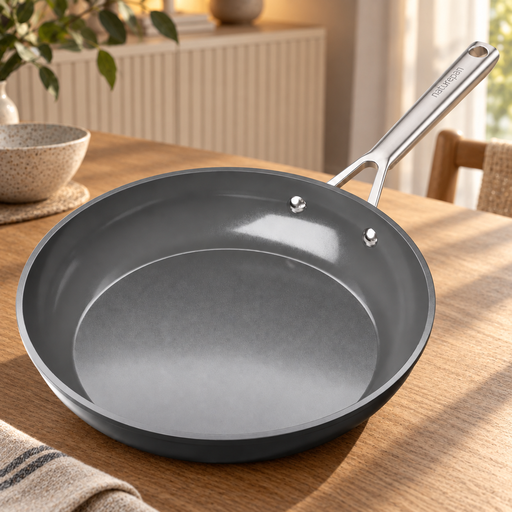
Why this product suits the profile: This 28 cm aluminium pan is stated as suitable for induction, gas, electric and ceramic hobs, covering typical everyday dishes.
The product data specifies the material, diameter and suitable hob types concretely. The recommended use at low to medium heat reduces unnecessary stress on the coating.
Ceramic-coated aluminium body, stainless steel handle and stated suitability for multiple hob types.
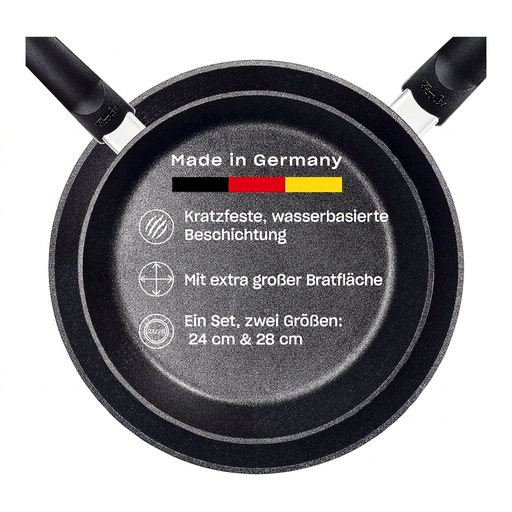
Why this product suits the profile: The set combines two frequently used sizes and is described as a scratch-resistant aluminium pan with non-stick coating.
The 24 cm and 28 cm sizes are clearly stated. This allows you to choose the pan according to portion size, rather than using a single unsuitable measurement.
Two-piece set, aluminium construction, non-stick coating and stated induction suitability.
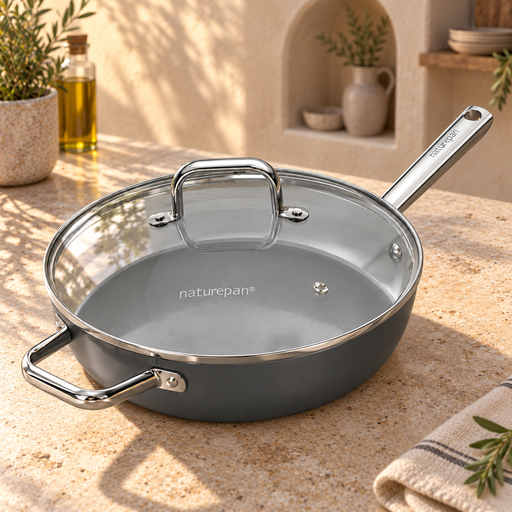
Why this product suits the profile: The high sides and included lid make this sauté pan interesting for sauces, stews and one-pan dishes.
The product description explicitly states the 7.5 cm height, the lid, the hob types and the oven limit of 260 °C.
High rim, glass lid, ceramic-coated aluminium body and stated suitability for induction, gas, electric and ceramic hobs.
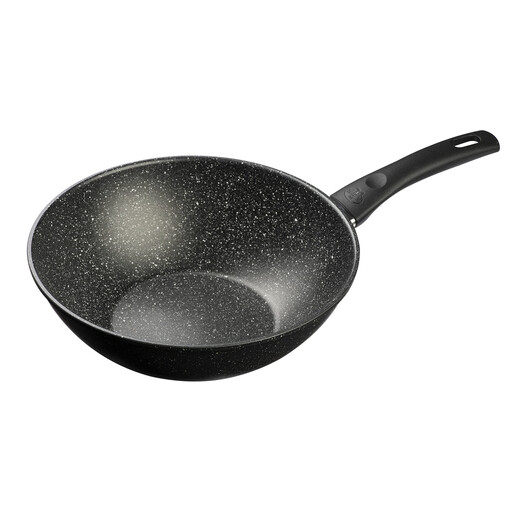
Why this product suits the profile: According to the product description, the wok shape is suitable for Asian dishes, pasta, and for searing and tossing vegetables, fish and meat.
The specifications clearly distinguish between wok shape, coating, induction suitability and the maximum oven temperature of 160 °C.
28 cm aluminium body, four-layer Nerolite non-stick coating and stated suitability for all common hob types.
We have put together a complete, regularly updated list of products that fully meet these strict selection criteria and the safety regulations in force in the EU.
For smaller portions, a 24 cm pan is often sufficient. A 28 cm frying pan offers more surface area for vegetables, meat or multiple portions. It is important that the base diameter matches the diameter of the induction zone you are using.
The lifespan depends on heat, utensils, cleaning and frequency of use. It is not possible to give a reliable general figure. If you avoid overheating, metal utensils and abrasive cleaning, you will reduce the typical stresses on the coating.
That depends on the individual model. Some products are explicitly marked as dishwasher-safe. However, hand washing with mild detergent is still often recommended to preserve the coating. The product information for the specific model is what counts.