Joybuy Insights

Induction Cookware Selection Guide

Buying a new induction pan seems simple. But disappointment often follows: the heat distributes unevenly, the fried egg burns in the middle while the edge is still raw, or the expensive non-stick pan loses its effectiveness after just a few months. Many of these problems arise from clever marketing promises that conceal significant technical flaws. Before you make a decision, you should know the most common pitfalls.

  • Pitfall 1: The "Suitable for all hobs" seal. Many pans carry this label, but their performance on an induction hob is often subpar. A base that is too thin or insufficiently ferromagnetic leads to slow heating, wasted energy, and uneven cooking results.
  • Pitfall 2: Short-lived non-stick coatings. A coating that works perfectly at first can quickly scratch or lose its non-stick properties, especially with daily use, due to improper manufacturing or material choice.
  • Pitfall 3: Misleading claims about harmful substances. The "PFOA-free" label is now standard. However, PFOA is just one of thousands of chemicals in the PFAS group. A truly health-conscious choice considers whether a pan is completely PFAS-free.

What Really Matters: The Decisive Features of a Good Induction Pan

To avoid a bad purchase, you should focus on objective, technical criteria rather than advertising claims. Three aspects are crucial for the performance and longevity of an induction pan.

The Base: The Heart of an Induction Pan

The most important component of an induction pan is its base. For the hob's magnetic field to generate heat, the base must be ferromagnetic. But that alone is not enough.

  • Thickness and Construction: A thick, multi-layered base (often called a "sandwich base") made of different metals, such as stainless steel and an aluminium core, retains heat better and distributes it evenly across the entire cooking surface. This prevents hot spots and ensures consistent cooking results. A solid base also prevents the pan from warping at high temperatures.
  • Flatness: The pan's base must lie completely flat on the hob to ensure maximum energy transfer.

Material and Coating: An Objective Comparison

The choice of material and coating largely depends on your cooking habits and priorities.

  • Classic Non-Stick Pan (PTFE): These pans offer excellent non-stick properties, making them ideal for delicate foods like fish or eggs. However, they are sensitive to heat (usually up to 260°C) and prone to scratches. Look for the PFOA-free label, but be aware that other PFAS substances may still be present.
  • Ceramic Pan: A ceramic pan is often completely PFAS-free and can withstand higher temperatures. Its non-stick effect may diminish more quickly than high-quality PTFE coatings with intensive use or improper care (e.g., cleaning in the dishwasher).
  • Stainless Steel Pan: A stainless steel pan is extremely durable, robust, and often oven-safe to high temperatures. It is ideal for searing meat. It has no factory-applied non-stick coating, so more fat and a certain technique are required to prevent food from sticking.

Practical Extras: Oven-Safe and Dishwasher-Safe?

Two frequently advertised features require a closer look:

  • Oven-Safe: Check the exact temperature limit. A pan is only as oven-safe as its weakest component—usually the handle. Plastic handles often limit oven suitability to below 80°C, while stainless steel handles allow for much higher temperatures.
  • Dishwasher-Safe: Even if a coated frying pan is declared dishwasher-safe, the lifespan of the non-stick layer can be shortened by aggressive detergents and high temperatures in the dishwasher. Gentle hand washing is generally recommended for coated pans.

Our Selection: Suitable Induction Pans for Different Needs

Based on these objective criteria, we have identified several models that are suitable for different user profiles and requirements.

MATCH FOR: Budget-Conscious Beginners
Silit Belluna 20 cm Induction Compatible Frying Pan, Aluminum Coated, Plastic Handle, for Gentle Sautéing, Blue

Silit Belluna 20 cm Induction-Compatible Frying Pan

Why This Fits Their Persona: Ideal for singles or small households who need a reliable and affordable pan for everyday dishes like scrambled eggs or sautéing vegetables. Its compact size is practical and space-saving.

How It Avoids the Trap

The aluminium body ensures fast and even heat distribution, counteracting the pitfall of poor heat regulation in budget-friendly pans. The Silitan coating comes from an established manufacturer.

Key Advantage & Pros

Good non-stick properties for low-fat cooking. Easy to handle and simple to clean. Suitable for all hob types, including induction.
MATCH FOR: Quality-Focused Home Chefs
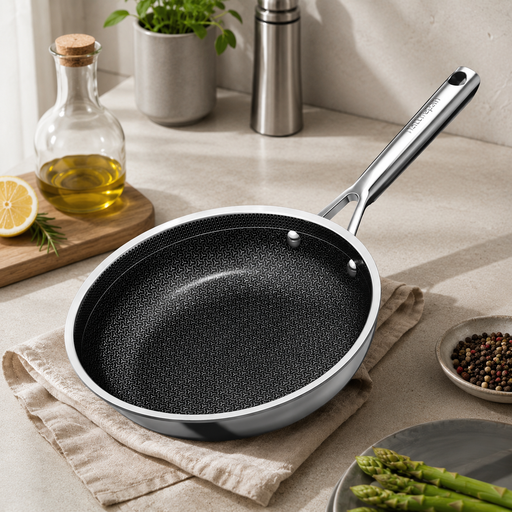
naturepan Hybrid Ceramic Frying Pan 28cm, 5-Ply Diamond-Titanium Nonstick Stainless Steel Pan, Hexagon Surface, Dishwasher Safe & Oven Safe

naturepan Hybrid Ceramic Frying Pan 28 cm

Why This Fits Their Persona: Perfect for ambitious cooks looking for a versatile and durable **28 cm pan** for daily use. It's suitable for searing steaks as well as for more delicate dishes and is completely free of harmful substances.

How It Avoids the Trap

The 5-ply construction with a stainless steel core prevents warping and guarantees excellent, even heat distribution on induction. The coating is explicitly PFAS, PFOA, and PTFE-free, thus avoiding the trap of misleading substance claims.

Key Advantage & Pros

The laser-etched hexagon pattern combines the benefits of stainless steel (searing) and non-stick ceramic. High scratch resistance and oven-safe up to 260°C.
MATCH FOR: Dessert & Sweet Treat Specialists
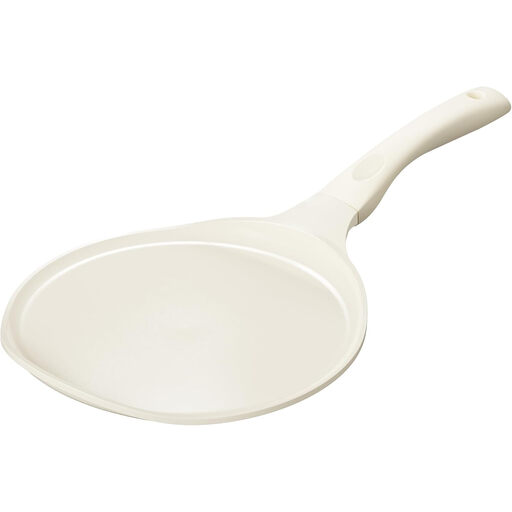
Redchef Starlight Series 26cm Pancake Crepe Pan, White Exterior & Interior

Redchef Starlight Series 26 cm Crêpe Pan

Why This Fits Their Persona: For anyone who loves making perfect, paper-thin crêpes or golden-brown pancakes. The special design of this **crêpe pan** is tailored exactly for this purpose.

How It Avoids the Trap

Unlike all-purpose pans, the flat base ensures absolutely even heat distribution, which is essential for crêpes. The PFAS-free ceramic coating provides peace of mind when preparing food for the whole family.

Key Advantage & Pros

Very lightweight (approx. 700g), which makes swirling and flipping easy. The low rim allows crêpes to slide effortlessly out of the pan. Works on all hob types.

Looking for More Options?

We have compiled a complete, real-time list of products that fully satisfy these strict selection criteria and UK safety regulations.

Frequently Asked Questions (FAQ)

How can I tell if a pan is suitable for induction?

The easiest way is the magnet test: hold a magnet to the bottom of the pan. If it sticks firmly, the pan is ferromagnetic and therefore suitable for induction. Additionally, induction-compatible pans usually have a symbol resembling a coil or a lightning bolt on the base or packaging.

How do I extend the life of my coated pan?

To protect the non-stick coating, you should follow a few basic rules:

  1. Only use utensils made of wood, silicone, or plastic.
  2. Never heat the pan empty on the highest setting.
  3. Allow the pan to cool completely after use before cleaning it with water.
  4. Clean the pan by hand with a soft sponge and mild washing-up liquid.

Is a heavy stainless steel pan always the better choice for induction?

Not necessarily. Weight alone is not a mark of quality. The construction of the base is the crucial factor. A heavy stainless steel pan often has a thick sandwich base that retains and distributes heat excellently. However, there are also lighter aluminium pans with a high-quality, thick induction base that perform very well. More important than the total weight is a solid, flat base that ensures efficient energy transfer.