
Lieferung heute & morgen

Qualitätsgarantie

Willkommens-Angebote freischalten: KOSTENLOSE Lieferung | Bis zu 80 % RABATT | Kostenlose 30-Tage-JoyPlus-Testphase
App herunterladen
A high-quality stainless steel pan for an induction hob promises durability, excellent searing results, and easy cleaning. But the market is flooded with products whose marketing promises often don't hold up in practice. Many home cooks invest in a pan that warps after a short time, heats unevenly, or has a coating that quickly wears off. Before you make a decision, it's crucial to know the common pitfalls and understand which technical features truly matter.
As your Joybuy Product Recommendation Officer, I'm here to help you separate fact from marketing hype. This guide will show you the three most common mistakes when buying a stainless steel pan and explain which parameters you need to look for to find a model that fits your needs.
The selection can be overwhelming. Many buyers focus on superficial features and overlook crucial technical details.
To avoid a costly mistake, you should focus on the technical fundamentals. These three criteria determine the performance and longevity of your new pan.
For a pan for induction, the construction of the base is the most important quality feature. Look for a so-called multi-ply base (often referred to as a "sandwich base" or "3-ply").
The choice of surface should depend on your cooking habits.
Pay attention to details that make daily use more comfortable and safer.
Here are some models that represent a considered choice for specific user profiles based on their objective features.
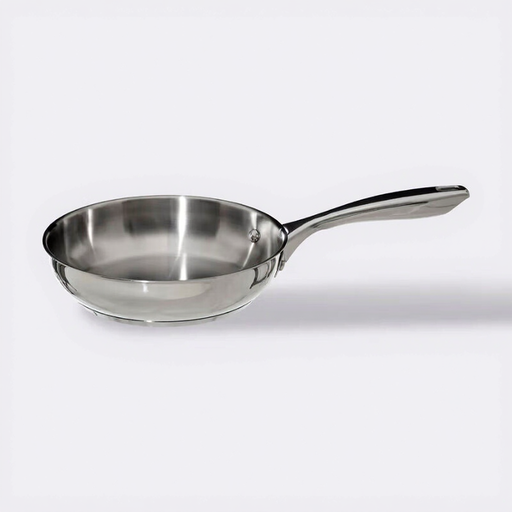
Why This Fits Their Persona: Ideal for one to two-person households or as a first uncoated pan. It focuses on core functions—robustness and heat tolerance—without costly extras and is perfect for learning how to fry on stainless steel.
As a purely uncoated pan, there are no misleading promises about delicate coatings. Its strength lies in its material honesty and durability.
Robust stainless steel construction for high temperatures and searing. The base with an aluminium core is designed for all hob types, including induction. Dishwasher-safe.
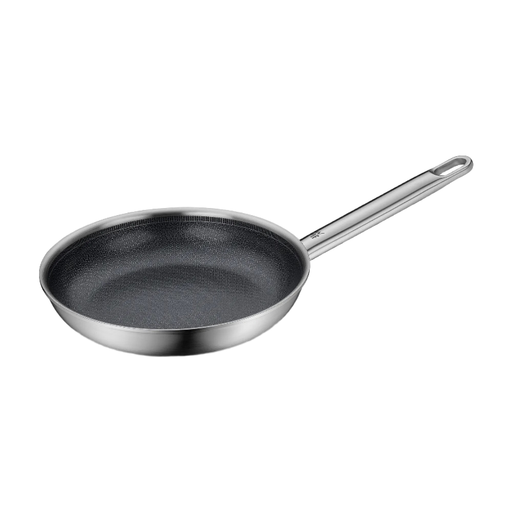
Why This Fits Their Persona: For ambitious home cooks who appreciate the robustness of stainless steel but don't want to sacrifice the convenience of a non-stick surface. A well-designed solution for daily, versatile use.
It resolves the "coated vs. uncoated" conflict with a hybrid structure. The WMF Protection Grid made of stainless steel protects the underlying non-stick coating, significantly increasing its scratch resistance.
Multi-layer material with Cromargan stainless steel and an aluminium core for optimal heat distribution. The PermaDur non-stick coating in a honeycomb structure is durable and oven-safe.
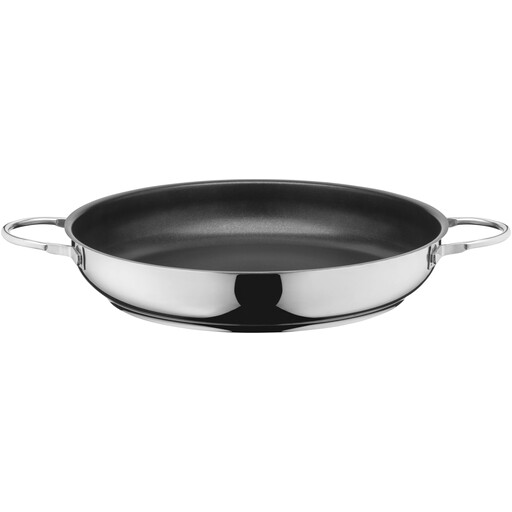
Why This Fits Their Persona: Perfect for preparing larger quantities, one-pot meals, or as a **stainless steel braising pan**. The side handles save space in the cupboard and on the table, making it ideal for serving directly from the pan.
Instead of being a compromise all-rounder, this model is clearly positioned as a versatile serving and braising pan due to its size (32 cm) and shape. It serves a specific, practical purpose for families and frequent cooks.
Large diameter and high oven-safe temperature (up to 260°C). The SiliTherm universal base ensures energy-efficient heat distribution on induction. The 3-layer Silitan non-stick coating simplifies cooking and cleaning.
We have compiled a complete, up-to-date list of products that fully meet these strict selection criteria and German safety regulations.
1. Why is my pan warping on the induction hob? Warping is usually caused by thermal stress when a thin or poorly constructed pan base is heated unevenly. Powerful induction hobs generate high temperatures very quickly. A high-quality, thick multi-ply base is more dimensionally stable and distributes heat more evenly, which minimises this problem.
2. How do I properly care for an uncoated stainless steel pan? Before the first use, the pan should be cleaned thoroughly. When frying, it's important to first heat the pan to a medium temperature, then add the oil and let it get hot as well before adding the food. This creates a natural non-stick effect. For cleaning, hot water and a sponge are usually sufficient. For stubborn residues, you can bring water with a little washing-up liquid to a brief boil in the pan.
3. Are stainless steel pans dishwasher-safe? Most uncoated stainless steel pans are dishwasher-safe. For coated models, many manufacturers recommend hand washing to maximise the lifespan of the non-stick surface, even if they are declared dishwasher-safe. Always refer to the specific care instructions from the manufacturer.