
Lieferung heute & morgen

Qualitätsgarantie

Willkommens-Angebote freischalten: KOSTENLOSE Lieferung | Bis zu 80 % RABATT | Kostenlose 30-Tage-JoyPlus-Testphase
App herunterladen
Preparing daily meals often needs to be quick, but without sacrificing nutrition or flavour. In kitchens with modern induction hobs, efficient cookware is particularly in demand. An induction pressure cooker can be a valuable addition, as it significantly reduces cooking time for dishes like goulash, stews, or legumes while also lowering energy consumption.
This article serves as a guide for when you're looking to buy a pressure cooker. We'll explain the key features to look for and present a selection of models suitable for use on induction hobs.
Choosing the right model depends on your individual cooking habits and household needs. The following three criteria will help you make your decision.
Most high-quality pressure cookers are made of stainless steel, often an 18/10 alloy. This material is rust-proof, flavour-neutral, hygienic, and easy to clean. The base of the pot is crucial for induction compatibility. A ferromagnetic base—often designed as a sandwich or encapsulated base (e.g., with an aluminium core between stainless steel layers)—is necessary for the pot to be recognised by the induction hob and to conduct heat quickly and evenly.
The volume of a pressure cooker is measured in litres. For a one to two-person household, models with 3 to 4.5 litres are often sufficient. Families or those who enjoy meal prepping for several days are well-served with a 6-litre pressure cooker or larger. Some manufacturers also offer a pressure cooker set, which includes two pots of different sizes and a single compatible lid. This provides maximum flexibility for various dishes and quantities.
Modern pressure cookers are equipped with multi-stage safety systems. These include a locking mechanism that prevents opening under pressure, a pressure-regulating valve, and a pressure indicator. Look for a clearly visible indicator that shows the current pressure status inside the pot. A pressure cooker with a steamer insert further expands its functionality. This accessory allows you to gently steam vegetables, fish, or dumplings, which helps to better preserve vitamins and nutrients.
Based on the criteria mentioned, we have compiled a selection of models that stand out for their material quality, functionality, and suitability for induction hobs.
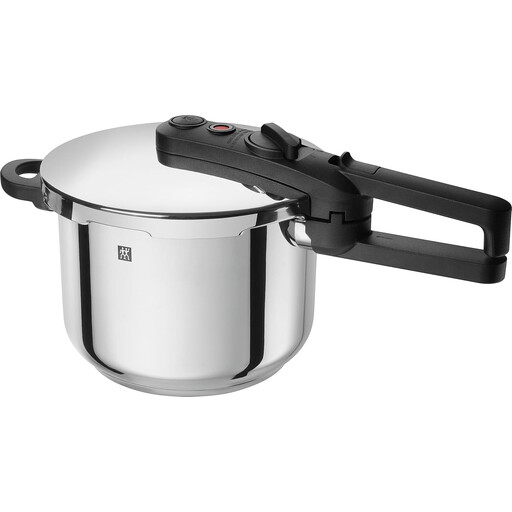
Why it stands out The ZWILLING EcoQuick II combines a robust 18/10 stainless steel construction with thoughtful features. Its Sigma Classic sandwich base ensures excellent heat distribution and is optimised for all hob types, including induction. Two adjustable pressure levels allow for both rapid cooking at high pressure and gentle cooking at a lower pressure.
Pros
Who is it for? This model is a great choice for households looking for a reliable and versatile single pressure cooker for daily use. It is suitable for anyone who values solid build quality and straightforward operation.
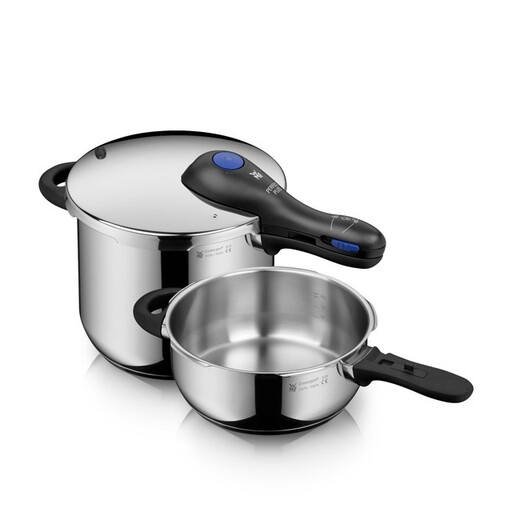
Why it stands out This pressure cooker set from WMF offers great flexibility with two pots (6.5 and 3 litres) that can be used with the same lid. The TransTherm universal base conducts heat quickly and retains it for a long time, promoting energy-efficient cooking. It is conveniently operated via a one-hand control dial on the detachable handle.
Pros
Who is it for? The WMF pressure cooker set is aimed at ambitious home cooks and families who appreciate a versatile setup for different quantities and dishes. Those who prefer flexibility and an established brand will find this a suitable solution.
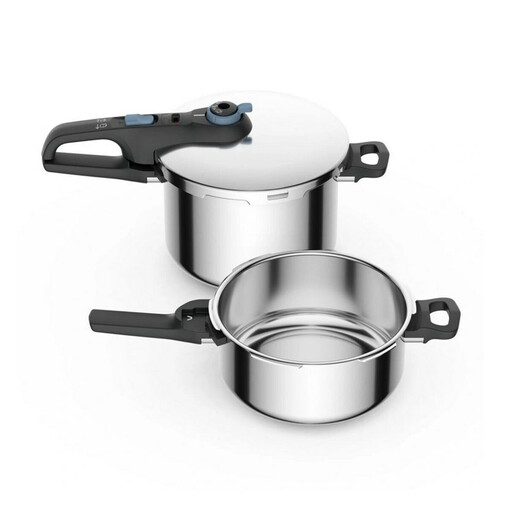
Why it stands out The Tefal Secure Trendy is designed as a practical kitchen helper. It is made of durable stainless steel and equipped with multiple safety systems. An included cooking basket makes it a pressure cooker with a steamer insert, qualifying it for gentle cooking methods. Its universal hob suitability makes it a flexible tool in any kitchen.
Pros
Who is it for? This model is suitable for users looking for a functional and straightforward pressure cooker that can also be used as a steamer. It's a good option for anyone who prefers an all-in-one solution for different cooking methods.
The models presented here cover common requirements. However, the market offers an even greater variety of sizes, features, and designs. If you want to compare other alternatives or are looking for specific functions, it's worth exploring the entire range.
Discover our full range of pressure cookers and find the perfect model for your kitchen.
A pressure cooker works on an induction hob when an electromagnetic field from the hob directly heats the pot's ferromagnetic base. This direct energy transfer is very efficient and fast. The prerequisite is that the pot's base is made of a magnetisable material like stainless steel or cast iron.
By building up pressure, the boiling point inside the pot rises above 100°C. This significantly shortens the cooking time compared to conventional cooking. Shorter cooking times and minimal oxygen exposure can help to better preserve heat-sensitive vitamins and nutrients in food.
Most stainless steel pressure cooker pots are dishwasher-safe. However, the lid, handle, and sealing ring should generally be cleaned by hand to protect the sensitive safety mechanisms and seals. Always follow the manufacturer's specific care instructions. The sealing ring should be regularly checked for wear and replaced if necessary.