
Lieferung heute & morgen

Qualitätsgarantie

Willkommens-Angebote freischalten: KOSTENLOSE Lieferung | Bis zu 80 % RABATT | Kostenlose 30-Tage-JoyPlus-Testphase
App herunterladen
By the Joybuy Product Recommendation Officer, July 18, 2026
Preparing nutritious and delicious meals can be a daily challenge, especially when time is short. A suitable pot designed specifically for modern induction hobs can significantly simplify and speed up the cooking process. Whether for a hearty stew, a tender braised dish, or a quick soup, having the right equipment is crucial.
This guide is designed to help you choose the right pot for your induction hob. We will introduce various models and explain the key features to help you make an informed decision that suits your cooking habits and kitchen needs.
Before you decide on a model, there are several technical and practical aspects to consider. These criteria will help you evaluate a pot's functionality and suitability for your needs.
A crucial feature for an induction pot is a ferromagnetic base. Only pots with a magnetic bottom can absorb energy from the induction field and convert it into heat. Stainless steel pressure cookers, often made from alloys like 18/10 (304 stainless steel), are a popular choice due to their durability, rust resistance, and hygienic properties. Look for a thick, multi-layered sandwich base that distributes and retains heat evenly, which is advantageous for braised dishes and stews.
The size of the pot should be tailored to the number of people in your household and your typical cooking quantities.
A modern and safe pressure cooker features multiple independent safety systems. A pressure cooker operates under high pressure, so these features are non-negotiable. Important functions include a lid-locking system that prevents opening under pressure, a pressure-regulating valve to control the operating pressure, and at least one additional safety valve that automatically releases steam in case of excessive pressure build-up. A visual pressure indicator shows when the pot is pressurised and when it is safe to open.
Here is a selection of models that stand out for their material quality, functionality, and suitability for induction hobs.
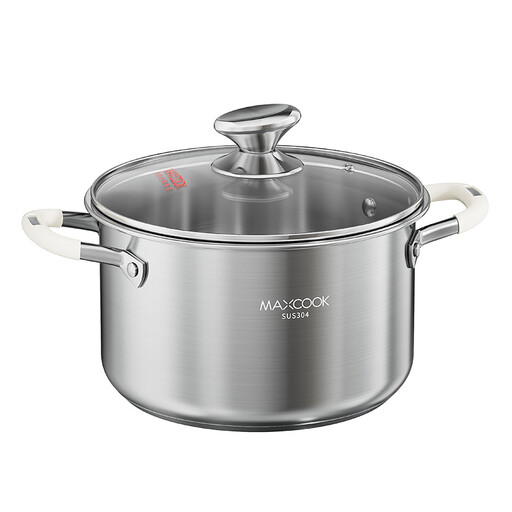
Why This Model Stands Out This pot is a classic induction stockpot that stands out for its robust construction and thoughtful details. It is not a pressure cooker, but a versatile alternative for dishes that require slow simmering over low to medium heat.
Advantages
Who It's For This model is ideal for home cooks looking for a reliable and durable pot for preparing soups, stews, and braised dishes, who prefer to avoid the complexity of a pressure cooker.
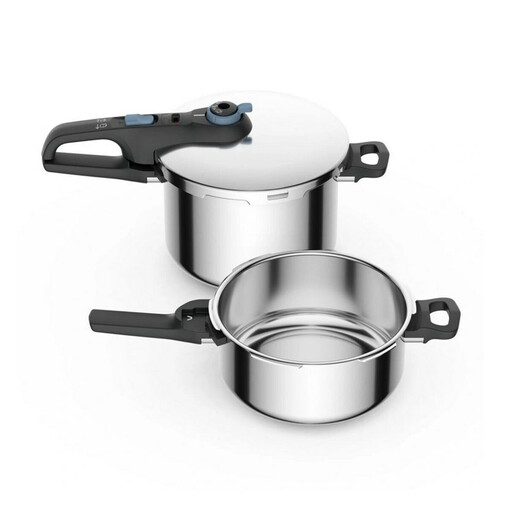
Why This Model Stands Out The Tefal pressure cooker is a classic pressure cooker designed for efficiency and safety. With its advanced safety systems and robust stainless steel construction, it is a reliable partner for quick cooking.
Advantages
Who It's For This model is aimed at busy families and anyone who values quick and healthy meal preparation. Its availability in different sizes (4L and 6L) makes it flexible for various household sizes.
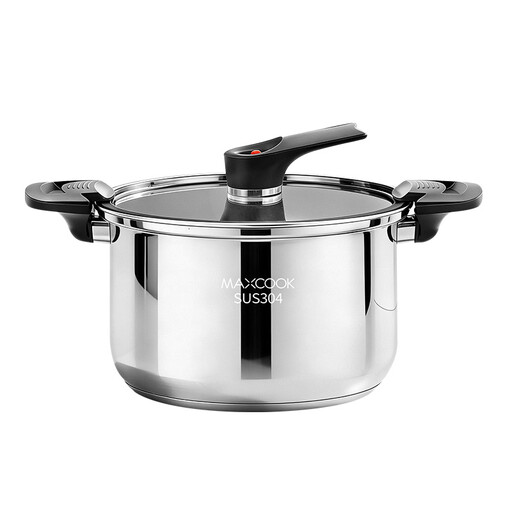
Why This Model Stands Out This 6L pressure cooker operates with a micro-pressure system. It represents a middle ground between a conventional stockpot and a high-pressure cooker. The lower pressure allows for shorter cooking times and makes meat exceptionally tender, while handling remains straightforward.
Advantages
Who It's For This pot is a great choice for users who want to shorten cooking time but find traditional high-pressure cookers too complex to handle. It is excellent for tender braised dishes.
For specialised cooking tasks or to complement your new pressure cooker, a smaller pot could also be useful. Discover our selection of milk pots with lids to find the perfect additions for your kitchen.
A pressure cooker works on an induction hob as the hob's electromagnetic field directly heats the pot's ferromagnetic base. This direct energy transfer is highly efficient and allows for rapid heating. The prerequisite is that the pot's base must be magnetic, which is the case for most modern stainless steel pots designed for induction.
Pressure cooking can help preserve nutrients. Due to the shorter cooking times and the smaller amount of water required, heat- and water-soluble vitamins, such as vitamin C and some B vitamins, are better retained than with longer cooking methods that use a lot of water. The airtight seal also prevents the oxidation of nutrients.
The right size depends on your household size. As a rule of thumb: for 1–2 people, a 3–4 litre pot is sufficient. For a family of 3–4, a model with around 6 litres is a good all-round size, also adequate for preparing larger quantities like stews or soups. For larger households or ambitious meal preppers, pots of 8 litres or more are worth considering.