
Lieferung heute & morgen

Qualitätsgarantie

Willkommens-Angebote freischalten: KOSTENLOSE Lieferung | Bis zu 80 % RABATT | Kostenlose 30-Tage-JoyPlus-Testphase
App herunterladen
An induction pressure cooker can cook soups, stews, pulses, vegetables and meat under pressure. To make sure it’s a worthwhile long-term addition to your kitchen, don’t focus solely on the brand and capacity. You’ll also need to consider hob compatibility, ease of use, safety features and cleaning. It’s also important to understand the difference between a traditional pressure cooker and a pot that uses only gentle micro-pressure.
Not every stainless steel or cast iron pot will work on an induction hob. Look for an explicit statement that it’s suitable for induction, and check that the base sits flat on the hob. Multi-layer or encapsulated bases can help distribute heat more evenly. For the products mentioned here, terms such as TransTherm and SIGMA Classic describe the manufacturer’s particular base design.
A pressure cooker mustn’t be filled to the brim. Many dishes need room for steam and foaming. So a 6-litre pressure cooker doesn’t offer six litres of usable cooking capacity. A 4 to 4.5-litre model may be enough for two or three people. Families and households that batch-cook portions may be better off with a 6-litre or 6.5-litre pressure cooker.
An induction pressure cooker operates at a higher pressure and typically has adjustable cooking settings. A micro-pressure pot, on the other hand, creates less pressure. It may be suitable for slow-cooked dishes, but it isn’t automatically the same as a traditional pressure cooker. Consider whether you want shorter cooking times using defined pressure settings or gentler slow cooking.
A stainless steel pressure cooker made from 18/10 stainless steel typically contains 18% chromium and 10% nickel. This material specification is given for the WMF, Fissler and ZWILLING models mentioned here. However, it doesn’t tell you anything about the handles, seal, base or how easy the cooker is to clean.
Also look for:
A pressure cooker with 2 cooking settings lets you choose between a gentler and a more intense setting. According to the product information, the WMF Perfect Plus One Pot reaches 110 °C on the gentle setting and 119 °C on the intense setting. The ZWILLING and Fissler models in our selection also have two pressure or cooking settings.
A clear pressure indicator makes it easier to monitor the cooker while it’s in use. A pressure cooker with a safety valve or an additional residual-pressure lock should only open once the pressure inside has fallen sufficiently. Even so, you should always read the relevant instruction manual before use.
Removable handles make a pressure cooker easier to clean and store neatly. If you choose a pressure cooker set with two pots, a shared lid can also save storage space. Before you buy, check whether replacement sealing rings and safety-critical parts are available, and how often they should be inspected.
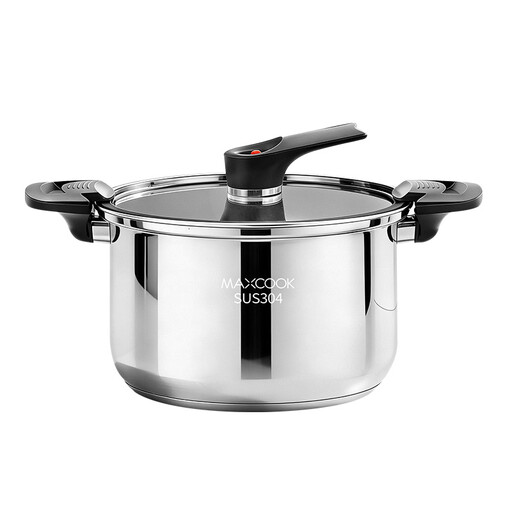
Why it suits this household: This 6-litre pot is for households looking for an induction-compatible stainless steel casserole pot that uses gentle micro-pressure. It’s explicitly not a traditional high-pressure cooker.
The product information clearly distinguishes micro-pressure from traditional high pressure, so you can get a realistic idea of how it works before buying.
304 stainless steel, 6-litre capacity and a bonded base suitable for induction, gas, electric and ceramic hobs.
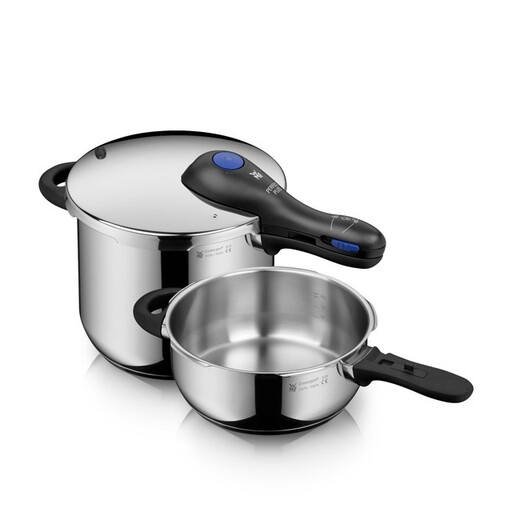
Why it suits this household: This pressure cooker set combines a 6.5-litre pressure cooker with a 3-litre casserole pan and a shared lid. It’s a versatile choice for households that cook different quantities.
The two cooking settings, large cooking indicator and stated residual-pressure lock make key operating and safety features clear.
18/10 Cromargan stainless steel, TransTherm base and compatibility with induction, gas and ceramic hobs. The handle is removable.
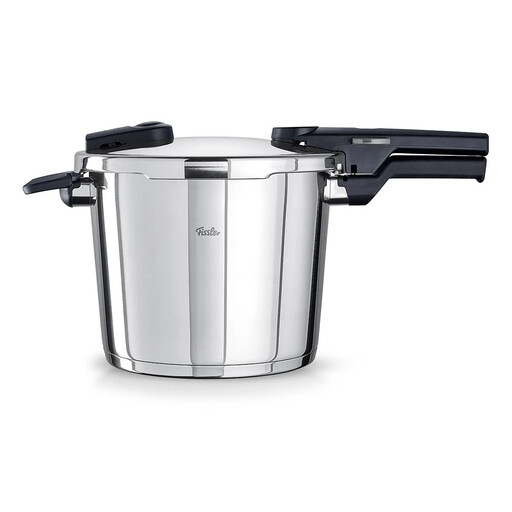
Why it suits this household: This pressure cooker works on all hob types and is designed for regular family meals. It offers two cooking settings and a 6-litre capacity.
The positioning aid and locking indicator help prevent a common mistake: putting the lid on incorrectly or failing to close it properly.
18/10 stainless steel, Superthermic base, removable handle and a 3-year manufacturer’s warranty, according to the product information.
We’ve put together a complete, regularly updated list of products that meet these strict selection criteria and fully comply with the safety regulations applicable in the EU.
Choose a model whose product description explicitly states that it’s suitable for induction and that has a flat, magnetic base. A pressure cooker suitable for all hob types can also be used on gas, electric and ceramic hobs. Before using it for the first time, check the manufacturer’s guidance against the size of your induction cooking zone.
Its lifespan depends on the materials, how often it’s used, how it’s cleaned and the condition of the sealing ring, valve and handle. A stainless steel body and removable handles can make it easier to care for. Seals are wear-and-tear parts, so check them regularly for cracks, deformation or loss of elasticity, and replace them when needed.
A pressure cooker can shorten cooking times compared with cooking in an open pot, as pressure and temperature rise inside the sealed cooker. Actual energy use depends on the recipe, how much you’re cooking, the hob, preheating and the cooking setting. For a fair comparison, use the same dish and quantity, and include the energy used to keep it warm.