
Lieferung heute & morgen

Qualitätsgarantie

Willkommens-Angebote freischalten: KOSTENLOSE Lieferung | Bis zu 80 % RABATT | Kostenlose 30-Tage-JoyPlus-Testphase
App herunterladen
A high-quality sauté pan is the cornerstone of many kitchens. It's incredibly versatile, handling everything from searing a goulash to gently steaming vegetables. However, the search for a 28 cm sauté pan for induction is fraught with pitfalls that can quickly turn a supposed investment into a costly mistake. Many products promise durability and perfect results, but reality often tells a different story.
As a Joybuy Product Recommendation Officer, I analyse product information daily to provide you with objective, practical guidance. In this guide, I'll reveal the three most common defects that drastically shorten a pan's lifespan and explain what you need to look for to make an informed decision.
Before you make a purchase, you should be aware of the typical weaknesses that often only become apparent after a few months of use.
To avoid these problems, you should focus on three core features when making your selection. These define the quality and longevity of a deep pan for induction.
The most important component of an induction pan is its base. Look for a fully ferromagnetic base or a thick, encapsulated sandwich base with an aluminium or copper core. This construction ensures fast, even heat distribution across the entire cooking surface and optimal energy transfer from the hob. A solid base also retains heat better, which is ideal for braising at a constant temperature.
The material determines the pan's thermal properties and weight. A cast aluminium pan offers excellent heat conductivity at a moderate weight and is a superb all-rounder.
There have been significant advancements in coatings in recent years. Alongside traditional PTFE coatings, PFAS-free ceramic pans are gaining prominence. These are considered non-toxic as they are made without per- and polyfluoroalkyl substances. A high-quality ceramic or titanium-reinforced coating is also more resistant to scratches and abrasion.
A true sauté pan is distinguished by its high sides. This not only prevents splatters when searing but also provides ample volume for sauces, stews, and casseroles. A frying pan with a lid is essential for keeping moisture and heat locked in. Also, check if it is an oven-safe pan. Models with stainless steel or removable handles allow for use in the oven, significantly expanding your cooking possibilities.
Based on the criteria above, we have selected a few products from our range that are suitable for different user profiles.
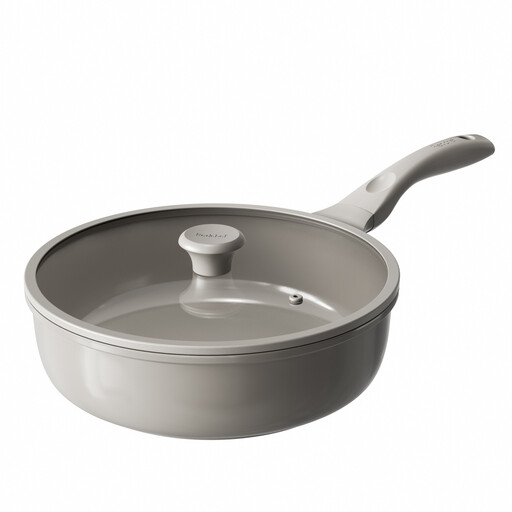
Why This Fits Their Persona: Ideal for home cooks looking for a reliable and versatile pan for daily use. With its high sides and matching glass lid, it's perfect for a wide range of dishes, from fried potatoes to pot roasts.
According to the manufacturer, the robust aluminium construction ensures fast and even heat distribution, avoiding the typical hot spots of inefficient bases. The ceramic coating is PFOA/PFOS-free, making it a durable alternative to coatings that wear out quickly.
Healthy ceramic non-stick coating; suitable for all hob types including induction; riveted handles for a secure grip.
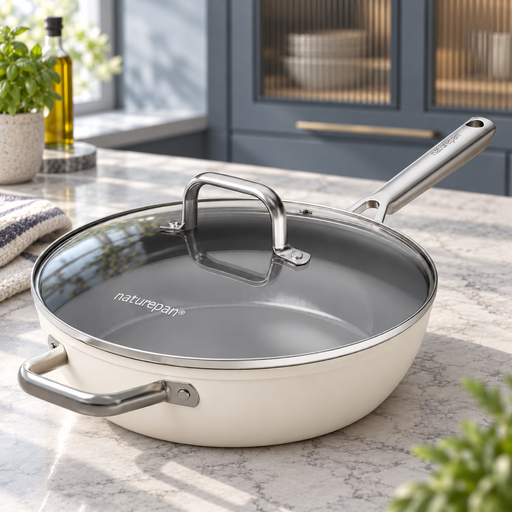
Why This Fits Their Persona: Perfect for users who place the highest value on non-toxic materials and maximum functionality. The explicitly PFAS-free coating and high oven-safe temperature make it the first choice for sophisticated, worry-free cooking.
The ceramic coating, reinforced with diamond and titanium particles, is extremely durable and resistant according to the manufacturer. Its high oven-safe temperature of up to 260°C and the stainless steel handle bypass the typical weaknesses of plastic handles.
PTFE/PFOA/PFAS-free ceramic coating; high oven-safe temperature (up to 260°C); optimised base for fast, even heat distribution.
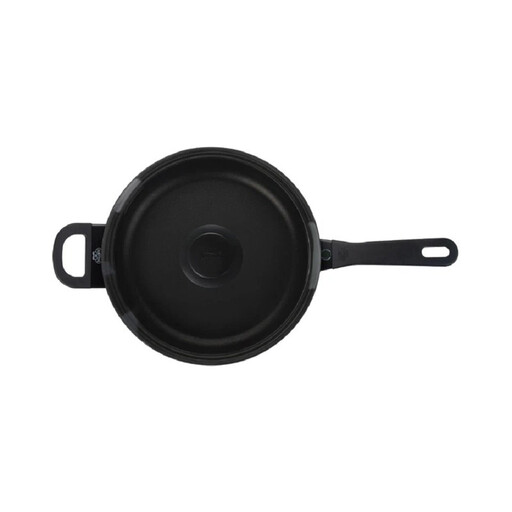
Why This Fits Their Persona: For ambitious cooks seeking a specialised tool with brand-name quality. The sauté pan design with two handles is ideal for tossing ingredients and serving directly at the table. The robust coating and Thermopoint are features designed for precision cooking.
The 4-layer KERAVIS Extreme non-stick coating from Ballarini is designed for durability and scratch resistance. The thick aluminium body and efficient induction base provide excellent heat retention and distribution, as required for demanding braised dishes.
Highly scratch-resistant 4-layer non-stick coating; Thermopoint for temperature indication; two-handle design for easy handling.
We have compiled a complete, up-to-date list of products that fully meet these strict selection criteria and UK/EU safety regulations.
You can identify a high-quality induction pan primarily by its base. It should be thick, solid, and perfectly flat. A full-surface stainless steel base or an encapsulated sandwich base are indicators of quality. A simple test: hold a magnet to the base. If it sticks strongly across the entire surface, the magnetic conductivity is good.
To maximise the lifespan of the non-stick coating, you should follow a few basic rules:
A PFAS-free ceramic pan is an excellent choice for health-conscious users. Ceramic coatings are very hard and heat-resistant. However, they can become brittle and crack if handled improperly (e.g., through thermal shock or hard impacts). High-quality PTFE coatings (often reinforced with titanium particles) can also be very durable with proper care and often offer slightly better non-stick performance for very delicate foods like eggs or fish. The choice, therefore, depends on your personal priorities.