
Lieferung heute & morgen

Qualitätsgarantie

Willkommens-Angebote freischalten: KOSTENLOSE Lieferung | Bis zu 80 % RABATT | Kostenlose 30-Tage-JoyPlus-Testphase
App herunterladen
A good wok is the cornerstone of quick, aromatic Asian cuisine. However, using a wok on an induction hob presents unique challenges that can quickly turn your cooking experience into a frustrating one. Many models claim compatibility but fail in practice due to inefficient heat distribution or materials that lack durability. As your Joybuy Product Recommendation Officer, I'll help you identify the crucial features to make an informed choice that suits your cooking style.
Before you buy an Asian pan, you should be aware of the typical weaknesses that often only become apparent after a few weeks of use.
To avoid these mistakes, focus on three core technical parameters. These will determine the performance, durability, and maintenance of your future induction wok.
The material is the foundation of the wok's cooking performance. Each has specific pros and cons.
For induction hobs, a flat-bottomed wok is essential. This is the only way to ensure direct, gapless contact with the cooking zone for efficient energy transfer. Make sure the diameter of the ferromagnetic base matches the size of your hob. A base that is too small will lead to inefficient and slow heating.
Here are some recommendations tailored to different user profiles and the quality criteria mentioned above.
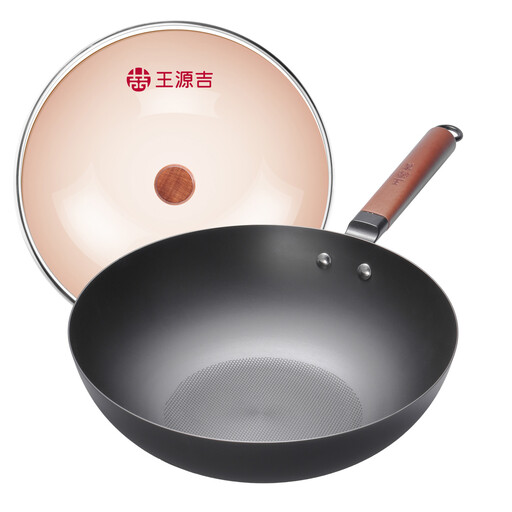
Why it's a match: Ideal for cooks who aim for that authentic "wok hei" aroma and are willing to maintain their wok. Its light weight of just 1.1 kg makes the tossing and flipping typical of stir-frying significantly easier.
This wok avoids the pitfall of a short-lived coating because it is completely uncoated. The non-stick effect is created by seasoning and is permanent. The flat bottom ensures full compatibility with induction hobs.
Develops a natural, chemical-free non-stick patina that gets better over time. The nitriding treatment increases its rust resistance compared to conventional carbon steel.
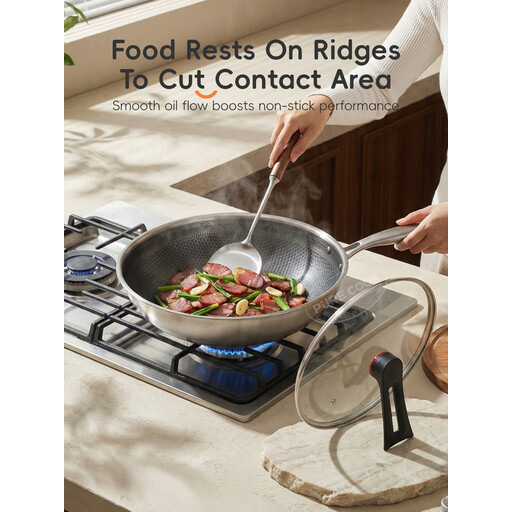
Why it's a match: With a diameter of 32 cm and an included glass lid, this wok is ideal for preparing larger portions and versatile dishes—from stir-frying to steaming. It combines the durability of stainless steel with a low-maintenance surface.
The three-ply stainless steel construction ensures rapid, even heating, solving the problem of uneven heat distribution. The internal honeycomb texture creates a physical non-stick barrier that is more scratch-resistant and durable than many conventional coatings.
Offers a non-stick effect without a chemical coating and is robust enough for use with metal utensils. The glass lid allows you to monitor the cooking process.

Why it's a match: For cooks who value the highest material quality and precise heat control. This wok from an established brand is a long-term investment for ambitious cooking.
The 3-ply construction (stainless steel-aluminium-steel) guarantees superior, rapid, and perfectly even heat distribution that far exceeds the performance of simple steel bases. As an uncoated wok, there is no coating that can wear out or fail under heat.
Excellent heat conductivity and retention for professional cooking results. The wok is oven-safe, and the metal lid features an adjustable steam vent.
We have compiled a complete, up-to-date list of products that fully meet these strict selection criteria and comply with German safety standards.
1. How do you properly season a carbon steel wok? Seasoning creates a natural non-stick layer. First, thoroughly clean the new wok to remove the factory protective coating. Then, heat the dry wok on high until it changes colour (becoming bluish-grey). Remove it from the heat, add a tablespoon of high-smoke-point oil (e.g., rapeseed or sunflower oil), and use a paper towel to spread it over the entire inner surface. Heat the wok again until the oil just begins to smoke. Let it cool and wipe away any excess oil. This process can be repeated several times to build up the patina.
2. Why isn't my wok working properly on my induction hob? The most common problem is an unsuitable base. Either the material is not sufficiently ferromagnetic, or the flat base diameter is too small for your hob's detection zone. The wok will then either not heat up at all or will do so very slowly and unevenly. Ensure the wok is explicitly designated for induction with a sufficiently large, flat, and magnetic base.
3. Can you cook dishes other than Asian food in a wok? Absolutely. The high, curved shape makes the wok extremely versatile. It's excellent for deep-frying (e.g., chips or doughnuts), steaming (with a suitable insert), braising goulash, or even browning large quantities of minced meat for a bolognese sauce. Its shape prevents splatters and makes stirring easier.