
Lieferung heute & morgen

Qualitätsgarantie

Willkommens-Angebote freischalten: KOSTENLOSE Lieferung | Bis zu 80 % RABATT | Kostenlose 30-Tage-JoyPlus-Testphase
App herunterladen
A high-quality induction wok is the key to fast, aromatic dishes that preserve nutrients. However, the search for the right model can quickly become overwhelming. Many products promise high performance but turn out to be a poor choice in practice. As your Joybuy Product Recommendation Officer, I'm here to help you navigate the common pitfalls and make an informed decision.
We'll focus on the facts and show you what features truly define a great Asian pan for modern induction hobs.
Before we dive into the ideal features, let's highlight the most common issues that lead to disappointment and wasted money.
To avoid these mistakes, you should check three core technical aspects before buying. These factors define the performance and longevity of your future wok.
For optimal performance on an induction hob, a ferromagnetic base is essential. But that alone is not enough. Two other factors are crucial:
The choice of material depends on your cooking habits and priorities.
The size and features should match your household.
Based on the criteria above, we have identified a few models that are particularly well-suited for different user profiles.
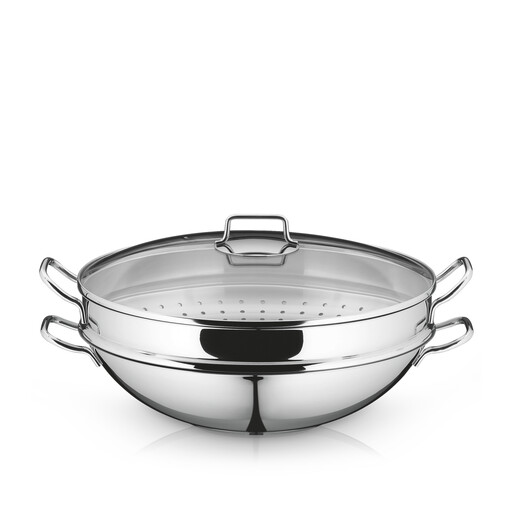
Why This Fits Their Persona: Ideal for families or ambitious home cooks who want to do more than just stir-fry. The large wok and complete accessory set allow for steaming, deep-frying, and braising in a single piece of cookware.
The TransTherm universal base ensures excellent, even heat distribution on induction and prevents warping. As an uncoated stainless steel wok, there is no short-lived coating that could wear out.
Complete induction wok set with a glass lid, steamer insert, and draining rack. Made from durable Cromargan 18/10 stainless steel.

Why This Fits Their Persona: For cooks who value material quality and maximum heat control. This wok is designed for longevity and professional cooking results, without the compromise of a coating.
The 3-ply construction (stainless steel-aluminium-stainless steel) prevents hot spots and warping. Heat is conducted extremely quickly and evenly right up to the rim—a significant upgrade over simple sandwich bases.
Superior heat conduction thanks to the multi-ply material. Includes a metal lid with an adjustable steam vent. Absolutely robust and suitable for the highest temperatures.
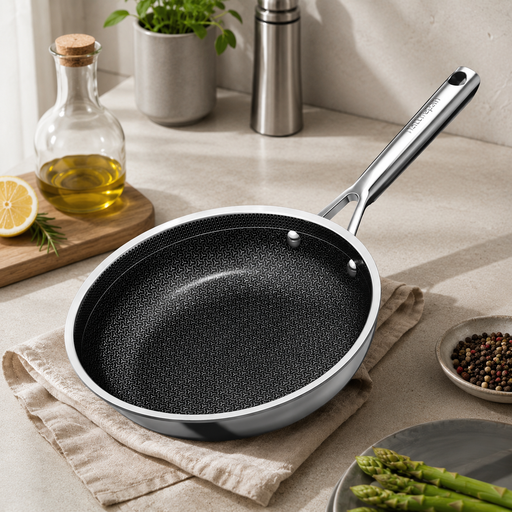
Why This Fits Their Persona: Perfect for users who want the convenience of a non-stick pan but wish to avoid traditional coatings and PFAS. The hybrid technology combines the searing properties of stainless steel with user-friendly handling.
The laser-etched hexagonal pattern protects the PFAS-free ceramic coating from scratches and wear. This ensures a longer lifespan than conventional coated pans. The 5-ply construction also prevents warping.
Combines the benefits of stainless steel (high-heat searing) and non-stick (easy cleanup). Completely free of PFAS, PFOA, and PTFE. Oven-safe up to 260°C.
We have compiled a complete, continuously updated list of products that fully meet these strict selection criteria and safety standards.
The easiest way is the magnet test: hold a magnet to the base of the pan. If it sticks, the material is ferromagnetic and therefore suitable for induction. Additionally, check the manufacturer's specifications for the recommended hob diameter to ensure efficient heat transfer.
The key is proper preheating. Heat the empty wok over medium-high to high heat. Do the water drop test: flick a few drops of water into the pan. If they sizzle and evaporate, the wok isn't hot enough yet. When the drops bead up and dance across the surface like mercury (the Leidenfrost effect), the ideal temperature has been reached. Only then should you add the oil, followed shortly by your ingredients.
For a family of four, a wok with a diameter of at least 32 cm is recommended. If you often cook high-volume dishes or like to prepare whole fish or poultry, a large wok with a 36 cm diameter offers even more flexibility and comfort for stir-frying.