
Lieferung heute & morgen

Qualitätsgarantie

Willkommens-Angebote freischalten: KOSTENLOSE Lieferung | Bis zu 80 % RABATT | Kostenlose 30-Tage-JoyPlus-Testphase
App herunterladen
A high-quality induction wok is an asset to any modern kitchen. It enables fast, even cooking at high temperatures—ideal for Asian dishes, but also for everyday searing of vegetables and meat. But the market is flooded with models whose marketing promises often fall short in practice. Many buyers only realise after a few weeks that the heat is distributed unevenly, the coating is failing, or cleaning is tedious.
This guide will help you identify the crucial features and avoid common purchasing pitfalls. We focus on the technical specifications that define a durable, high-performance wok.
Before you make a decision, you should be aware of two common problems that often lead to disappointment:
To avoid a bad purchase, you should focus on two technical aspects that are crucial for performance and longevity.
For optimal performance on an induction hob, a so-called multi-ply sandwich base (also called an encapsulated base) is essential. This construction combines different materials to leverage their advantages:
Such a construction ensures that your wok for all hob types not only works but reaches its full potential on an induction cooktop.
The choice of cooking surface depends heavily on your cooking habits and priorities.
Here is a selection of woks tailored to specific user needs, all of which meet the quality criteria mentioned above.
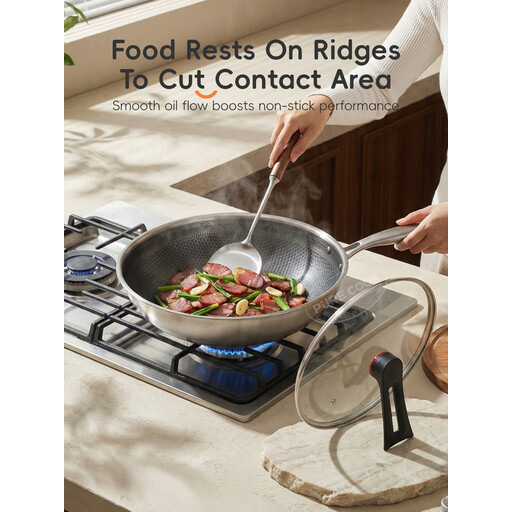
Why This Fits Their Persona: Ideal for users seeking a durable, chemical-free solution. The physical non-stick surface is robust enough for metal utensils and is suitable for a variety of cooking methods, from high-heat searing to braising.
The stainless steel honeycomb structure creates a physical non-stick effect without a chemical coating that could wear off. The three-layer composite construction ensures fast and even heat distribution on induction hobs.
Material: 304 stainless steel, scratch-resistant.
Feature: Includes glass lid.
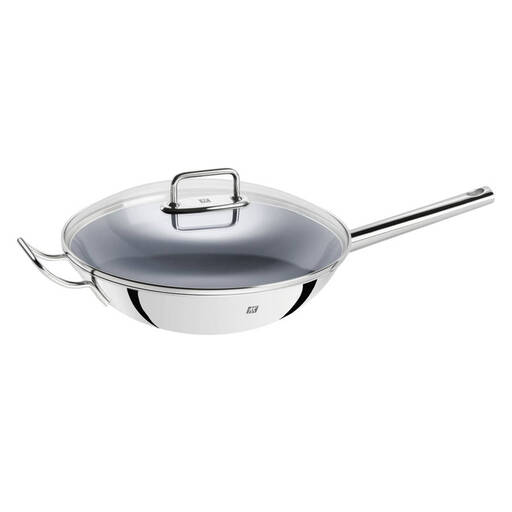
Why This Fits Their Persona: For cooks who value brand quality, excellent heat conduction, and a durable, scratch-resistant ceramic coating. The wok is dishwasher-safe and comes with practical accessories like a lid and a steaming rack.
The SIGMA Clad 3-ply base is specifically designed for optimal heat distribution on all hob types, including induction. The Ceraforce ceramic non-stick coating offers a robust alternative to conventional coatings.
Material: 18/10 stainless steel with ceramic coating.
Accessories: Includes glass lid with silicone seal and stainless steel steaming rack.
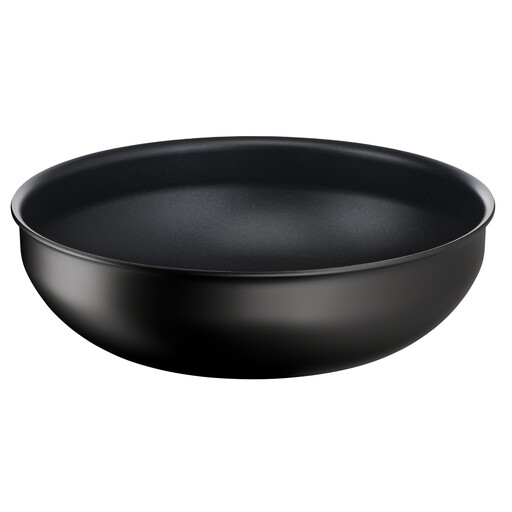
Why This Fits Their Persona: Perfect for kitchens with limited storage space. The removable handle (sold separately) allows for space-saving stacking and use in the oven. The proven Tefal technology ensures reliability for everyday use.
The Thermo-Fusion base is engineered for fast and even heat distribution on induction hobs. The Titanium non-stick coating is, according to the manufacturer, durable and PFOA-free, addressing concerns about short-lived coatings.
Feature: Space-saving, stackable design with removable handle.
Technology: Thermo-Signal temperature indicator.
We have compiled a complete, up-to-date list of products that fully meet these strict selection criteria and rigorous safety standards.
A simple test is to hold a magnet to the base of the pan. If it sticks strongly across the entire surface, the basic requirement is met. In the product description, look for terms like "sandwich base,""encapsulated base," or specific base technologies like "SIGMA Clad" or "Thermo-Fusion." A thick, flat base plate is also a good indicator of solid induction performance.
PFAS (per- and polyfluoroalkyl substances) is a group of chemicals used in many traditional non-stick coatings (e.g., PTFE). At the very high temperatures common in wok cooking, there is concern that these substances could break down. PFAS-free alternatives use ceramic-based coatings or rely on physical non-stick properties from material structures (e.g., a stainless steel wok with a honeycomb pattern), which are considered safe.
Unlike woks made of carbon steel, a stainless steel wok does not need to be seasoned in the traditional sense to build up a patina. However, the right cooking technique is crucial to minimise sticking: Heat the empty wok over medium to high heat. Do the water drop test—if a drop of water dances on the surface without immediately evaporating, the wok has reached the right temperature. Only then should you add the oil and swirl it to coat the surface before adding your ingredients. This "hot wok, cold oil" method creates a temporary non-stick barrier.