
Lieferung heute & morgen

Qualitätsgarantie

Willkommens-Angebote freischalten: KOSTENLOSE Lieferung | Bis zu 80 % RABATT | Kostenlose 30-Tage-JoyPlus-Testphase
App herunterladen
An induction-compatible wok with a lid needs to do more than simply have a suitable base. Many buyers initially focus on the diameter, colour or a low price. In everyday use, though, other details determine whether the wok becomes a regular kitchen favourite or ends up at the back of the cupboard after a short time.
A round wok may heat unevenly on an induction hob if its magnetic contact area is too small. That’s why a flat, induction-compatible base is important. For a wok designed for a gas hob, the shape of the base plays a different role: the flame can rise around the sides of the wok. For induction, electric and ceramic hobs, a flat base is usually more practical.
An uncoated wok made from stainless steel or carbon steel can last a long time with the right care. The care it needs will depend on the material. For example, stainless steel is more sensitive to incorrect temperature control and food may stick when searing. Carbon steel often needs to be seasoned, then dried and lightly oiled after cleaning.
A large 32 cm wok has room for several portions. At the same time, it may heat unevenly on smaller induction zones and become heavy when full. Before buying, check the size of your hob, your storage space, whether it will fit in your dishwasher and how much worktop space you have.
Look for clear information on compatibility with induction, gas, electric and ceramic hobs. A multi-layer base, often called Tri-Ply or a bonded base, is made from several layers of metal and is designed to transfer heat from the hob to the base of the pan. Even so, actual compatibility depends on the model and the hob.
An induction wok should sit flat and securely on the hob. On a gas hob, it’s also important that the wok sits safely on the pan supports. If you’re considering a wok pan for induction with a glass lid, check that the lid handle is far enough from hot zones and the wall.
For one to three portions, around 28 to 30 cm is often enough. A 32 cm wok can suit families, provided there’s enough room on the hob, in the cupboard and in the sink. A wok with a glass lid lets you keep an eye on food as it braises and means you won’t need to lift the lid as often.
If you’d like to make broths or share a meal as well as cook stir-fries, you could choose a hotpot or Yin-Yang hotpot with a divided interior. Don’t judge capacity by diameter alone: depth, handles and the weight when full also affect how easy it is to use.
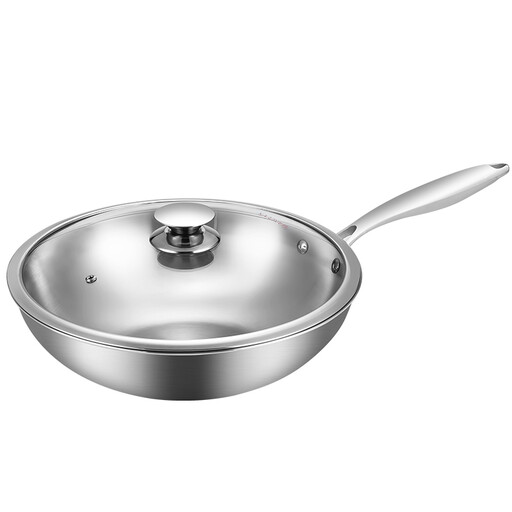
Why this product suits this profile: The 28 cm wok is a good size for everyday portions and, according to the product information, works with induction, gas, electric and ceramic hobs.
The uncoated stainless steel base means you don’t have to rely on a delicate non-stick layer. When searing, follow the recommended hot-pan, cold-oil method.
304 stainless steel, a glass lid and a multi-layer base; listed as dishwasher-safe by the supplier.

Why this product suits this profile: This 4.7-litre cast iron casserole is designed for braising, stews and slow cooking on a range of hob types.
Its weight of around 4.675 kg makes it sturdy, but bear this in mind before buying and when lifting it while full.
Enameled cast iron, a 4.7-litre capacity and compatibility with all hob types, according to the product information.
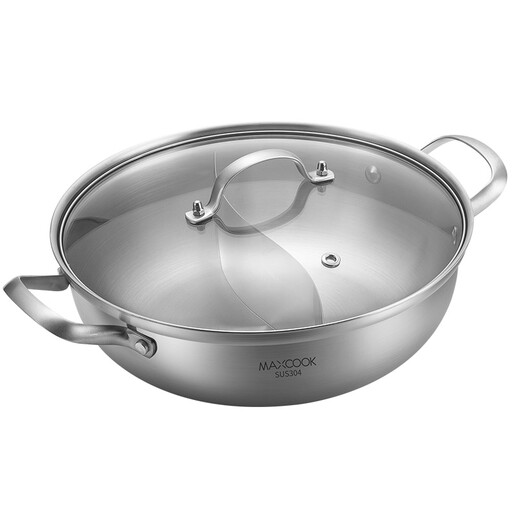
Why this product suits this profile: With a 4.6-litre capacity, this Yin-Yang hotpot is designed for sharing a meal with two broths or flavours.
The product details list a bonded base and compatibility with induction, gas, electric and ceramic hobs. Even so, the pot should be positioned centrally and securely.
304 stainless steel with no non-stick coating listed, a divided interior and a glass lid.
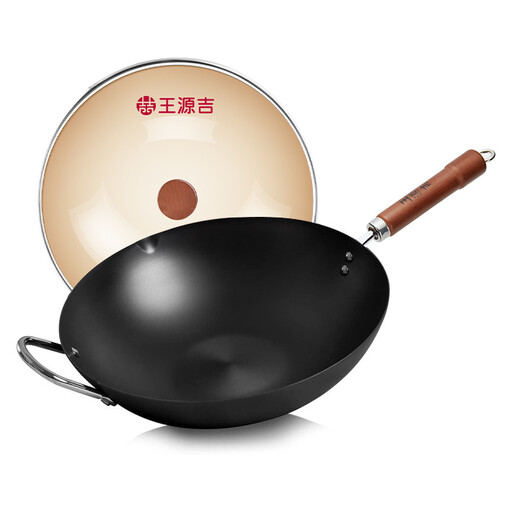
Why this product suits this profile: According to the product details, this 32 cm wok has a main handle and a side handle, holds around two to four portions and is compatible with induction, gas, electric and ceramic hobs.
The flat base is designed for use on several hob types. This model needs seasoning and hand-washing, so you’ll know what care it requires before buying.
32 cm diameter, side handle, glass lid and nitrided carbon steel, according to the product description.
We’ve put together a complete, regularly updated list of products that meet these strict selection criteria and fully comply with the safety regulations in force in the EU.
Choose a model with a magnetic, flat base and an explicit statement from the manufacturer that it’s suitable for induction. If you’re considering a large diameter, check the size of your induction zone.
It depends on the material and the model. Stainless steel woks may be listed as dishwasher-safe by the manufacturer. Carbon steel is usually washed by hand, dried thoroughly and oiled. Always follow the care instructions for the specific product.
There’s no set lifespan that applies to every wok. With proper use, stainless steel won’t suffer from a worn non-stick coating. Carbon steel needs more care, but can last for a long time if it’s seasoned correctly and stored dry. Material thickness, base quality, temperature control and cleaning all make a difference.