
Lieferung heute & morgen

Qualitätsgarantie

Willkommens-Angebote freischalten: KOSTENLOSE Lieferung | Bis zu 80 % RABATT | Kostenlose 30-Tage-JoyPlus-Testphase
App herunterladen
An induction frying pan with a non-stick coating should cook food evenly, require little fat and be easy to clean. In practice, however, not every model will suit every hob or cooking style. Before buying, home cooks, families and quality-conscious households should check a few technical details rather than relying solely on coating names or marketing claims.
A measurement such as 28 cm usually refers to the diameter across the top. The base that actually heats up can be considerably smaller. This matters with induction, as the base should be a close match for the cooking zone. A 20–24 cm frying pan is often enough for a single portion. For family meals, cuts of meat or vegetable dishes, 26–28 cm is usually more practical.
A frying pan may be suitable for induction, gas, electric and ceramic hobs, but still have limited oven use. Plastic or Bakelite handles often restrict the temperature. Before buying, check these three details separately:
For example, according to the product details, the Silit Belluna is oven-safe up to 70 °C, while certain Naturepan models can withstand considerably higher temperatures without the lid.
Even reinforced ceramic or hybrid coatings should not be used with metal utensils, steel wool or abrasive cleaners. High temperatures and prolonged heating when empty can also damage the surface. A dishwasher-safe frying pan can go in the dishwasher, but washing it by hand with a soft sponge may help protect the coating.
A classic non-stick frying pan with a PTFE coating is practical for eggs, pancakes, fish and low-fat frying. According to the product details, the Silit Belluna uses a PTFE-based Silitan coating. It is suitable for all common hob types, including induction, and has a plastic handle.
According to the manufacturer, a ceramic frying pan can be made without PTFE, PFAS and PFOA. Always check these claims in the product details, as “ceramic” can also refer to a metal pan with a ceramic coating rather than a solid ceramic body. Naturepan describes its ceramic-coated models as aluminium or stainless steel pans with a diamond- and titanium-reinforced coating.
An uncoated stainless steel frying pan has no chemical non-stick layer. However, you need to manage the temperature carefully: preheat the pan, add oil, then add the food once the surface is hot enough. The Maxcook pan is described as having a three-layer construction of stainless steel, an aluminium core and stainless steel. It has an uncoated surface and is listed as dishwasher-safe in the product description.
For induction, you need a magnetic base that sits flat on the hob. Multi-layer constructions with an aluminium core can help distribute heat throughout the pan. Check the following:
A large pan with a small base may heat unevenly on a small induction zone. If you’re looking for a pan suitable for all hob types, also check whether halogen or infrared hobs are specifically mentioned.
A shallow frying pan is ideal for quick searing. A deep sauté pan or wok is more useful for sauces, vegetables, casseroles or larger quantities. A well-fitting glass lid helps retain moisture and reduce splashes.
These sizes are often useful for everyday cooking:
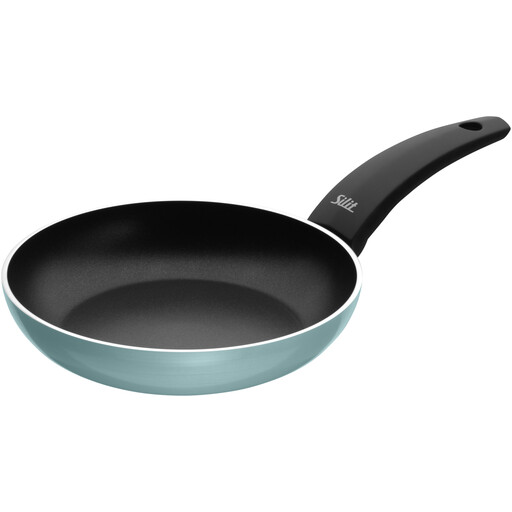
Why it suits this cooking profile: Its compact size is ideal for smaller households, individual portions and delicate foods such as eggs or fish. According to the product details, the pan is compatible with gas, electric, ceramic and induction hobs.
The product details explicitly state hob compatibility and the 20 cm diameter. The pan is listed as oven-safe up to 70 °C, so bear this in mind before buying.
Coated aluminium, a lightweight design and even heat distribution. The supplier also states that it comes with a 5-year guarantee covering materials, workmanship and non-stick performance.
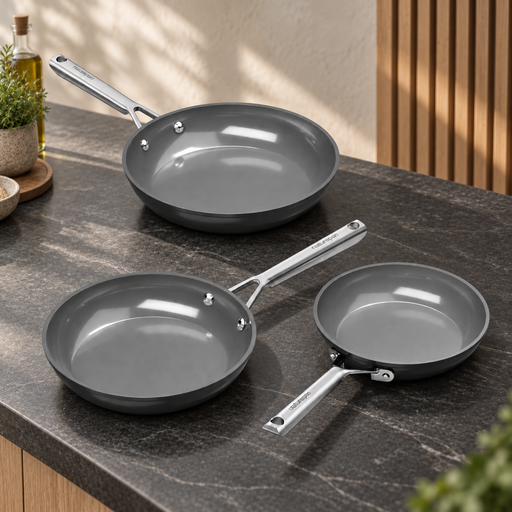
Why it suits this cooking profile: This three-piece pan set covers small, medium and larger quantities. According to the manufacturer, the pans have a diamond- and titanium-reinforced ceramic coating and are designed for induction, gas, electric and ceramic hobs.
The three different diameters mean you won’t have to use one pan for every portion size. According to the product description, the pans are oven-safe up to 260 °C.
Three sizes, coated aluminium and stainless steel handles. According to the manufacturer, the coating is free from PFAS, PFOA and PTFE. Dishwasher cleaning is listed as suitable.
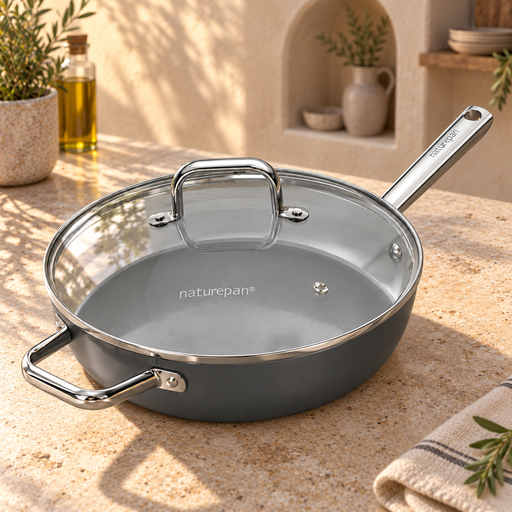
Why it suits this cooking profile: Its high sides and included lid make it well suited to casseroles, vegetables, sauces and one-pan recipes. According to the product details, the pan is suitable for induction, gas, electric and ceramic hobs.
The product details distinguish between hob and oven use: according to the product description, it can be used in the oven up to 260 °C without the lid. It is not suitable for microwave use.
28 cm diameter, 7.5 cm body height, a matching lid and a ceramic non-stick coating. Dishwasher cleaning is listed as suitable, though hand washing is recommended to protect the coating.
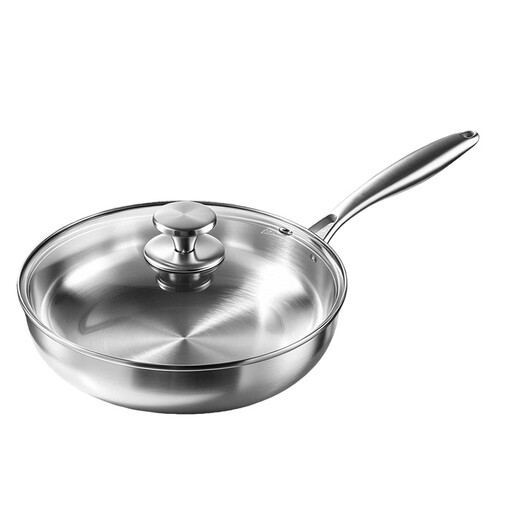
Why it suits this cooking profile: This stainless steel frying pan is for anyone who prefers an uncoated surface and is happy to pay closer attention to the temperature and amount of oil when cooking.
The product description states that the surface is uncoated. This removes the need to consider coating and utensil compatibility, although preheating the pan correctly is still important to reduce sticking.
Three-layer construction with 304 stainless steel and an aluminium core, induction compatibility and a glass lid. The supplier also lists it as dishwasher-safe.
We’ve put together a complete, regularly updated list of products that meet these strict selection criteria and fully comply with the safety regulations in force in the EU.
The lifespan of a coated frying pan depends largely on how you use it. We recommend that you:
Stainless steel calls for a different approach: heat the pan first, then add oil and place the food in the pan with enough space between each piece. Soak burnt-on residue rather than removing it with harsh steel wool.
For one person or smaller portions, 20–24 cm is usually enough. Families often choose 26–28 cm. The top diameter isn’t the only thing that matters: check the base diameter in relation to the induction cooking zone.
There’s no set lifespan. It depends on the type of coating, heat, cleaning method and utensils you use. Low to medium temperatures, soft utensils and gentle cleaning can help preserve the surface for longer.
No. A PFAS-free frying pan may appeal to some people, but it still needs to suit your hob, cooking needs, oven requirements and care routine. With an uncoated stainless steel frying pan, there’s no non-stick layer, but you’ll need to cook with greater precision.