
Lieferung heute & morgen

Qualitätsgarantie

Willkommens-Angebote freischalten: KOSTENLOSE Lieferung | Bis zu 80 % RABATT | Kostenlose 30-Tage-JoyPlus-Testphase
App herunterladen
An industrial bookcase typically combines a black metal frame with a wood-effect finish, open shelves and a tall, space-saving design. To ensure it remains practical in the living room, home office, bedroom, hallway or kitchen over the long term, buyers should look beyond its vintage appearance. The key considerations are dimensions, load capacity, anti-tip protection and how the bookcase will actually be used.
A 180 cm bookcase or a six-tier shelving unit makes good use of the room’s height. However, the usable shelf space may still be limited if the shelves are narrow or the compartments are very low. As well as the overall height, check the width, depth, shelf height and internal dimensions.
A narrow shelving unit measuring 30 to 40 cm wide is ideal for alcoves, but offers less room for large coffee-table books or wide ring binders. For a home office with files and folders, a wider freestanding bookcase is often more practical.
Marketing terms such as ‘Heavy Duty’ or ‘robust construction’ are no substitute for a specific weight limit. Look for the maximum load per shelf and for the bookcase as a whole. Books, ceramics and small electrical appliances can quickly weigh more than decorative items or lightweight baskets.
It is also important to check whether the load needs to be distributed evenly. Heavy items should preferably be placed on the lower shelves. The specifications provided by the respective manufacturer are the authoritative source.
A tall wood-and-metal shelving unit has a relatively small footprint in proportion to its height. Uneven floors, sideways pressure, children or pets can affect its stability. An included anti-tip kit, rear cross-braces and adjustable feet are therefore important features.
The wall fixings must be suitable for the type of wall. Use appropriate wall plugs and screws, and follow the assembly instructions. A bookcase should never be used as a climbing aid.
Start by measuring the available floor space. Take skirting boards, doors, radiators and the distance from the wall into account. A bookcase measuring 187 cm in height will also require enough room for assembly and positioning. Models measuring around 30 cm deep and 40 cm wide are suitable for narrow alcoves.
When choosing a bookcase for the living room or bedroom, make sure there is still enough clear space in front of it for movement. A wider model measuring 70 to 80 cm, on the other hand, is better suited to a freestanding wall as a bookcase and display unit.
Many models feature a frame made from powder-coated metal. In everyday use, this finish is easy to clean with a soft cloth. The shelves are often made from MDF or chipboard with a wood-effect finish. Look for clearly stated material thicknesses and evenly finished edges.
A wood-effect finish does not automatically mean solid wood. If you are looking for a vintage bookcase, check whether the specifications state MDF, chipboard or solid wood. For kitchens and bathrooms, the stated moisture resistance is also important. Excessive moisture can damage engineered wood and its coatings.
A bookcase with open shelves provides quick access and is suitable for books, plants, picture frames and baskets. At the same time, all items remain visible and can collect dust. Rear cross-braces can help prevent items from falling backwards.
Additional hooks are useful for towels, bags or umbrellas. However, they do not replace enclosed drawers. Consider whether you need a dedicated storage unit or a combination of storage space and display shelving.
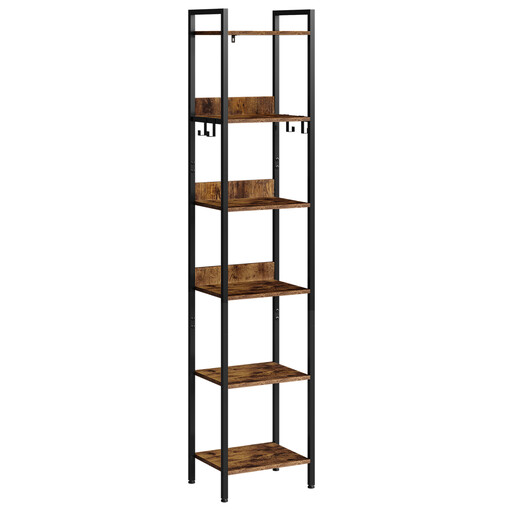
Why this product suits the profile: Measuring 40 × 30 × 187 cm, it is suitable for narrow spaces. Six open tiers and four movable, removable hooks offer a range of possible uses.
The product specifications state a maximum load of 10 kg. This makes it easier to plan how it will be used than with a purely promotional claim. Anti-tip protection and adjustable foot pads are also included.
Narrow design, six open shelves, metal frame with a wood-effect finish and additional hooks.
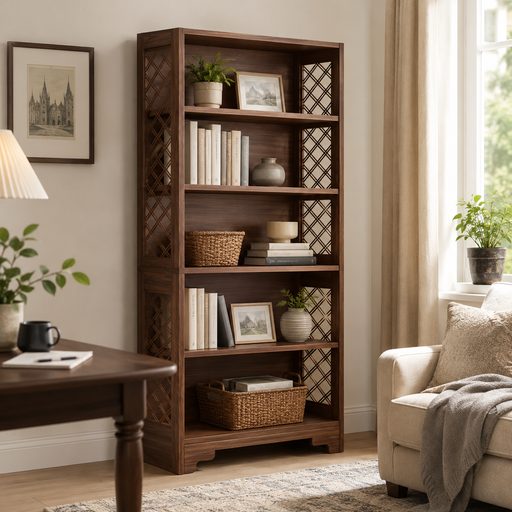
Why this product suits the profile: The six open compartments, 80 × 30 × 180 cm construction and decorative side elements make it suitable for a larger book collection or a well-organised home office.
The specifications state a load capacity of 34 kg per shelf and 136 kg overall. The MDF shelves are described as 1.5 cm thick. Loads should still be distributed evenly, and the wall fixings should be used.
Specific load ratings, six tiers, MDF construction and rear stability components.
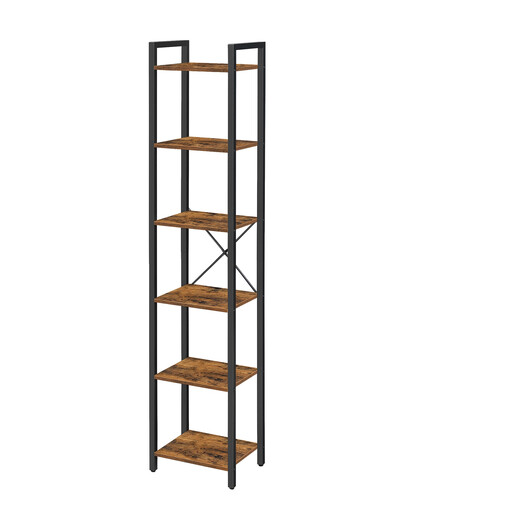
Why this product suits the profile: Measuring 30 × 40 × 187.5 cm, it is designed for confined spaces such as hallways, bathrooms or small studies. The six tiers create vertical storage space for books, baskets and decorative items.
The stated overall load capacity is 50 kg. X-braces, adjustable feet and an anti-tip kit address common stability issues with tall, narrow shelving units.
Small footprint, steel frame, six shelves and included wall safety fixing.
We have put together a complete, regularly updated list of products that fully meet these strict selection criteria and the safety regulations applicable in the EU.
Safety depends on the construction, floor, load and wall fixing. A tall freestanding bookcase should stand on a stable, level surface and be secured with the supplied anti-tip protection. The maximum load per shelf must not be exceeded.
This varies depending on the model. The products featured specify, for example, 10 kg, an overall load of 50 kg or up to 34 kg per shelf. Check whether the stated figure applies to an individual shelf or the bookcase as a whole, and distribute the weight evenly.
An industrial-style shelving unit can be used in the kitchen for food supplies, cookbooks or lightweight household items. Before buying, however, check the care instructions and how susceptible the engineered-wood surfaces are to moisture. Choosing a suitable location is particularly important if the unit is to be placed near a sink or in an area that is continuously damp.