
Lieferung heute & morgen

Qualitätsgarantie

Willkommens-Angebote freischalten: KOSTENLOSE Lieferung | Bis zu 80 % RABATT | Kostenlose 30-Tage-JoyPlus-Testphase
App herunterladen
An industrial bookcase usually combines a wood-effect finish with a black metal frame. This makes it suitable for a living room, home office, bedroom or hallway. However, before buying, it is worth taking a close look at the dimensions, load capacity and anti-tip protection. A bookcase that looks appealing in photographs may prove impractical in everyday use if folders do not fit, the shelves are too narrow or the construction wobbles on an uneven floor.
An 180 cm bookcase makes efficient use of wall space, but it does not automatically provide plenty of storage. The number, width and depth of the shelves are what really matter. A tall, narrow bookcase is suitable for paperbacks and decorative items, while large-format art books or ring binders require greater depth.
Also pay attention to the actual shelf height. In an open shelving unit with several levels, crossbars or side frames may restrict the usable space.
The stated ‘maximum load capacity’ may refer to the entire piece of furniture or to a single shelf. These values are not interchangeable. Books create a considerable amount of weight over a small area. Distribute heavy books evenly and place particularly heavy items on the lower levels wherever possible.
With an industrial bookcase with a metal frame, you should also check whether the construction has adjustable feet, crossbars or a wall-mounting option. A high load capacity does not replace anti-tip protection.
X-shaped supports, geometric side frames and vintage finishes define the industrial style. However, they can make it harder to access the shelves or reduce the available storage space. Check that the bookcase will have sufficient clearance from doors, radiators and sockets on the wall where you intend to place it.
For rented properties, it is also important to know whether an anti-tip kit is included and how the wall fixing needs to be installed. The suitability of wall plugs depends on the wall material and should be checked before assembly.
Do not just measure the available wall width. Also measure the depth and the height up to the ceiling or windowsill. For narrow hallways and small rooms, a narrow bookcase measuring around 30 to 40 cm wide can be a good choice. A wider freestanding bookcase is more suitable for an empty wall in a living room or home office.
A bookcase measuring around 180 cm in height should be positioned with sufficient clearance from coving or other ceiling mouldings. Also allow enough space for assembly.
Many models are made from coated chipboard, MDF or E0 MDF with a wood-effect finish, combined with a powder-coated steel or metal frame. The surface should suit how you intend to use the bookcase:
Direct moisture and persistently high humidity can damage engineered wood panels. A dry, well-ventilated environment is therefore advisable for kitchens or dining areas.
Look for adjustable feet, a level surface and clear load-capacity information. Wall anchoring is particularly important for tall bookcases. Heavy items should go at the bottom, with lighter books and decorative pieces higher up. Children should not climb on or hang from the furniture.
A 6-tier bookcase can provide plenty of vertical storage, but it needs to be carefully levelled. After assembly, check all screw connections and tighten them again after a few days if necessary.
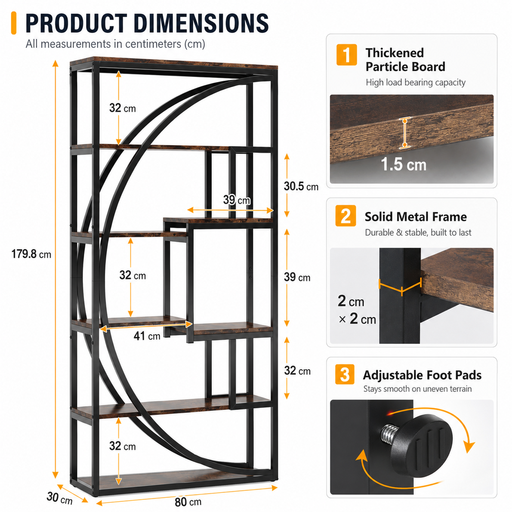
Why this product suits this profile: Measuring 80 × 179.8 × 30 cm, this freestanding bookcase offers eight open compartments across five levels. It makes use of the available height without projecting too far into the room. It is suitable for books, plants and decorative items in the living room or home office.
The precise external dimensions and number of open compartments make room planning easier. The open design clearly shows the areas that can actually be used.
Five levels, eight open storage areas, vintage brown finish with a black metal frame, plus assembly accessories and instructions.
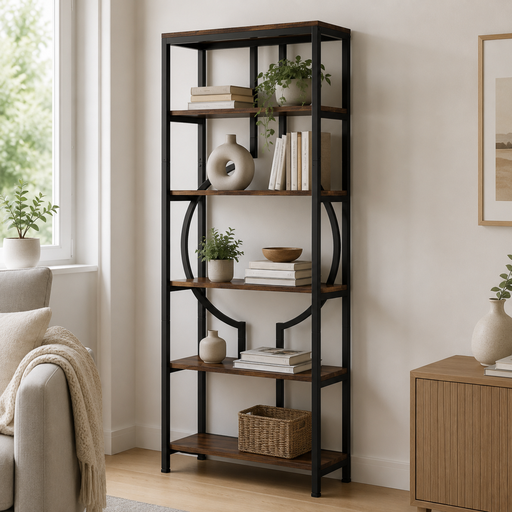
Why this product suits this profile: This bookcase measures 70 × 30 × 180 cm and has six open levels. Its stated maximum total load capacity of 100 kg will appeal to anyone who wants to combine books with decorative objects.
The load limit is given as a total figure. The weight should therefore be distributed thoughtfully across the six levels, rather than treating each shelf as having the same individual capacity.
Six open storage areas, 180 cm height, powder-coated metal frame, plus a scratch- and stain-resistant surface according to the product information.
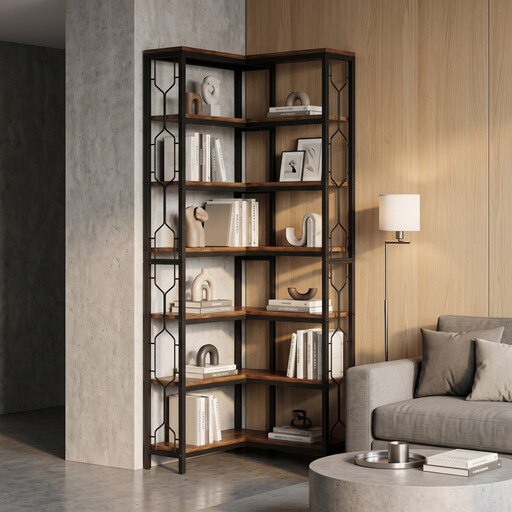
Why this product suits this profile: Measuring 60 × 60 × 200 cm, this corner bookcase makes use of two walls and is designed for living rooms, kitchens or home offices. Seven levels provide storage space for books, plants and kitchen utensils.
The L-shaped design is made for corner spaces. Adjustable feet and the included wall anti-tip kit help address uneven floors and the risk of tipping when correctly installed.
Seven levels, E0 chipboard according to the product description, powder-coated metal frame and a stated load capacity of up to 45 kg per level.
We have put together a complete, regularly updated list of products that fully meet these strict selection criteria and the safety regulations applicable in the EU.
Not every storage solution has to be a classic bookcase. An industrial-style console table can be placed behind a sofa, in an entrance hall or against an empty wall. The 140 cm-wide model from LANTINE has a 30 cm-deep MDF top, a metal frame and a stated maximum load capacity of 90 kg. It is suitable for lamps, vases, pictures or small storage boxes.
For a dining area or home bar, a wine rack with bottle compartments and glass holders may be more practical than a bookcase. According to the product description, the corresponding model can hold up to twelve wine bottles and six to nine stemmed glasses. It should be placed on a level surface, and the load specifications and assembly instructions must be followed.
Assemble the bookcase according to the enclosed instructions on a level surface. Adjust the feet and secure tall models to the wall using the supplied anti-tip kit. Use fixings suitable for the type of wall. Heavy items should be placed at the bottom.
Allow a few centimetres of space for assembly and movement. The exact amount depends on the construction method, ceiling height and any skirting boards. Before buying, compare the bookcase’s external height with the actual wall height available.
An open shelving unit can be used in dry kitchens and dining areas for crockery, provisions or decorative items. However, it is more exposed to dust and kitchen fumes than closed furniture. Clean the surfaces regularly and avoid persistent moisture unless the model is specifically designed for it.