
Lieferung heute & morgen

Qualitätsgarantie

Willkommens-Angebote freischalten: KOSTENLOSE Lieferung | Bis zu 80 % RABATT | Kostenlose 30-Tage-JoyPlus-Testphase
App herunterladen
An industrial-style bookshelf is more than just storage; it's a statement piece that combines urban charm with functionality. However, the market is flooded with models that look great at first glance but quickly turn out to be a poor investment. Before you buy, it's crucial to understand the typical weaknesses often hidden behind an attractive exterior.
Many buyers focus on design and overlook critical quality features. This often leads to disappointment when the shelf shows signs of wear after just a few months. Pay special attention to these three points:
To avoid buyer's remorse, you should focus on objective and verifiable criteria. These three parameters are crucial for the longevity and functionality of your shelf.
A typical shelf made of wood and metal combines two materials whose quality is paramount.
A freestanding vintage-style shelf must be secure. Stability is a non-negotiable criterion, especially for a tall model.
The practical usability of a shelf depends directly on its dimensions and load-bearing capacity.
Instead of making a blanket recommendation, we have identified models that meet specific requirements and avoid the common pitfalls mentioned.
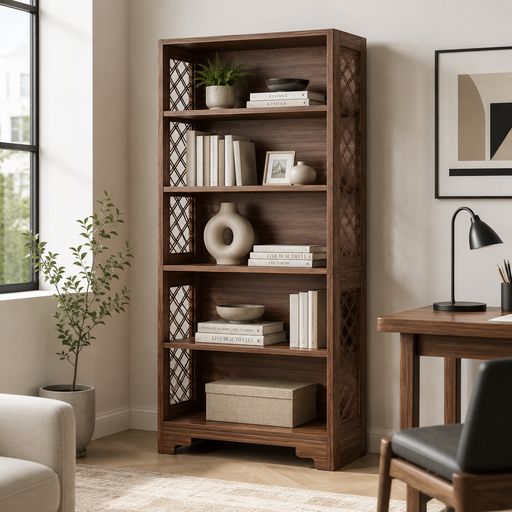
Why it's a good fit: Ideal for users who want to stylishly display a large book collection or heavy decorative objects in their living room. The X-bracing design is a classic feature of the industrial style and also enhances stability.
The specified load capacity of 34 kg per shelf is precise and avoids misleading total capacity figures. The thickened MDF boards and sturdy structure counteract the problem of unstable constructions.
The combination of high load capacity and a 180 cm height makes it a fully-fledged industrial-style library wall, suitable even for heavy hardcover books.
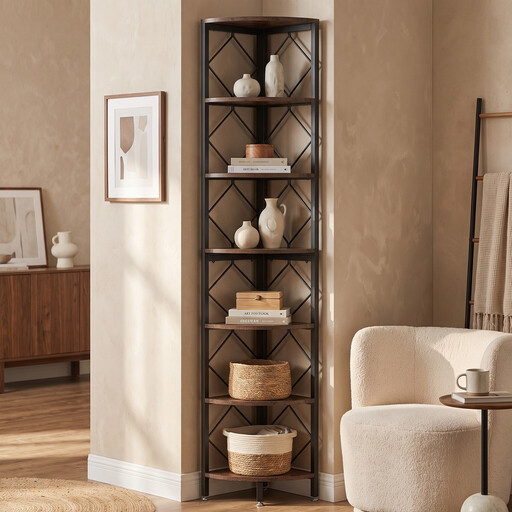
Why it's a good fit: Perfect for smaller apartments or home office nooks where every square centimetre counts. It utilises unused corners and creates vertical storage without taking up valuable floor space.
The material is clearly specified as E1-grade particleboard with a sturdy metal frame. The included anti-tip kit is essential for a 200 cm tall shelf and directly addresses the stability issue of tall, narrow units.
Maximum space efficiency thanks to the corner design and an impressive height of 200 cm on a footprint of just 35 x 35 cm.
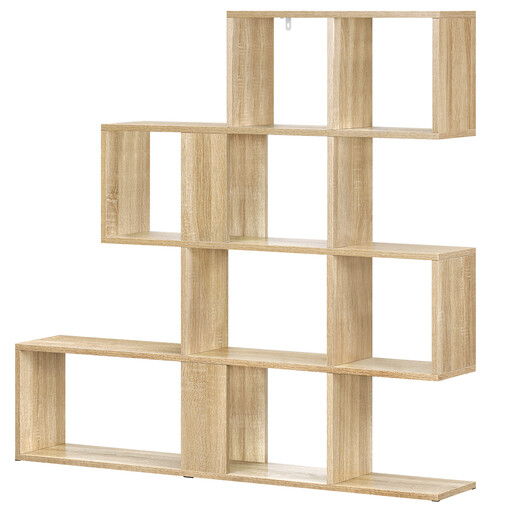
Why it's a good fit: For users seeking a flexible solution for open-plan living spaces. This step shelf can be used as a classic **living room shelf** against a wall or placed freely in the room as a visual divider.
The surface is a melamine coating, which is more resistant to scratches and moisture than simple foils. The wide base and included anti-tip kit provide the necessary stability.
The asymmetrical step design with 11 open compartments offers versatile decoration and storage options while also functioning as a design element.
We have compiled a complete, up-to-date list of products that fully meet these strict selection criteria and German safety regulations.
The load capacity varies greatly depending on the model and construction. Instead of relying on general statements, always check the manufacturer's specified load capacity per shelf. This can range from 10 kg for lighter decorations to over 30 kg for heavy books. Always place heavier items on the lower shelves to maximise stability.
Yes, for safety reasons, this is strongly recommended. Any shelf that is taller than it is wide poses a tipping hazard. Reputable manufacturers include an anti-tip kit (usually a bracket and screws for wall mounting). Installation is a small effort that significantly increases safety, especially in households with children.
Care is generally straightforward. A soft, dry or slightly damp cloth is sufficient for cleaning the engineered wood shelves and the powder-coated metal frame. Avoid aggressive cleaning agents or abrasive sponges, as they can damage the surfaces.