
Lieferung heute & morgen

Qualitätsgarantie

Willkommens-Angebote freischalten: KOSTENLOSE Lieferung | Bis zu 80 % RABATT | Kostenlose 30-Tage-JoyPlus-Testphase
App herunterladen
An industrial-style bookshelf is more than just a place to store books. It's a statement piece that brings the raw, urban charm of loft apartments and old factory halls into your own home. The combination of robust metal and warm wood creates a focal point that is both functional and aesthetic, perfect for a living room or office. However, the market is flooded with models that promise the look but disappoint in practice. Before you make a decision, it's crucial to understand the common weaknesses to ensure you choose a durable and stable option.
Many shelves look appealing in product photos but only reveal their flaws after assembly or when loaded. Pay close attention to these two points to avoid a bad purchase:
To ensure your new piece of furniture delivers on both aesthetics and function, you should carefully check three key technical features.
The characteristic look of an industrial design shelf comes from the interplay of wood and metal. This is where the critical quality differences lie.
An open freestanding shelf must be stable, especially when designed as a tall bookshelf.
A freestanding wood and metal shelf must fit your space and serve its intended purpose. Before buying, check the internal dimensions of the compartments. Will your largest books, binders, or decorative objects fit? A vintage-style living room shelf may have different depth requirements than a pure bookshelf in a study.
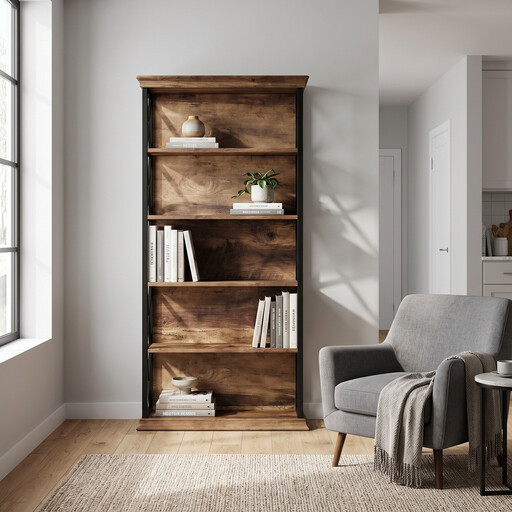
Why it's a good fit: At 180 cm tall with six tiers, this shelf offers maximum storage for large book collections or files in a home office. It makes optimal use of vertical space and is ideal for anyone who needs to store a lot.
The construction, featuring E0-grade MDF panels and a solid metal frame with X-bracing, ensures high stability. The included anti-tip kit directly addresses the safety risk of tall shelves.
The high load capacity of 34 kg per shelf is an objectively verifiable spec that guarantees safe use even with heavy items.
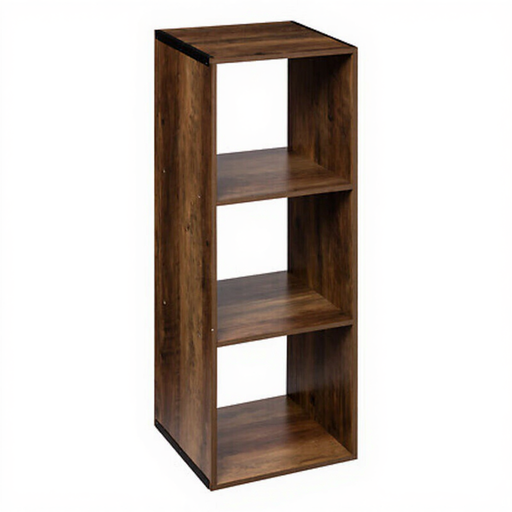
Why it's a good fit: With its moderate height of approx. 100 cm and clean, grid-like structure, this shelf is ideal for smaller apartments, alcoves, or as a complement to existing furniture. It provides structured storage without overwhelming the room.
The material is specified as engineered wood fibreboard, which provides a solid base. Its lower height and compact design inherently minimise the risk of wobbling compared to oversized, poorly constructed shelves.
The modular design with three clearly defined compartments is excellent for organising and displaying items and integrates well into existing decor.
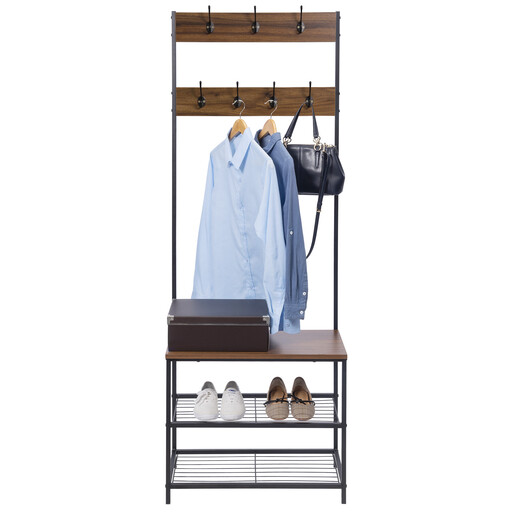
Why it's a good fit: This piece is ideal for entryways or small apartments where functionality is key. It combines a coat rack, a shoe rack, and a bench with the popular industrial look.
According to the manufacturer, the frame is made of alloy steel with an electrolytic coating, making it waterproof, durable, and rust-resistant. Clear load limits (5 kg per hook, 20 kg per shelf) prevent overloading.
The 2-in-1 functionality offers a space-saving solution that combines storage and a coat rack into a single, stylish piece of furniture.
We've compiled a complete, up-to-date list of products that fully meet these strict selection criteria and safety standards.
The load capacity varies widely depending on the model and quality. Pay attention to the manufacturer's "maximum load capacity per shelf" specification. Simple shelves often only support 5–10 kg per shelf, which is sufficient for paperbacks. For heavy coffee table books, encyclopedias, or binders, you should choose a model with a load capacity of at least 15 kg, or even better, 20–30 kg per shelf.
Yes, absolutely. Any freestanding shelf that is taller than it is wide poses a tipping hazard, especially in households with children or pets. Securing it to the wall with an anti-tip kit is an essential safety feature. Reputable manufacturers include the appropriate mounting hardware. Installation is usually simple and prevents serious accidents.
Care is usually straightforward. For the powder-coated metal frame, a dry or slightly damp microfibre cloth is sufficient. Avoid harsh cleaning agents. The engineered wood panels should also only be wiped with a damp (not wet) cloth and then dried to prevent the material from swelling. With proper care, the surfaces will maintain their attractive appearance for a long time.