
Lieferung heute & morgen

Qualitätsgarantie

Willkommens-Angebote freischalten: KOSTENLOSE Lieferung | Bis zu 80 % RABATT | Kostenlose 30-Tage-JoyPlus-Testphase
App herunterladen
An industrial-style bookshelf is more than just a place to store books. It's a statement piece that brings urban loft character and rustic charm to your living room or home office. However, the wide variety of models also has its pitfalls. Many buyers are frustrated by unstable construction or low-quality surfaces that don't live up to the product photos. Before you make a decision, you should know the common weaknesses to avoid a regrettable purchase.
The two most common problems with industrial-look shelves are:
This guide will show you the key features to look for to find a durable and functional industrial-design shelf.
To avoid disappointment, focus on three core aspects: stability, material quality, and the right dimensions for your space.
A solid wood and metal bookshelf's quality depends entirely on its frame construction. Look for the following features:
The signature look comes from the combination of warm wood tones and cool metal. The quality of the engineered wood is crucial for longevity.
Consider what purpose the shelf will serve. A purely open bookshelf is excellent for displaying decorative items, plants, and favourite books, creating an airy and personal atmosphere. However, if you also need to store binders, cables, or other everyday items, a model with closed compartments or doors can help maintain a tidy, organized look.
Here are some recommendations tailored to different needs and living situations.
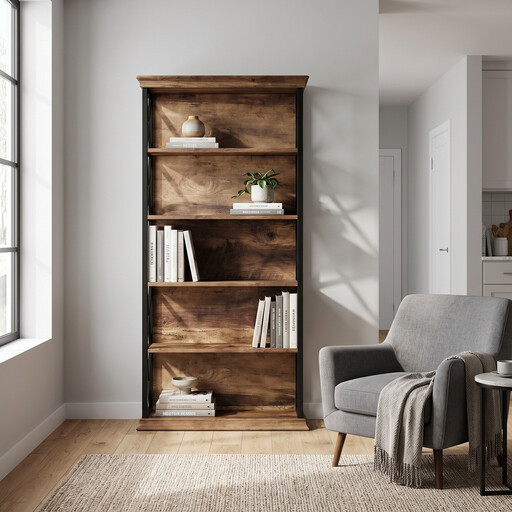
Why This Fits Their Persona: Ideal for anyone seeking a classic, functional, and stable shelf. At 180 cm tall, it makes optimal use of vertical space and offers plenty of storage on six levels for books and binders in the home office or living room.
The X-shaped bracing on the side provides high stability and prevents the typical wobble. The included anti-tip kit ensures secure wall mounting.
High load capacity of up to 34 kg per shelf. The E0-grade MDF shelves are scratch-resistant and water-repellent.
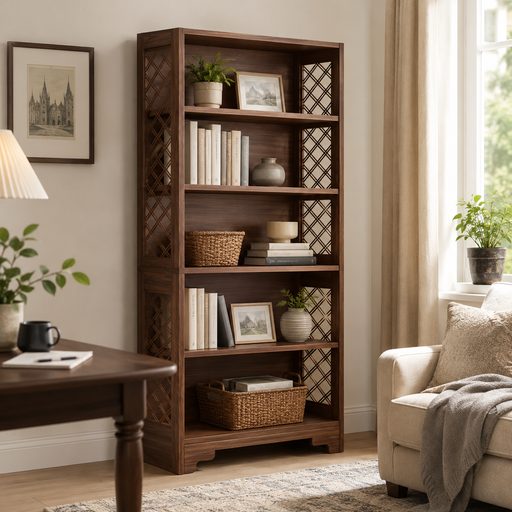
Why This Fits Their Persona: Perfect for fans of the vintage standing shelf look who want a piece of furniture with special character. The decorative grilles on the sides make it an eye-catcher and provide a beautiful frame for decor, plants, and coffee table books.
Despite its delicate design, the sturdy construction ensures stability. The scratch-resistant surface of the MDF shelves preserves the high-quality look long-term and prevents the finish from peeling.
The unique lattice design on the sides gives the shelf special aesthetic value. The total load capacity is 136 kg, according to the manufacturer.
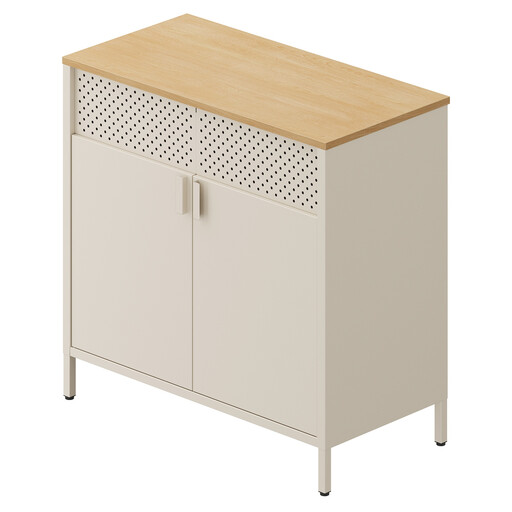
Why This Fits Their Persona: For those who love the industrial look but need closed storage. This cabinet can serve as a sideboard in the dining room, a TV stand in the living room, or a complement to an open shelf to keep things tidy.
The steel body is moisture-resistant and very easy to clean—a clear advantage over foiled particleboard. The perforated metal look provides good ventilation and enhances the industrial character.
Offers flexible, concealed storage with an adjustable shelf. The doors create a calm and organized appearance.
If you're looking for more furniture that fits this style, you'll find matching pieces in our collection that meet objective quality criteria.
1. How much weight can an industrial-style bookshelf hold? The load capacity varies greatly depending on the model and construction. Always check the manufacturer's specifications for the maximum load capacity per shelf. Models with a solid frame and high-quality shelves can often support 20 to 35 kg per shelf. Ideally, place heavy items like coffee table books or binders on the lower shelves to increase stability.
2. Is wall mounting mandatory for a tall 180 cm shelf? Yes, for safety reasons, wall mounting is strongly recommended for any shelf that is taller than it is wide. A tall 180 cm shelf, especially when fully loaded, can tip over if accidentally bumped or if children pull on it. An included anti-tip kit should therefore always be used to securely anchor the shelf to the wall.
3. How do I care for a wood and metal bookshelf? Maintenance is generally straightforward. A dry or slightly damp, soft cloth is sufficient for the metal parts and coated wood surfaces. Avoid harsh cleaning agents or abrasive sponges, as they can damage the surfaces. For dust on the metal struts or in the corners, a duster or the brush attachment of your vacuum cleaner will work well.