
Lieferung heute & morgen

Qualitätsgarantie

Willkommens-Angebote freischalten: KOSTENLOSE Lieferung | Bis zu 80 % RABATT | Kostenlose 30-Tage-JoyPlus-Testphase
App herunterladen
An industrial-style bookshelf is more than just storage. It's a statement piece that combines the raw charm of factory lofts with the warmth of wood, lending character to any room. However, the vast selection can quickly become overwhelming, leading to decisions you might later regret. Many models look robust online but turn out to be unstable constructions or use materials that show signs of wear after only a short time.
As your Joybuy Product Recommendation Officer, I'll help you identify the common pitfalls and define the right criteria for your selection. We'll focus on the facts so you can find a shelf that not only looks great but is also functional and built to last.
Before we dive into the details, let's look at three common issues that often lead to disappointment:
To avoid these mistakes, you should check three core aspects before buying. These define the quality, safety, and functionality of your new shelf.
The combination of wood and metal is the heart of the industrial look. The quality of these two components is critical for longevity.
A shelf must stand securely, especially if there are children in the household or if it will be heavily loaded as an office file shelf.
The shelf should not only look good but also fit your space and meet your needs.
Here are some recommendations tailored to different needs and living situations.
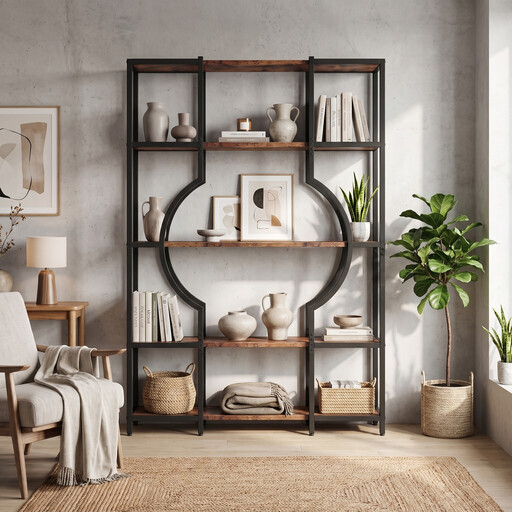
Why it's a great fit: Ideal for those who want to utilise vertical space while making a visual statement. The curved silhouette and 12 open compartments make it a decorative and functional piece for the living room or home office.
The sturdy metal frame and the included anti-tip kit for wall mounting actively counteract the stability trap, ensuring a secure stance.
Combines high storage capacity with a unique, elegant design that stands out from standard shelving units.
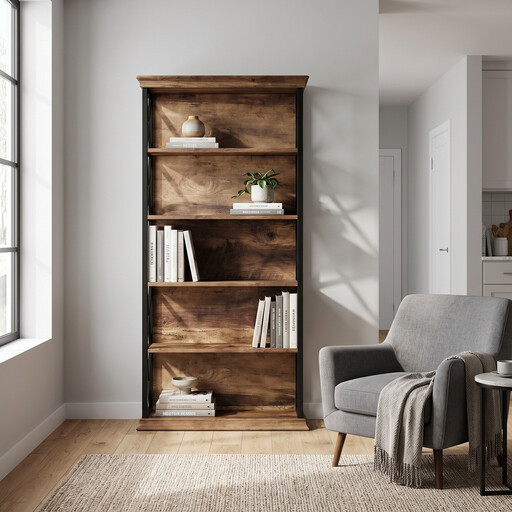
Why it's a great fit: Perfect for anyone needing high load capacity for heavy books, file binders, or collections. The simple, robust design with X-bracing prioritises function.
With a clearly declared load capacity of 34 kg per shelf, it avoids the trap of underestimated load limits. This shelf is explicitly designed for heavy loads.
Exceptionally high load capacity and a stable construction make it ideal for use as a library or archive shelf.
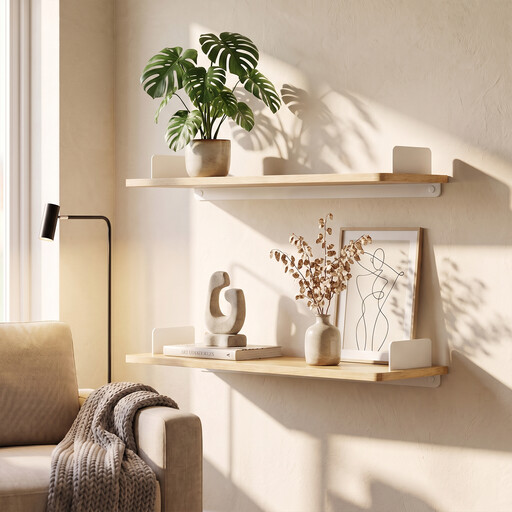
Why it's a great fit: For anyone looking to create storage without sacrificing valuable floor space. These wall shelves are perfect for smaller rooms, hallways, or as a complement above a desk.
It sidesteps the material bluff by using FSC-certified solid rubberwood instead of foiled particleboard, promising higher quality and durability.
Maximum space efficiency through wall mounting and the use of high-quality real wood for an authentic look and feel.
We have compiled a complete, up-to-date list of products that fully meet these strict selection criteria and safety regulations.
1. How do I securely attach a tall bookcase to the wall? Every tall shelf should come with an anti-tip kit. This typically consists of a bracket or a strap that is screwed to the shelf and the wall. Mark the drill position on the wall, drill a hole, insert a suitable wall anchor, and screw the safety element in tightly. This prevents the shelf from tipping forward.
2. What is the difference between MDF and solid wood in shelves? Solid wood is a natural product; every piece is unique. It is very durable and robust, but also more expensive and requires more care. MDF (Medium-Density Fiberboard) is an engineered wood product made from finely shredded wood fibers that are pressed together. It is very dimensionally stable, has a smooth surface that is easy to coat, and is more cost-effective than solid wood. For a vintage-style shelf with good value for money, high-quality, coated MDF is an excellent choice.
3. How much weight can a typical industrial-style bookshelf hold? This varies greatly depending on the model, material, and construction. There is no standard answer. Lightweight decorative shelves often only support 5-10 kg per shelf, whereas a sturdy office file shelf or a bookcase for heavy art books can hold up to 35 kg per shelf or more. Therefore, always check the manufacturer's specified maximum load capacity per shelf in the product details. This is the most reliable indicator of its strength.