
Lieferung heute & morgen

Qualitätsgarantie

Willkommens-Angebote freischalten: KOSTENLOSE Lieferung | Bis zu 80 % RABATT | Kostenlose 30-Tage-JoyPlus-Testphase
App herunterladen
A bookcase should keep books neatly organised, stand securely and fit the available space. In practice, however, a few common purchasing mistakes can lead to unnecessary expense. You might choose a bookcase based on its appearance, only to find it is not deep enough for your books. Or you might confuse the maximum load capacity with the load it can bear when weight is evenly distributed, or leave the anti-tip kit unused.
This guide explains what families, parents and adults should look for when buying a bookcase. We cover children’s bookcases, freestanding living room shelves, space-saving home office storage and bookends for furniture you already own.
A decorative bookcase may look right in your room, but it might not be suitable for heavy reference books, ring binders or lots of coffee table books. When choosing a freestanding bookcase, the material, shelf thickness, overall load capacity and wall fixings matter more than appearance alone.
For a children’s room, accessibility is also important. A tall piece of furniture with upper shelves that children can’t reach does little to encourage them to use it independently.
Figures such as ‘20 kg per shelf’ apply only under the conditions specified by the supplier. Weight should be spread as evenly as possible. Keep heavy books on the lower shelves, and use the higher ones for lighter toys or decorative items.
For a bookcase used for both books and toys, check that the shelves are wide and deep enough for different items. A narrow shelf may be fine for paperbacks, but not for large picture books or toy boxes.
Before you buy, measure the width, depth and height of the space where you plan to put the bookcase. Remember to allow extra room for skirting boards, doors, radiators and assembly. A wall-mounted shelf needs a suitable wall, as well as the right wall plugs and screws for the surface.
Once assembled, a children’s shelf or bookcase shouldn’t be left freestanding if wall fixings are provided or recommended. Follow all the manufacturer’s instructions on securing it against tipping.
First, make a note of what you plan to store in the bookcase:
A compact freestanding bookcase can fill an unused corner. A wall-mounted shelf saves floor space, but needs to be fixed securely and in a way that’s suitable for the wall material.
Steel frames can offer a high load capacity when they’re well designed. Wood-based materials such as MDF or chipboard often have an easy-care finish and come in a range of styles. Oxford fabric shelves are lightweight and can help protect books from direct contact with hard edges.
Look for clear information about:
For homes with children, neatly finished or rounded edges are particularly useful. Check a fabric book organiser regularly for dirt and damage.
A bookcase should stand on a level surface. Tall or narrow pieces of furniture often need to be secured to the wall. This is especially important if children can access the bookcase or if you’re storing items on the upper shelves.
Before assembly, check:
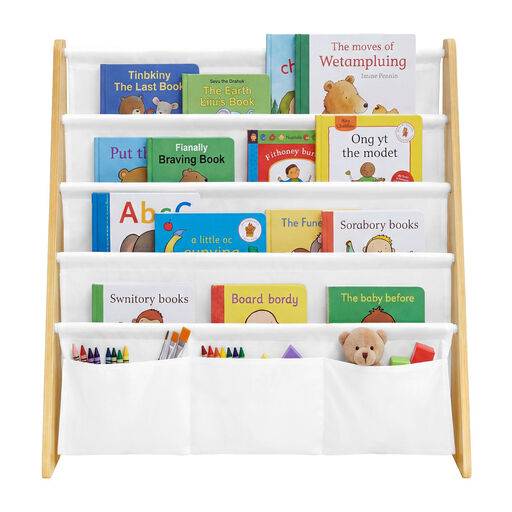
Why this product suits this profile: Measuring 62.4 × 25 × 60 cm, this children’s bookcase is designed for low-level, compact storage in a child’s bedroom or reading corner. Its six soft Oxford fabric compartments can hold books of different sizes.
Its low height makes it easy to reach. The supplier states a load capacity of up to 20 kg per shelf; even so, position the bookcase against a wall in accordance with the instructions.
Compact dimensions, four tiers and fabric compartments with a rounded, child-friendly look.
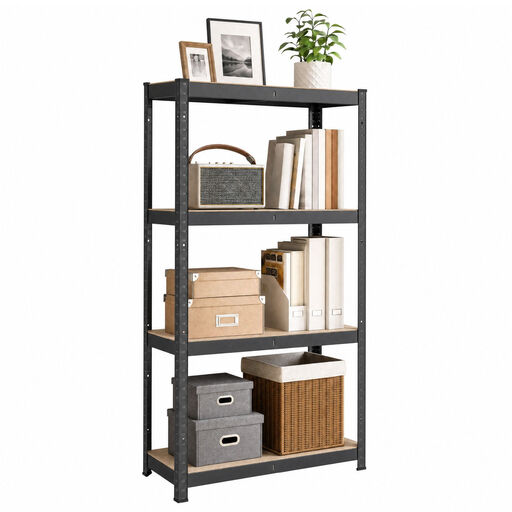
Why this product suits this profile: This freestanding bookcase measures 40 × 80 × 160 cm and, according to the product description, has adjustable shelves in 3 cm increments. This makes it easy to adapt the storage space for books, kitchen utensils, workshop supplies or documents.
Adjustable shelves help make the most of the available space. The anti-tip kit supplied is designed to secure the bookcase to the wall.
Steel frame, adjustable shelf heights and a stated capacity of up to 130 kg per shelf when weight is evenly distributed.
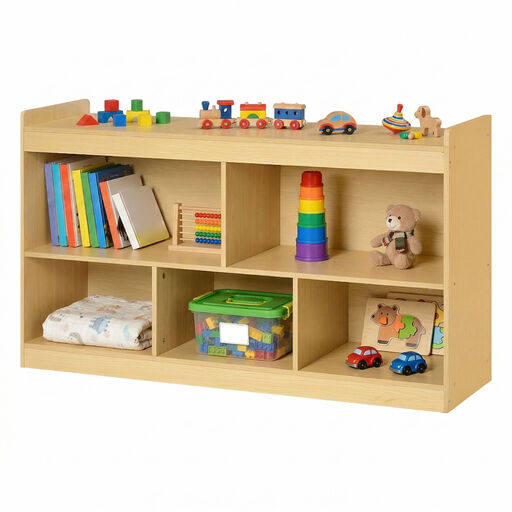
Why this product suits this profile: With a spacious top and several compartments, and standing 65 cm high, this bookcase is a good fit for families looking for children’s storage for books, toys and personal belongings.
Rounded corners, a reinforced construction and an included anti-tip kit address common requirements for a child’s room. Make sure the bookcase is securely fixed to the wall.
Five compartments in different sizes, an easy-care finish and a stated capacity of up to 20 kg per compartment.
If you have space on your desk, a two-tier clamp-on shelf could also be a useful option. This model has an adjustable divider and attaches to desk tops measuring 10 to 45 mm thick, without the need to drill. It’s ideal for keeping documents, notes and decorative items to hand.
We’ve put together a complete, regularly updated list of products that meet these strict selection criteria and fully comply with the safety regulations applicable in the EU.
A children’s bookcase should be low enough for your child to reach the books they use most often without climbing. Models around 60 to 65 cm high may be accessible for toddlers. However, the right height depends on your child’s age and size, as well as how securely the bookcase is positioned. Always secure tall furniture to prevent it from tipping over.
It depends on what you plan to store. Paperbacks weigh considerably less than coffee table books or ring binders. Don’t exceed the manufacturer’s stated load capacity per shelf. Put heavy items on the lower shelves and spread the weight as evenly as possible.
Bookends may be all you need if you already have a sturdy shelf and simply want to keep a row of books upright. Options made from concrete, marble or metal also add weight of their own. However, if you’re looking for a completely new storage solution, bookends are no substitute for a bookcase with sufficient shelf height and load capacity.