
Lieferung heute & morgen

Qualitätsgarantie

Willkommens-Angebote freischalten: KOSTENLOSE Lieferung | Bis zu 80 % RABATT | Kostenlose 30-Tage-JoyPlus-Testphase
App herunterladen
When you're travelling, camping, or on a long-haul truck route, reliable refrigeration isn't a luxury—it's a necessity. A compressor cooler promises to keep food fresh and drinks ice-cold, regardless of the ambient temperature. But the market is flooded with models whose marketing promises often fall short in practice. Before you invest, it's crucial to understand the most common pitfalls that can lead to disappointment and a costly mistake.
As your Joybuy Product Recommendation Officer, I'll help you correctly interpret technical specs and make an informed decision.
Many buyers are drawn in by tempting marketing claims, only to discover later that their unit can't handle real-world demands. Pay close attention to these three points:
To avoid these traps, you should focus on objective technical features. These three factors determine the performance and reliability of your future compressor cooler.
The heart of the unit is the compressor. Unlike thermoelectric coolers, whose cooling power is highly dependent on the ambient temperature, a compressor cooler works just like a conventional refrigerator. It can precisely reach and maintain temperatures from, for example, +10°C down to -20°C, even in high external heat. This allows not only for chilling drinks but also for safely freezing food, making it a true cooler with a freezer function. Models with two separate cooling zones offer maximum flexibility to cool and freeze simultaneously.
A good 12V car fridge must be efficient. Look for the following features:
The right size depends on your intended use.
Also, look for robust construction. Features like reinforced corners, sturdy carrying handles, and an incline tolerance of 30° or more are indicators of a high-quality portable cooler built to withstand the rigours of mobile use.
Instead of presenting an overwhelming list, we've selected models that meet specific needs and consistently avoid the pitfalls mentioned.
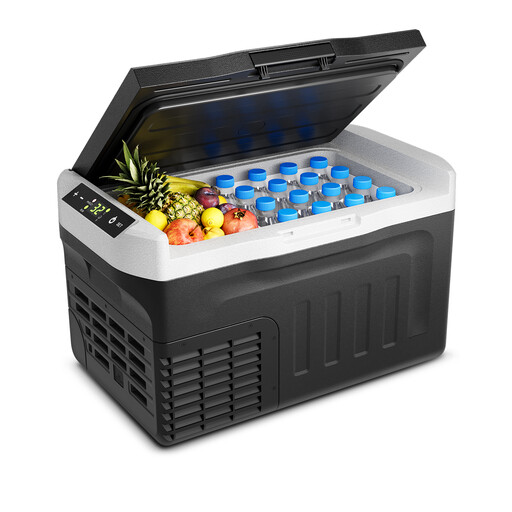
Why This Fits Their Persona: At 21 litres, this cooler is compact enough for a car boot and offers plenty of space for a weekend trip. It combines essential features without breaking the bank.
It features a true compressor for reliable cooling down to -20°C and a three-stage battery protection system to save your vehicle's battery. The app control is a convenient bonus in this price range.
Compact dimensions, low power consumption in ECO mode, and quiet operation at just 42 dB, according to the manufacturer.
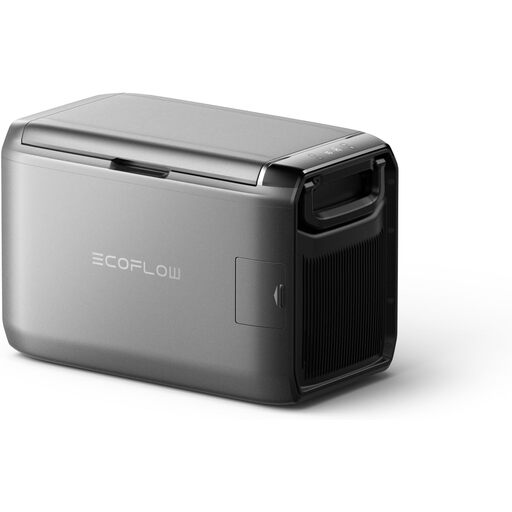
Why This Fits Their Persona: For users who demand maximum independence and performance. Ideal for van life, boat trips, or multi-day expeditions far from any power outlet.
It solves the power problem with an optional 298 Wh plug-in battery that provides up to 39 hours of cooling, according to EcoFlow. True dual-zone cooling with separate controls and thick insulation ensure maximum efficiency.
Option for complete power autonomy, extremely fast cooling (from 25°C to 0°C in 40 min, per the manufacturer), and flexible charging options (AC, car, solar).
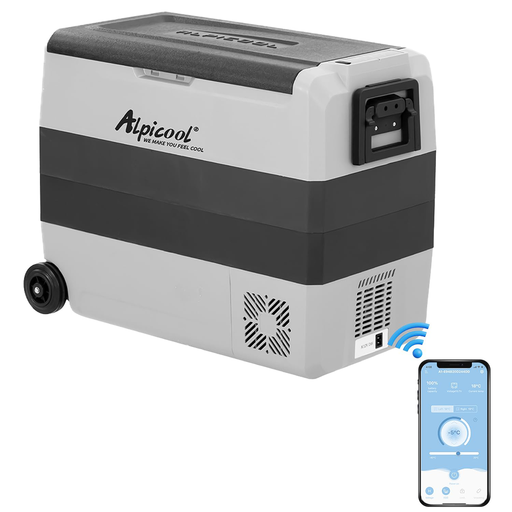
Why This Fits Their Persona: The large 60-litre capacity is perfect for supplying a whole family on holiday or a professional driver on a long tour. The sturdy wheels and folding handle make transport significantly easier.
Its large size is made practical by smart features. A removable divider allows for flexible use as one large single zone or as a combined fridge and freezer. Good insulation keeps power consumption in check despite the large volume.
Very large 60-litre capacity, flexible dual-zone configuration, and well-designed transport features (wheels, magnetic handle).
We've compiled a complete, up-to-date list of products that fully meet these strict selection criteria and comply with rigorous safety standards.
The runtime depends on many factors: the cooler's efficiency, battery capacity, set temperature, ambient temperature, and how often the cooler is opened. An efficient 40-litre model consumes about 0.5-1 Ah per hour in cooling mode. A healthy 60 Ah car battery could theoretically run it for over 24 hours before the battery protection kicks in. However, for extended stops, it's recommended to connect the cooler to an external power source or run the engine periodically.
No, modern compressor coolers are designed for mobile use. Most models operate without issue at an incline of up to 30-45 degrees. This makes them ideal for use in cars, on uneven roads in a truck, or even on a boat in light seas. This is a significant advantage over absorption coolers, which require a level surface to function.
The difference is fundamental. A compressor cooler is an active refrigeration system that works like a home refrigerator, capable of reaching temperatures well below freezing, regardless of the outside temperature. A thermoelectric cooler cools passively and can typically only lower the internal temperature by about 15-25°C below the ambient temperature. So, on a hot summer day with the car interior at 35°C, it will cool to 10-20°C at best, whereas a compressor cooler will effortlessly maintain 4°C or even freezing temperatures.