
Lieferung heute & morgen

Qualitätsgarantie

Willkommens-Angebote freischalten: KOSTENLOSE Lieferung | Bis zu 80 % RABATT | Kostenlose 30-Tage-JoyPlus-Testphase
App herunterladen
Unused corners in living spaces are wasted potential. An industrial-style corner shelf can be a functional and aesthetically pleasing solution to showcase books, plants, or decorative objects. However, the market offers a vast array of options, and not every shelf that looks robust delivers on its promise. Before you make a decision, it's crucial to understand the common weaknesses that often only become apparent after purchase.
This guide will help you identify the key features of a quality industrial-design shelf and avoid making a poor purchase.
Many shelves look convincing in product photos but prove to be impractical or unstable in daily use. Pay special attention to these three points:
To make an informed decision, you should check three core parameters. These are crucial in determining the durability and functionality of your new furniture.
The combination of wood and metal is characteristic of the industrial style. The quality of these two components is critical.
A tall living room shelf must be secure. The following features contribute significantly to its stability:
An L-shaped bookcase is particularly efficient for utilising corners, offering more storage space than two separate, narrow shelves. Models with multiple tiers, such as a 7-tier shelf, maximise vertical storage without taking up much floor space. Measure your corner precisely before buying and ensure the shelf design will sit flush against both walls.
Here are some recommendations tailored to different needs and room situations.
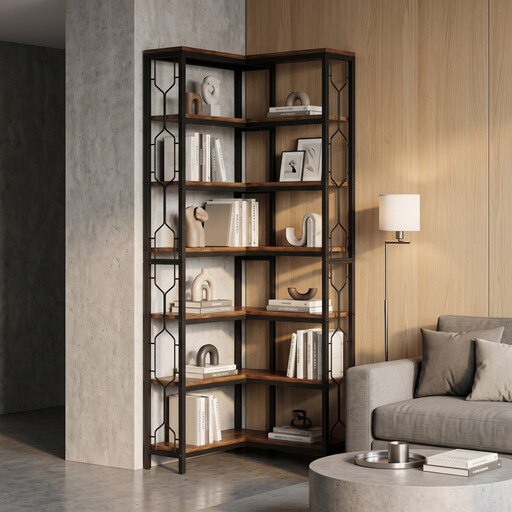
Why This Fits Their Persona: Ideal for anyone looking to transform an unused corner into a fully functional storage area. The L-shaped design makes optimal use of the space and provides ample room on seven tiers for an extensive book collection or decorative items.
The combination of a reinforced metal frame, adjustable feet, and an anti-tip kit actively counteracts instability. The side grids also prevent items from falling off.
High-quality materials featuring E0-grade particleboard and a powder-coated metal frame. The high load capacity of up to 45 kg per shelf (according to the manufacturer) allows for storing heavy items.
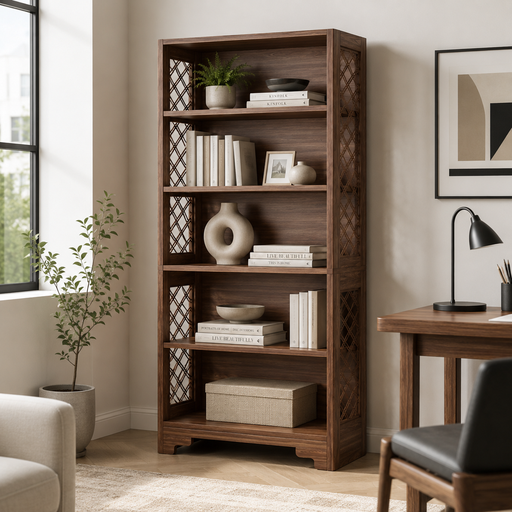
Why This Fits Their Persona: An alternative for users who prefer the industrial look but want to utilise a straight wall. This tall standing shelf also offers plenty of storage with six tiers and fits well in a living room or home office.
The construction, featuring thickened MDF boards, a solid base, and a wooden back panel, ensures high foundational stability and avoids the typical wobbling of simpler standing shelves.
The X-design side braces are not just a visual feature; they also contribute to structural integrity. The high load capacity of up to 34 kg per shelf (according to the manufacturer) is another plus.
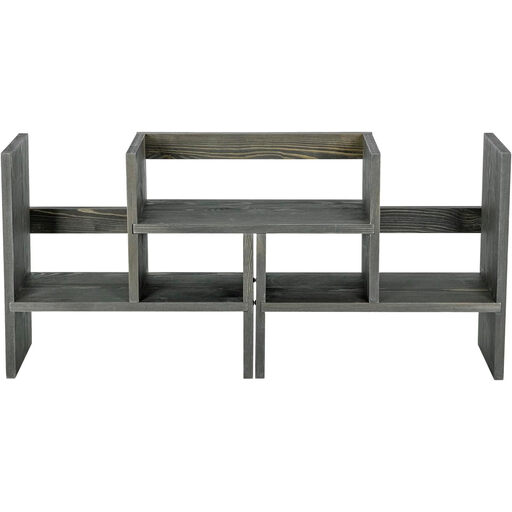
Why This Fits Their Persona: For those who want to implement the industrial look in a smaller space. This desktop organiser creates additional shelving for books, files, or accessories without blocking valuable workspace.
Instead of relying on cheap particleboard, this model is made of solid wood. This ensures a higher-quality feel and greater stability, even for a compact, freestanding design that doesn't require wall mounting.
The adjustable and expandable design allows for flexible adaptation to the height of books or binders and fits various desk sizes.
We have compiled a complete, up-to-date list of products that fully meet these strict selection criteria and rigorous safety standards.
Stability depends on several factors. Always use the included anti-tip kit to secure the shelf to the wall. Ensure the shelf stands on a level surface; use the adjustable feet to compensate for any unevenness. Distribute weight evenly, placing heavy items like books or binders on the lower shelves.
In theory, yes, but it's crucial to measure the corner accurately before buying. Make sure the corner's angle is actually 90 degrees and that there are no skirting boards, pipes, or other obstructions that could prevent it from sitting flush against the wall. Compare your measurements carefully with the product dimensions.
Care is generally straightforward. A soft, dry or slightly damp cloth is sufficient for cleaning the wood and metal surfaces. Avoid harsh cleaning agents or abrasive sponges, as they can damage the metal's powder coating or the wood components' melamine surface.