
Lieferung heute & morgen

Qualitätsgarantie

Willkommens-Angebote freischalten: KOSTENLOSE Lieferung | Bis zu 80 % RABATT | Kostenlose 30-Tage-JoyPlus-Testphase
App herunterladen
An industrial-style standing shelf is more than just a storage solution; it's a statement piece that brings functionality and urban character to any room. However, the vast selection can quickly become overwhelming. Not every shelf that looks sturdy lives up to expectations in daily use. Before you make a decision, it's crucial to understand the most common pitfalls that often only become apparent after the purchase.
Many buyers report three core problems that severely limit a shelf's usefulness:
A well-considered purchase will save you from these disappointments. By using a few key parameters, you can objectively evaluate a model's quality and suitability.
To find a durable and functional living room storage shelf or one for another space, you should check three technical aspects. These features are critical for stability, longevity, and practical everyday use.
The signature look of the industrial style comes from the combination of wood and metal elements. The quality of these components is crucial.
A tall shelf must be absolutely secure. Several design features contribute to this:
Measure the available space precisely—height, width, and depth. Remember to account for baseboards or light switches. A vintage-style ladder shelf, for example, can be a clever solution for alcoves, as it often tapers towards the top, creating a more airy feel. Pay attention to the usable depth of the shelves. It should be sufficient to stably place binders (approx. 29 cm) or larger decorative objects.
Based on these objective criteria, we have identified several models that offer a suitable solution for different needs and living situations.
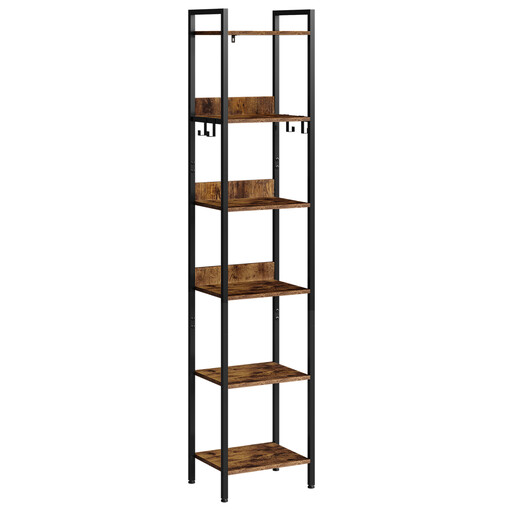
Why This Fits Their Persona: Ideal for narrow alcoves or small rooms where vertical storage is key. Its slim 40x30 cm profile makes optimal use of space without overwhelming the room.
Addresses the stability problem with adjustable foot pads for uneven floors and an included anti-tip kit, which is essential for such a tall, narrow shelf.
Offers extra, flexible storage with 4 movable hooks for towels or kitchen utensils. The 15 cm of ground clearance makes cleaning underneath easy.
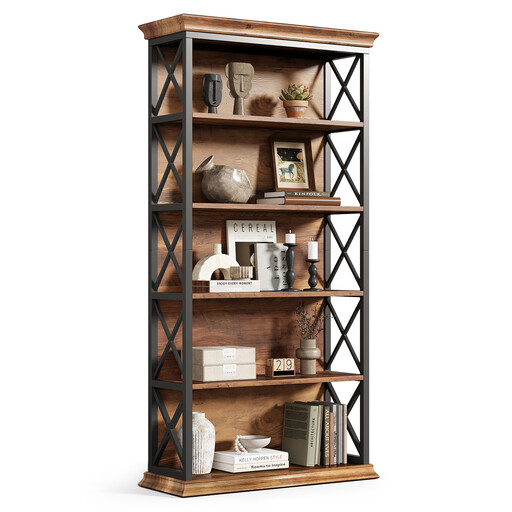
Why This Fits Their Persona: Perfect for users who need to store heavy items like extensive book collections, binders, or hefty decorative objects and who prioritise maximum stability.
Counters the pitfalls of instability and low-grade materials with a robust metal frame featuring X-shaped bracing and 1.5 cm thick, E0-grade engineered wood shelves.
According to the manufacturer, it offers a high load capacity of up to 75 pounds (approx. 34 kg) per shelf, ensuring reliable storage for even heavy loads.
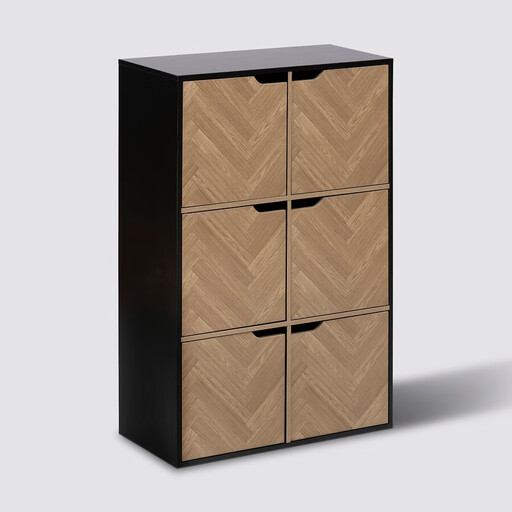
Why This Fits Their Persona: For anyone who prefers a mix of open and closed storage to maintain a tidy, uncluttered look. Ideal for living rooms or home offices to stylishly conceal clutter.
The design with doors creates a calm aesthetic, avoiding the messy impression that fully-stocked open shelves can create. The use of particleboard and MDF provides a solid foundation.
The doors with a chevron pattern are a decorative highlight. The combination of open and closed compartments allows for flexible organisation of decor and everyday items.
We've compiled a complete, up-to-date list of products that meet these strict selection criteria.
1. How do I securely attach a tall, narrow shelf to the wall? Most tall shelves come with an anti-tip kit. This usually consists of a bracket or strap that attaches to the shelf and is anchored to the wall with a screw and wall plug. It is crucial to use the correct type of wall plug for your wall type (e.g., drywall, concrete) and to follow the manufacturer's assembly instructions precisely. This prevents the shelf from tipping forward.
2. What is the difference between MDF and particleboard in an industrial-style shelf? MDF (Medium-Density Fibreboard) is made by compressing very fine wood fibres under high pressure. This results in a very homogeneous, dense, and stable panel with smooth surfaces that are easy to finish. Particleboard consists of coarser wood chips that are glued together. It is generally lighter and less expensive, but also less resistant to bending and more susceptible to moisture at the edges. For shelves intended to hold more weight, MDF is often the more robust choice.
3. Can I use an industrial standing shelf in the kitchen? Yes, a freestanding kitchen shelf in an industrial style is a popular and practical solution. When choosing one for the kitchen, pay special attention to a durable surface finish. A powder-coated metal frame is preferable as it is better protected against moisture and steam. The shelves should have a melamine-coated or well-sealed surface to make them easy to clean and protect them from stains. Models with hooks offer practical added value for kitchen utensils.