
Lieferung heute & morgen

Qualitätsgarantie

Willkommens-Angebote freischalten: KOSTENLOSE Lieferung | Bis zu 80 % RABATT | Kostenlose 30-Tage-JoyPlus-Testphase
App herunterladen
An industrial-style shelf combines raw materials like metal and wood into a piece of furniture that is both functional and striking. It promises urban charm and long-lasting stability. But looks can be deceiving. Many buyers are disappointed after their purchase when the supposedly sturdy shelf wobbles, the surfaces scratch easily, or the shelves begin to sag under the weight of just a few books.
To help you with your selection and avoid buyer's remorse, we'll highlight the three most common pitfalls and show you which technical features you should look for.
To ensure your new shelf is as functional as it is stylish, you should check three core parameters.
The longevity of an industrial shelf depends on the quality of its frame and shelves. A frame made of powder-coated steel offers protection against scratches and corrosion. Look for additional stabilising features like rear cross-braces (X-braces) or reinforced joints that prevent swaying. For the shelves, there are differences between solid wood, veneer, and MDF or particleboard. High-quality MDF boards (E0 or E1 standard) are a solid and dimensionally stable alternative to solid wood.
Load capacity is one of the most important, yet often misunderstood, specifications. Manufacturers typically provide two figures: the maximum load capacity per shelf and the maximum total load capacity for the entire unit. For storing heavy items like tools or complete book collections, the load capacity per shelf is crucial. A decorative vintage living room shelf requires less load capacity than a functional heavy-duty rack. Always check this value against your intended use.
A tall, loaded shelf poses a safety risk if not properly secured. An anti-tip kit—usually in the form of brackets or straps for wall mounting—is essential, especially in households with children or pets. Adjustable feet are another key feature. They allow you to level the shelf perfectly on uneven floors, ensuring a wobble-free, secure stance.
Instead of making a blanket recommendation, we have selected models for specific user profiles that meet the quality criteria mentioned above.
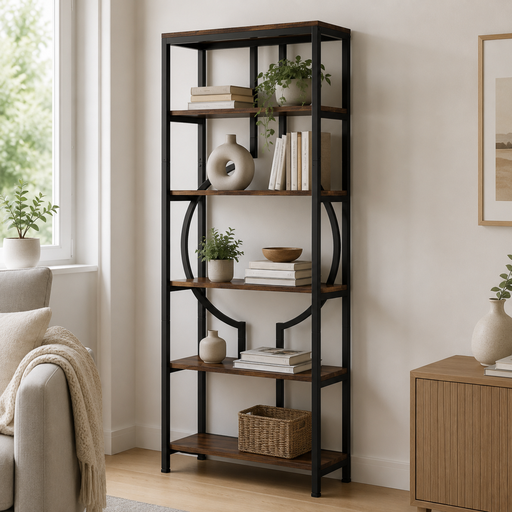
Why This Fits Their Persona: Ideal for users looking for a functional industrial bookshelf that also serves as a design piece in the living room or office. Its semi-circular silhouette sets it apart from standard shelves and makes optimal use of the room's height.
The sturdy iron construction, with a specified total load capacity of 100 kg, counteracts the pitfalls of instability and insufficient load-bearing. It's more than just a decorative element.
Striking geometric design; six open tiers for ample storage; scratch and stain-resistant surface for easy maintenance.
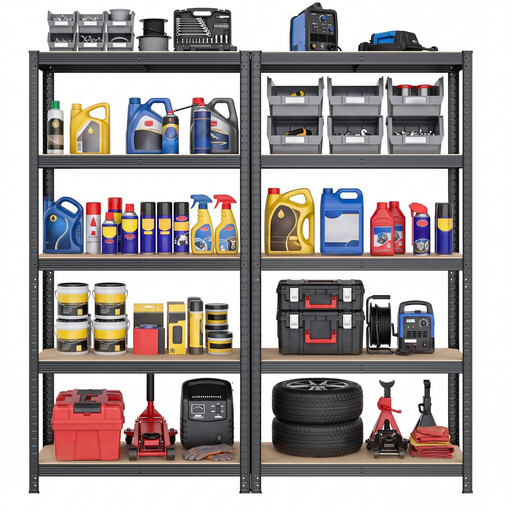
Why This Fits Their Persona: This set is designed for users who need maximum load capacity and flexibility for the garage, basement, or workshop. The primary focus here is its function as a heavy-duty rack.
With a steel frame, reinforced crossbars, and an enormous total load capacity of 875 kg (175 kg per shelf), this model bypasses the trap of merely looking sturdy. It is built for heavy loads.
Extremely high load capacity; can be split into two separate, shorter units (e.g., as a workbench); tool-free assembly with a slot-in system.
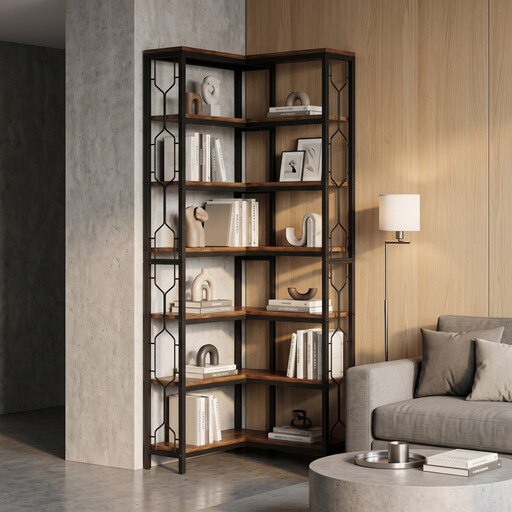
Why This Fits Their Persona: Perfect for anyone wanting to turn unused corners in the living room, home office, or kitchen into valuable storage space. This black corner shelf uses space efficiently and stylishly.
The L-shape provides high intrinsic stability in a corner. The included anti-tip hardware and adjustable feet directly address the problem of wobbly constructions. The high load capacity of up to 45 kg per shelf is remarkable for a corner model.
Optimal use of dead corner space; seven tiers for maximum storage on a small footprint; side grids prevent items from falling off.
We have compiled a complete, up-to-date list of products that fully meet these strict selection criteria and safety standards.
Most tall shelves come with an anti-tip kit. This usually consists of one or more brackets or a strap that is screwed to the shelf and the wall. It is strongly recommended to use this hardware to prevent the shelf from tipping over. Ensure you use the appropriate wall anchors and screws for your wall type (e.g., concrete, drywall).
The main difference lies in their intended use and construction. An industrial bookshelf or an open shelf for the living room focuses on an appealing aesthetic that evokes the industrial style. Its load capacity is designed for books and decor. A heavy-duty rack, on the other hand, is primarily designed for maximum stability and a very high load capacity for storing heavy tools, boxes, or supplies in a basement, garage, or warehouse. Its appearance is usually purely functional.
Care is generally straightforward. A dry or slightly damp, soft cloth is sufficient for cleaning the metal and engineered wood surfaces. Avoid harsh cleaning agents or abrasive sponges, as they can damage the metal's powder coating or the shelves' laminate. For any solid wood elements, you should follow the manufacturer's specific care instructions.