
Lieferung heute & morgen

Qualitätsgarantie

Willkommens-Angebote freischalten: KOSTENLOSE Lieferung | Bis zu 80 % RABATT | Kostenlose 30-Tage-JoyPlus-Testphase
App herunterladen
Industrial shelving promises robustness and a clean aesthetic. Yet, the search for the right solution can quickly become overwhelming. Many products fail to live up to their descriptions, leading to wobbly structures and disappointed expectations. Before you make a decision, it's crucial to understand the most common pitfalls to find a durable and secure storage solution.
Two common problems often lead to bad purchases:
To avoid these issues, you should check three core parameters. These will help you objectively evaluate the quality and suitability of an industrial shelving unit.
The material is the foundation of durability. For a heavy-duty shelving unit used in a garage, workshop, or basement, galvanized steel is an excellent choice. The zinc coating provides reliable protection against corrosion, which is crucial in environments with fluctuating humidity. Powder-coated steel, often found in pipe shelving or an industrial wall-mounted coat rack for living areas, offers an aesthetically pleasing and resilient surface but is less suitable for permanently damp rooms. Also, pay attention to the shelf board material. MDF boards are sturdy but can swell if they come into direct contact with moisture.
The stated load capacity is a key metric. It's important to distinguish between the load capacity per shelf and the total load capacity. These values almost always apply to a uniformly distributed load. This means heavy items should be placed across the entire surface of the shelf, not concentrated at a single point in the middle. For tall shelves or those bearing heavy loads, wall mounting is essential to prevent tipping. Sturdy interlocking or screw connections are also an indicator of a well-thought-out design.
Modern industrial shelves often use interlocking systems that allow for tool-free or low-tool assembly. Check that the connections fit precisely to ensure a wobble-free structure. For a wall-mounted clothes rail or a wall-mounted kitchen shelf, the quality of the included mounting hardware is critical. Ensure it is suitable for your wall type (e.g., concrete, brick, drywall) to guarantee a secure and lasting installation.
Based on these criteria, we have identified a few products that offer well-designed solutions for specific use cases.
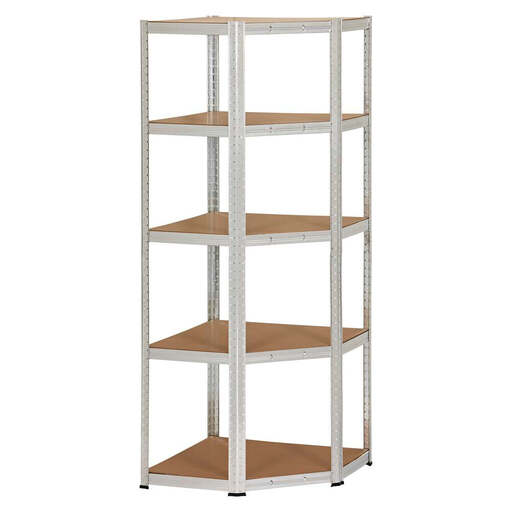
Why This Fits Their Persona: Ideal for users who want to make the most efficient use of unused corners in a garage, workshop, or basement, and who value maximum load capacity and durability.
The galvanized steel frame prevents corrosion in damp spaces. The high load capacity of 175 kg per shelf (with uniform distribution) prevents the sturdy MDF boards from sagging.
Total load capacity of 875 kg. The smart interlocking system allows for straightforward assembly. The corner design creates optimal storage space.
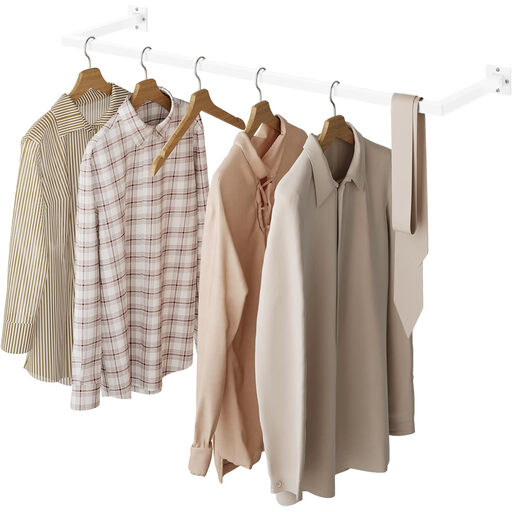
Why This Fits Their Persona: Perfect for anyone looking for a space-saving and aesthetic solution for a hallway, bedroom, or dressing room. This industrial-style wall rack replaces bulky wardrobes and creates open, accessible storage.
The construction of sturdy metal pipes and solid wall mounting ensures high stability. The specified load capacity of up to 50 kg (on concrete walls) is designed for clothes and coats.
Open, minimalist design. With a 30 cm distance from the wall, clothes remain clean. Assembly is straightforward thanks to the illustrated instructions and included mounting kit.
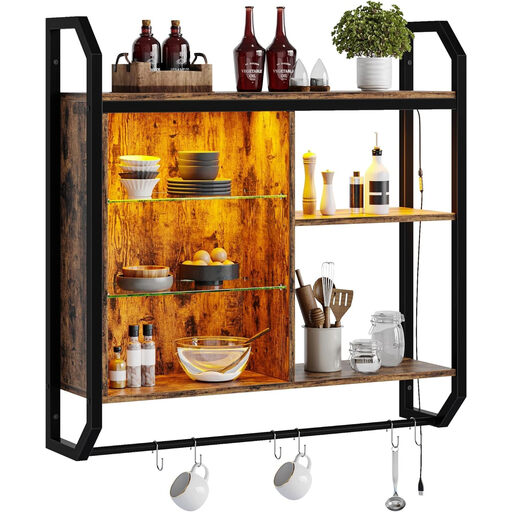
Why This Fits Their Persona: For users looking for a kitchen shelf, coffee bar, or decorative rack that not only provides storage but also serves as a visual highlight. Ideal for the kitchen, living room, or office.
This shelf combines robust wood panels and steel pipes with height-adjustable glass shelves. The overall structure is designed for a load of up to 68.5 kg and must be securely mounted to the wall.
Integrated LED lighting with 20 colours and a USB port. Added functionality comes from 6 S-hooks and a towel rail, making it a versatile kitchen or bar shelf.
We have compiled a complete, up-to-date list of products that fully meet these strict selection criteria and rigorous safety standards.
For a secure installation, it is crucial to use wall plugs and screws appropriate for your wall type (e.g., concrete, brick, drywall). Most heavy-duty shelves have pre-drilled holes in the frame for wall mounting. Position the shelf, mark the drill holes, drill the holes, insert the wall plugs, and screw the shelf firmly to the wall. This prevents tipping, especially if there are children in the household or the shelf is very tall.
Yes, this is a risk with low-quality materials. To prevent rust, choose a shelf made of galvanized steel. The zinc coating effectively protects the metal from moisture and corrosion. Powder-coated shelves are well-suited for dry living spaces but can begin to rust at scratches or damaged spots in a permanently damp basement.
This specification means that the maximum load capacity per shelf is only achieved when the weight is spread across the surface, not concentrated at a single point. Do not place heavy items just in the middle; distribute them over the entire area of the shelf. As a rule, place the heaviest loads on the bottom shelves to keep the unit's center of gravity low and increase stability.