
Lieferung heute & morgen

Qualitätsgarantie

Willkommens-Angebote freischalten: KOSTENLOSE Lieferung | Bis zu 80 % RABATT | Kostenlose 30-Tage-JoyPlus-Testphase
App herunterladen
An industrial shelving unit combines open storage with a clean mix of metal and wood-effect finishes. It can be used as a bookcase, kitchen shelf, freestanding industrial-style shelving unit, or storage solution for the living room and home office. However, product images and general claims such as “sturdy” or “plenty of storage space” do not always lead to the right buying decision.
You should check three common pitfalls before buying:
Do not just measure the available wall width; also check the available height and depth. A ladder shelf measuring 187 cm high makes good use of vertical space, but requires sufficient clearance from the ceiling and a secure footing. A depth of around 30 to 40 cm may be suitable for narrow alcoves.
Also consider which items you want to store on the shelving unit:
An open shelving unit feels accessible, but requires a certain level of organisation. Additional hooks can be a practical addition for frequently used items.
Metal-and-wood shelving usually combines a powder-coated metal frame with MDF, chipboard or wooden panels. A powder coating can give the metal surface an even, durable finish, but it does not replace careful use.
Look for:
The surrounding conditions are particularly important in bathrooms or covered balconies. Many items of furniture of this type are not designed for permanent exposure to moisture. Wipe away dust and light dirt with a soft, dry or only slightly damp cloth. Avoid standing moisture and aggressive cleaning products.
A tall freestanding shelving unit should stand on a level, load-bearing floor. Adjustable feet help compensate for minor unevenness. A rear support bar can provide additional rigidity and prevent items from sliding backwards.
Specific safety information is particularly important. The WOLTU model has a maximum load of 10 kg per level. This limit must not be exceeded. The shelving unit also features tip-over protection and four adjustable foot pads. With the wall-mounted shelf, on the other hand, correct wall fixing is crucial. Check that the wall plugs and screws are suitable for the wall material.
The following models differ considerably in width, installation method, number of levels and additional features. This makes it possible to base your choice on your actual needs rather than on design alone.
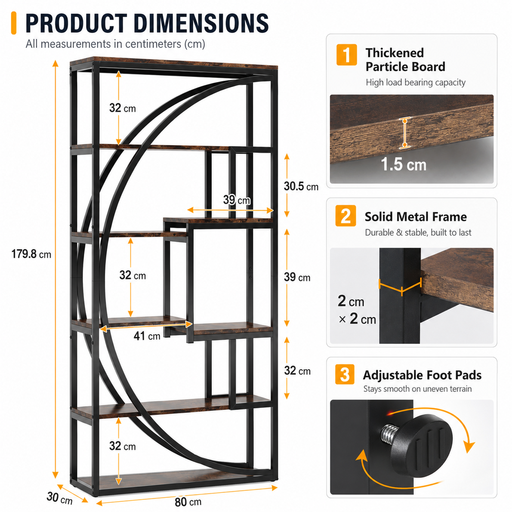
Why this product suits this profile: Measuring 80 × 30 × 179.8 cm, this freestanding shelving unit offers five levels and eight open compartments. It is suitable for books, decorations and everyday items in the living room, bedroom or home office.
The product description clearly states the dimensions, materials and number of compartments. Before use, however, you should still check the recommended load limit with the supplier.
Five levels, eight open storage areas, a black metal frame and a vintage brown finish.
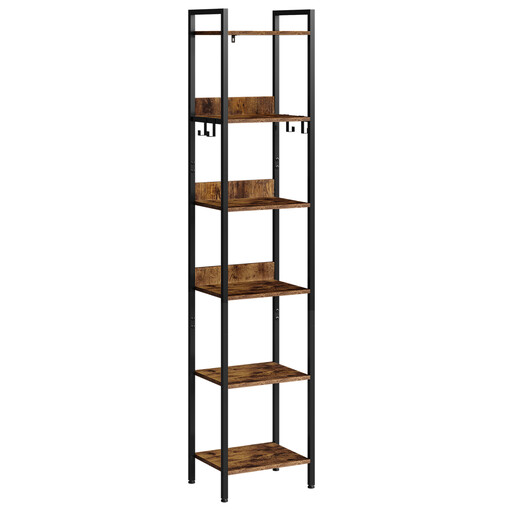
Why this product suits this profile: Measuring 40 × 30 × 187 cm, this ladder shelf makes efficient use of narrow spaces. Six open levels and four movable, removable hooks allow books, plants, towels or kitchen accessories to be stored separately.
Tip-over protection, rear supports and adjustable foot pads address common stability issues. The stated limit of 10 kg per level makes it easier to plan how the shelf will be used.
Six levels, four hooks, 15 cm floor clearance, plus adjustable feet and tip-over protection.
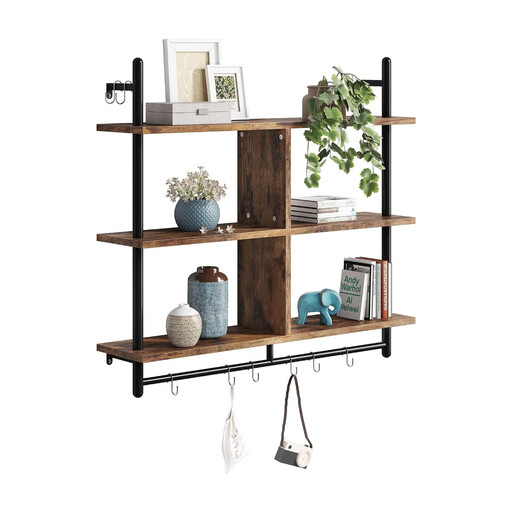
Why this product suits this profile: Measuring 105 × 23.8 × 94 cm, this wall-mounted shelf is suitable for kitchens, living rooms, balconies or other areas where you want to keep the floor clear. Wall mounting creates three open storage surfaces.
The need for wall mounting is clearly stated. This allows you to plan stability precisely, using suitable fixings and taking the wall construction into account.
Three wooden shelves, a tubular metal frame, compact depth and additional hooks in a wall-mounted design.
We have put together a complete, regularly updated list of products that fully meet these strict selection criteria and the safety regulations applicable in the EU.
Avoid placing a tall freestanding shelving unit in a busy passageway wherever possible. Before assembly, check whether skirting boards, sockets or radiators could affect its position. Heavy items should go on the lower shelves, while lighter decorations are better suited to the upper compartments. This helps keep the centre of gravity lower.
For a shelving unit with hooks, check whether the hooks can be moved and which items may be hung from them. Wet towels or heavy bags can put different stresses on the structure than lightweight kitchen accessories.
For a longer service life, we recommend:
That depends on the product dimensions. A model measuring 40 cm wide and 30 cm deep may be suitable for an alcove, but its height means that sufficient clear space must be left above it. Measure the installation area, including skirting boards and the door opening zone.
A kitchen shelving unit can hold crockery, spices, provisions or small appliances, provided that the load limit and compartment dimensions are suitable. In areas with high humidity, follow the care instructions and avoid direct contact with water.
Place it on a level surface, adjust the feet correctly and use the supplied tip-over protection. For a wall-mounted shelf, professional fixing with wall plugs and screws suitable for the wall is required.