
Lieferung heute & morgen

Qualitätsgarantie

Willkommens-Angebote freischalten: KOSTENLOSE Lieferung | Bis zu 80 % RABATT | Kostenlose 30-Tage-JoyPlus-Testphase
App herunterladen
An industrial-style wall shelf is more than just a storage surface. It's a design statement that merges functionality with aesthetics, lending character to unused walls. However, the market is flooded with products that look robust but disappoint in practice. Before you invest, it's crucial to understand the common pitfalls that lead to instability, rapid wear and tear, or impractical use.
This guide will help you separate the wheat from the chaff. We focus on the critical features that define a durable and functional industrial wall shelf and show you what to look for to make an informed decision.
Many shelves look high-quality in product photos but reveal their weaknesses only after assembly and during daily use. Pay special attention to these three problem areas:
To avoid these mistakes, you should focus on objective and measurable product characteristics. The following three parameters are decisive for the quality and longevity of your wall shelf.
The choice of materials is fundamental. A genuine wood and metal floating shelf should be made of components designed for a long service life.
A good wall shelf solves a specific problem. Additional features can significantly increase its utility.
Measure the intended space accurately, considering not only the width and height but also the depth of the shelf. A shelf that is too deep can be obstructive in a narrow hallway. Also, check the included mounting hardware. While standard wall plugs often suffice for solid concrete walls, you will need special hollow-wall anchors for drywall to ensure a secure and lasting installation.
Based on the criteria above, we have identified several models suitable for different user profiles.
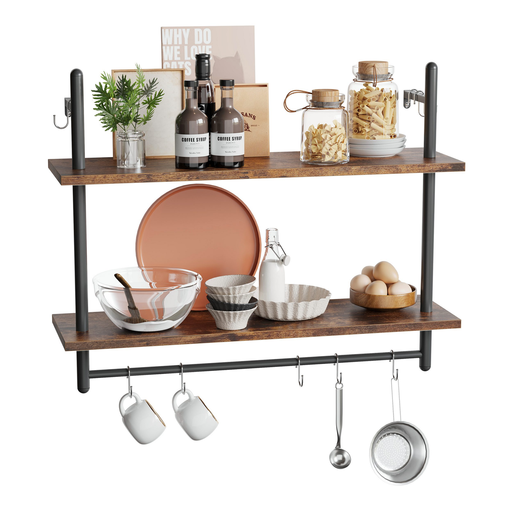
Why This Fits Their Persona: Ideal for anyone seeking a versatile solution for the kitchen, bathroom, or living room. The combination of two spacious shelves and hooks maximises storage in a small footprint.
The construction of thickened P2 particleboard and a reinforced metal frame ensures stability. The 8 included S-hooks immediately make it a functional hanging shelf, avoiding the pitfall of an impractical design.
High functionality with two tiers and 8 hooks. The specified load capacity of 9 kg per shelf is well-suited for everyday use in a kitchen or bathroom.
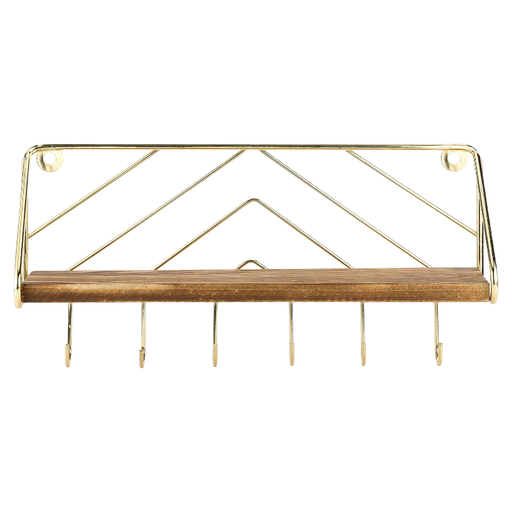
Why This Fits Their Persona: Perfect for entryways or small nooks. This compact shelf combines a ledge for mail or a smartphone with hooks for keys and accessories, all without being obtrusive.
Instead of cheap particleboard, this model uses solid wood with a burnt finish, ensuring durability and a premium feel. The 6 hooks make it a true key holder with a shelf, offering immediate added value.
Combination of solid wood and powder-coated metal wire. Very space-saving and functional design for an entryway.
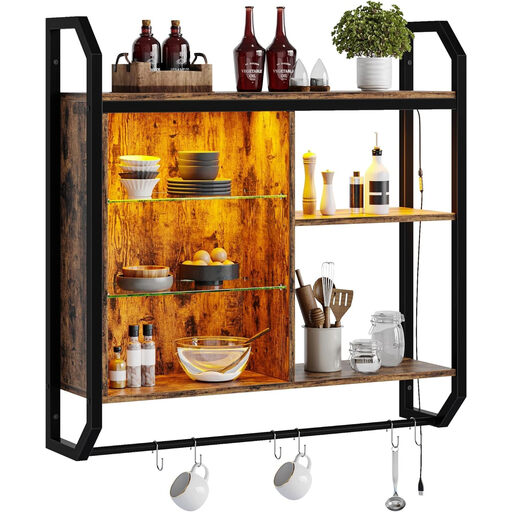
Why This Fits Their Persona: For users who want more than just storage. This shelf is a feature piece for the kitchen, home bar, or living room, creating a special atmosphere with its integrated LED lighting.
This model combines a robust pipe construction with wood and glass elements. Its functionality is maximised with height-adjustable glass shelves, hooks, and a towel bar, elevating it far beyond a purely decorative shelf.
Integrated LED lighting with 20 colours and a USB port. High total load capacity (up to 68.5 kg according to the manufacturer) and versatile usage options.
We've compiled a complete, up-to-date list of products that meet these strict selection criteria and relevant safety requirements.
The load capacity varies greatly depending on the model, materials, and especially the wall mounting. It can range from 5 kg per shelf for light decorative shelves to 20 kg or more for robust bookshelves. Always check the maximum load capacity specified by the manufacturer and ensure that the installation is done correctly on a suitable wall.
This depends entirely on the composition of your wall. For solid walls made of concrete or solid brick, the often-included expansion anchors are usually sufficient. For drywall, you must use special hollow-wall anchors that expand behind the board to provide the necessary support. When in doubt, seeking expert advice at a hardware store is recommended.
For most sealed or lacquered surfaces, a soft, dry, or slightly damp cloth is sufficient. Avoid aggressive cleaning agents. For oiled or waxed solid wood surfaces, occasional re-oiling can renew the protective layer and protect the wood from moisture and stains, which is particularly useful in the kitchen and bathroom.