
Lieferung heute & morgen

Qualitätsgarantie

Willkommens-Angebote freischalten: KOSTENLOSE Lieferung | Bis zu 80 % RABATT | Kostenlose 30-Tage-JoyPlus-Testphase
App herunterladen
Infant formula must suit your baby’s age, dietary situation and individual needs. The choice ranges from infant milk from birth and pre-term formula to first infant milk 1 and follow-on milk from 6 or 7 months. Terms such as DHA, GOS/FOS, organic and HA baby formula can make the decision even more difficult.
As a Joybuy Product Recommendation Officer, I filter the most important information from product descriptions and assess it objectively. The following applies: if you are unsure about your baby’s diet, if there are symptoms or if you are changing formula, speak to a midwife or paediatrician.
Pre-term formula and first infant milk 1 are not the same. Pre-term formula typically contains lactose as its source of carbohydrates and, according to the product information, can be used from birth. First infant milk 1 may also contain starch, giving it a different consistency.
Follow-on milk 2, on the other hand, is intended for a later stage of development. Products such as Aptamil Pronutra 2 and HiPP Bio Combiotik 2 are stated to be suitable from 6 months, while Nestlé BEBA Follow-on Milk 2 is specified as suitable from 7 months. The age stated on the packaging should always be the deciding factor.
DHA baby milk, GOS/FOS baby formula, natural lactic acid cultures and HMO are specific ingredients or nutritional details. However, they are not the only measure of whether a product is suitable for your individual needs. DHA is legally required in first infant formula, so a corresponding note on the label does not automatically mean an additional individual benefit.
Organic baby milk should also be assessed based on the organic seal, ingredients list and relevant age stage. The term ‘organic’ does not replace checking allergens, preparation instructions and storage requirements.
Baby milk powder is often available in 500, 600 or 800-gram packs. A larger pack is not automatically better value if it cannot be used within the stated period after opening. Depending on the product, manufacturers specify three or four weeks. Opened packs should be stored in a dry, sealed container at room temperature.
First, check whether the formula is intended for your baby’s current needs:
The ingredients list shows whether the product contains milk, fish or soya. In several of the products featured, DHA and ARA come from fish oil or special oils. This is important information for families with known allergies or intolerances.
If you are looking for pre-term formula with lactose as the only source of carbohydrates, this is stated, for example, for Bebivita Pre, Aptamil Pronutra PRE and several HA products. GOS and FOS, on the other hand, are prebiotic carbohydrates listed in recipes such as Aptamil Pronutra 2 and Milupa Milumil 2. The ingredients list shows the composition; no medical effect should be inferred from it.
Correct dosing is essential when preparing milk powder. The key steps are:
The manufacturer’s instructions take priority, as the quantity of water, weight of the measuring spoon and usage period after opening may vary.
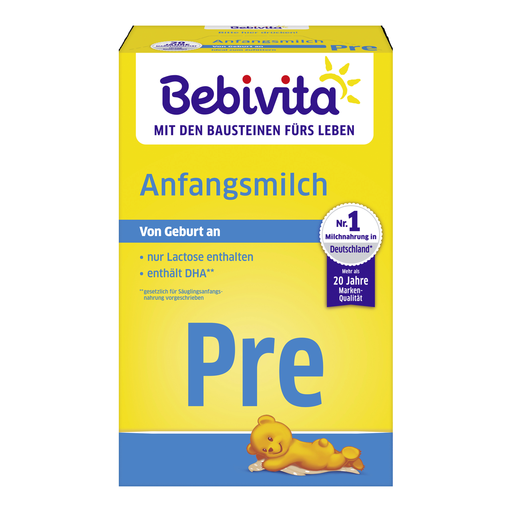
Why this product suits the profile: The 500-gram pack is suitable for parents who initially want to try a smaller quantity or supplement breastfeeding. According to the product information, it is suitable from birth and contains lactose as the only source of carbohydrates.
The clear age indication and manageable pack size reduce the risk of buying unsuitable follow-on milk or an overly large multipack.
Suitable from birth; 500 g; DHA according to the product labelling; lactose as the only source of carbohydrates.
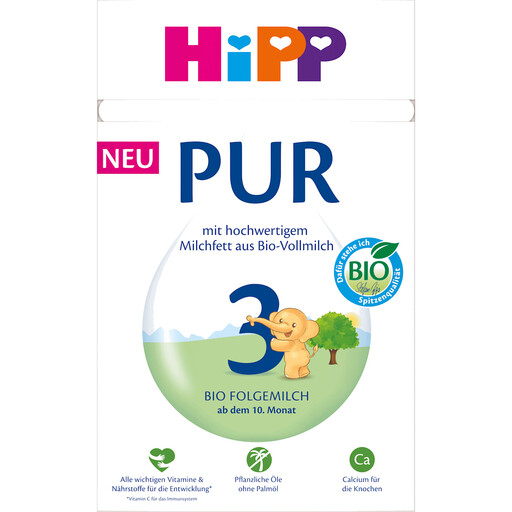
Why this product suits the profile: According to the product information, this follow-on milk is intended for babies from 10 months and contains ingredients from certified organic farming, including 19% whole milk powder.
The specific age stage prevents first infant formula from being mistakenly used as a suitable diet during the second half of the first year.
500 g; organic ingredients according to the labelling; DHA, iron, calcium and iodine listed in the nutritional declaration.
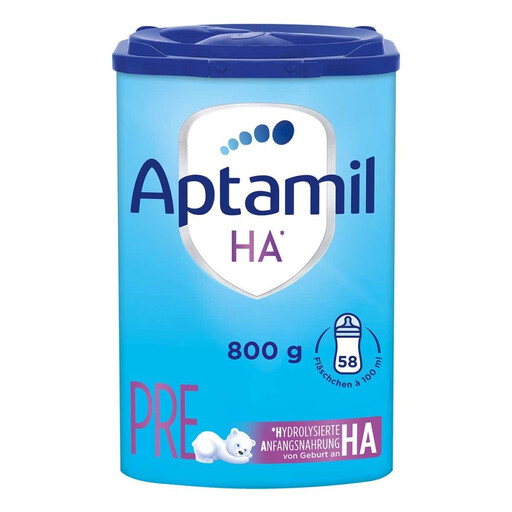
Why this product suits the profile: The 800-gram pack is aimed at families with regular usage. According to the product information, the recipe contains hydrolysed whey protein, lactose and GOS/FOS.
The clear statement that the product is not suitable for an existing or suspected cow’s milk protein allergy helps distinguish it from situations requiring medical assessment.
From birth; 800 g; hydrolysed protein; lactose as the only stated source of carbohydrates.
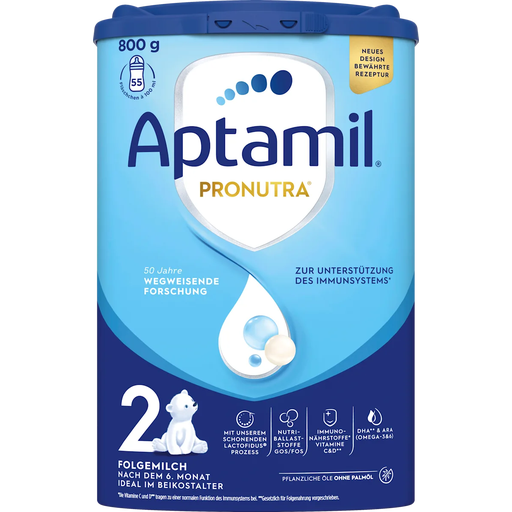
Why this product suits the profile: For babies from 6 months, the recipe provides GOS and FOS as well as DHA and ARA, according to the product information. The 800-gram pack is designed for regular use.
The age indication from 6 months makes it clear that this is not infant milk intended from birth.
800 g; GOS/FOS stated; DHA and ARA included in the nutritional declaration; intended for a mixed diet from 6 months.
We have put together a complete, regularly updated list of products that fully meet these strict selection criteria and the safety regulations applicable in the EU.
Pre-term formula and first infant milk 1 are generally available as products suitable from birth. The deciding factors are the specific age indication, ingredients list and recommendation from a paediatrician or midwife. With HA formula, you must also check whether it is suitable for your individual situation.
This depends on the product. The information available often specifies three or four weeks. The pack should be sealed tightly after each use and stored in a dry place at room temperature. The usage period stated on the packaging always applies.
Water and powder must be measured in the stated ratio. Prepare the formula fresh for each feed, allow it to cool to feeding temperature and feed it immediately. Leftovers should not be returned to the pack or offered again.