
Lieferung heute & morgen

Qualitätsgarantie

Willkommens-Angebote freischalten: KOSTENLOSE Lieferung | Bis zu 80 % RABATT | Kostenlose 30-Tage-JoyPlus-Testphase
App herunterladen
Buying infant formula online might seem straightforward at first glance. However, the shelves and online shops are filled with numerous options: Pre-milk, Stage 1 formula, follow-on milk from 6 months, organic baby milk and hypoallergenic infant formula. What really matters isn't the flashiest packaging, but the right product stage, a clear ingredients list and safe preparation.
Pre-milk and Stage 1 formula from birth are intended for babies from their first day of life. Follow-on milk Stage 2, on the other hand, is typically used from 6 months onwards and forms part of a mixed diet. Products like follow-on milk Stage 3 are designed for older babies. The age indication on the packaging should always match your child's developmental stage.
There's no need to switch just because of a marketing claim. If your baby tolerates a formula well, there's usually no valid reason to frequently change between brands or stages. If you have questions about feeding, notice any discomfort or feel unsure, it's always wise to consult your paediatrician or midwife.
DHA, GOS/FOS, lactic acid cultures or Metafolin are frequently listed ingredients. For infant formula, DHA is also legally required. However, simply seeing them listed doesn't automatically mean a specific health benefit.
Similarly, hypoallergenic infant formula is not a product for treating a cow's milk protein allergy. Hydrolysed protein can be part of an HA formula, but you must still follow the manufacturer's instructions. If you suspect an allergy, product selection should only be made with medical advice.
Baby milk powder must be stored in a dry, clean and well-sealed container. Depending on the product, an opened pack should be used within around three to four weeks. A larger pack is therefore only economical if your daily usage matches this timeframe. Always consider the price per 100 grams alongside the opened shelf life.
The specific information provided by the manufacturer on the packaging and product page takes priority. A product intended for babies under 6 months should not be independently replaced with follow-on milk.
Compare the ingredients list rather than just the front of the packaging. Key points to check are:
Never adjust the dosage by eye. Prepare fresh drinking water according to the pack instructions, measure the powder using the supplied scoop, and make up the feed immediately before use. Leftovers should not be reused. Bottles, teats and lids must be thoroughly cleaned.
Also pay attention to the net weight, the use-by period after opening, the best-before date and undamaged packaging. Nutritional values from different products can only be meaningfully compared if they refer to the same quantity of ready-to-feed formula.
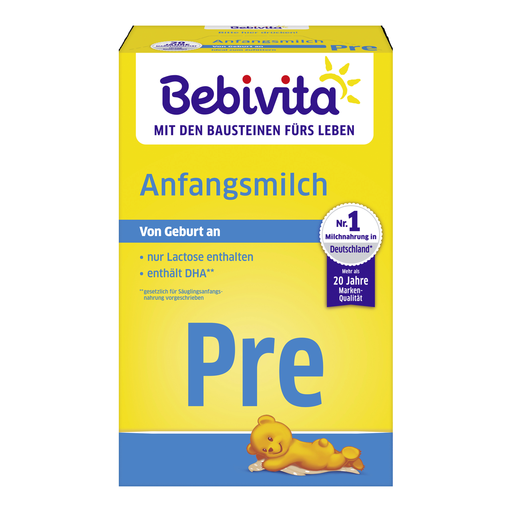
Why this product fits the profile: The 500g pack is ideal for parents who want to try a pre-milk from birth in a manageable quantity first. According to the product information, it can be used as a sole bottle feed or as a supplement to breastfeeding.
The age stage from birth and the sole carbohydrate source of lactose are clearly stated. The opened pack should be used within three weeks.
500g content, DHA as per infant formula regulations and manufactured in Germany.
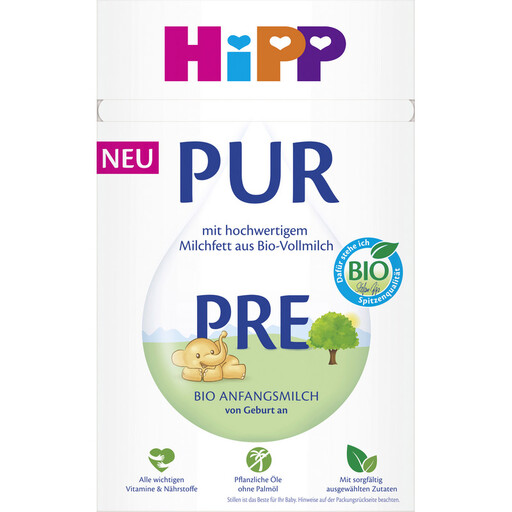
Why this product fits the profile: The recipe is labelled as an organic pre-milk from birth and contains, among other things, milk components, vegetable oils, and DHA and ARA.
Organic claims and ingredients are considered separately from general marketing statements. The pack also provides specific information on allergens and storage.
500g content, organic ingredients according to product information and lactose as the carbohydrate source.
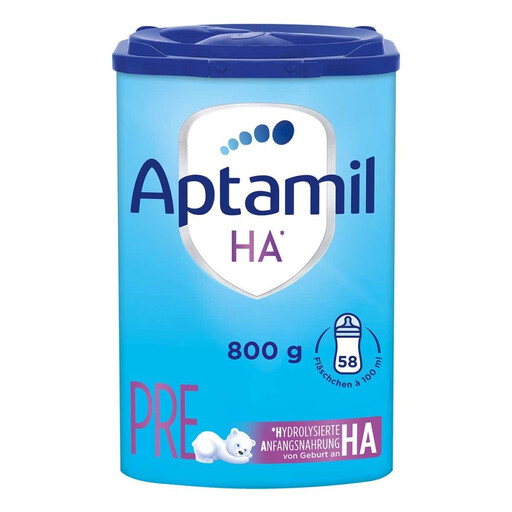
Why this product fits the profile: The 800g pack is designed for families with regular usage. The product information lists hydrolysed whey protein, lactose and GOS/FOS.
The HA property is not equated with allergy treatment. According to the product information, this product is not suitable for babies with a cow's milk protein allergy or suspected allergy.
Suitable from birth, 800g content and lactose as the sole stated carbohydrate source.
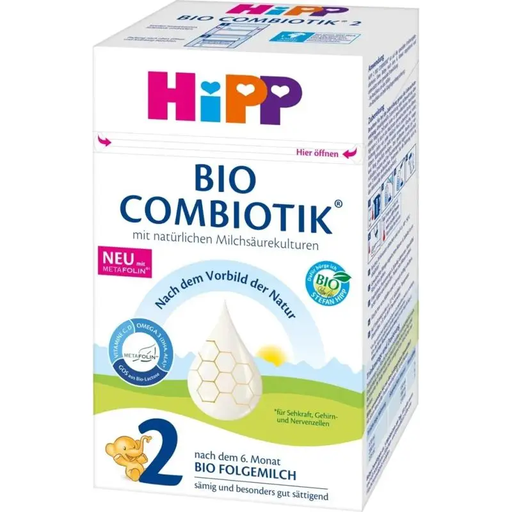
Why this product fits the profile: Stage 2 is labelled for babies from 6 months as part of a mixed diet. According to the information, the recipe contains organic ingredients, starch, DHA and GOS.
The clear age stage prevents confusion with pre-milk. The dosage of 30ml of water per scoop is described in the product information.
600g content, organic certification DE-ÖKO-001 according to the product description and DHA as part of the recipe.
We've put together a complete, regularly updated list of products that fully meet these strict selection criteria and the safety regulations in force in the EU.
Pre-milk usually contains lactose as the carbohydrate source and is suitable from birth. Stage 1 formula is also intended for the first stage of life, but may differ in its recipe, for example by containing added starch. The information on the respective packaging is what matters most.
This depends on the product. Manufacturers often state a period of three or four weeks after opening. The pack should be stored in a dry place at room temperature and kept tightly sealed. Always follow the specific information on the product.
Infant formula should be prepared fresh for each feed and used immediately. Any leftover feed should be discarded. Incorrect dosage, prolonged storage or inadequate cleaning can create hygiene risks.