
Lieferung heute & morgen

Qualitätsgarantie

Willkommens-Angebote freischalten: KOSTENLOSE Lieferung | Bis zu 80 % RABATT | Kostenlose 30-Tage-JoyPlus-Testphase
App herunterladen
Choosing the right infant formula and follow-on milk can often feel overwhelming for parents. Pre-formula from birth, starter milk, follow-on milk from 6 months, or toddler milk from 1 year differ not just by the colour of the packaging. What really matters are the age recommendation, carbohydrate source, protein base, allergens, and correct preparation.
As a Joybuy Product Recommendation Officer, I’ve organised the available information in a straightforward way. This isn’t about generic rankings, but about helping you avoid common mistakes and select a baby milk that suits each stage of your child’s development.
A Pre-formula is designed for babies from birth and, depending on the product, can be used as a sole source of nutrition or to supplement breastfeeding. Follow-on milk from 6 months, on the other hand, is intended for a mixed diet that includes solid foods. Products like follow-on milk from 10 months or toddler milk from 1 year are not suitable for newborns.
Always check the age recommendation on the packaging before looking at the brand name, marketing claims, or extras like “Combiotik”.
Terms such as organic baby milk, DHA and omega-3, GOS/FOS, or natural lactic acid cultures can be relevant product features. However, they are no substitute for reading the full ingredients list. Even a product with lots of added claims may not be right for every baby.
DHA is legally required in starter and follow-on infant formulas. Even so, the exact amount and overall composition can vary. Claims about digestion or immune function should not be taken as individual medical benefits.
An 800 g tin may seem more economical than a 500 g pack at first glance. But once opened, the powder must be used within the timeframe stated by the manufacturer. If your baby drinks small amounts, a smaller pack can be more practical, whereas heavier users should pay attention to the shelf life after opening and whether the packaging is resealable.
Look at the wording on the product page:
Switching stages should be based on your baby’s age, feeding situation, and, where appropriate, the advice of your paediatrician or midwife.
In lactose-based infant formula, lactose is the main carbohydrate. According to the product information, Bebivita PRE contains only lactose as its carbohydrate source. HiPP PRE HA Combiotik also lists lactose as the sole carbohydrate source and contains hydrolysed whey protein.
“HA” stands for a hydrolysed protein source. This is a specific nutritional feature, but it is not a general indication of treatment or suitability for an existing cow’s milk protein allergy. The product information from Bebivita and HiPP explicitly states that HA products should not be used if a cow’s milk protein allergy is suspected or confirmed without medical advice.
Check at least the following:
Prepare each bottle fresh, use boiled and cooled water according to the manufacturer’s instructions, and never keep leftovers. Microwaving is not recommended for the products listed. Always refer to the original packaging for the definitive information.
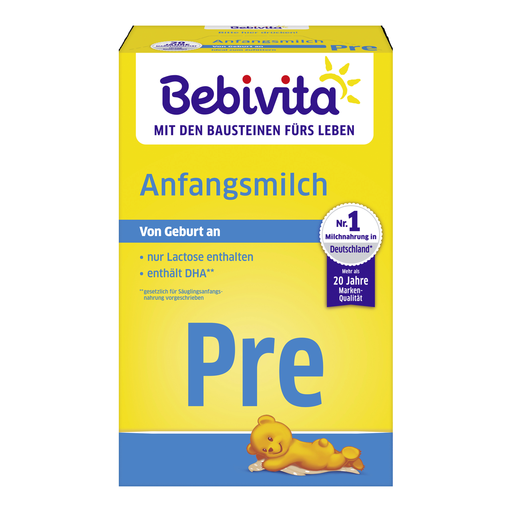
Why this product fits the profile: The 500 g pack is ideal for parents who need a manageable amount of Pre-formula from birth. According to the product information, it can be used on its own or as a supplement to breastfeeding.
The clear PRE labelling and the statement “only lactose as carbohydrate” help you avoid accidentally choosing a starch-containing starter milk.
500 g content, DHA as per product information, preparation guide for different age stages, and made in Germany.
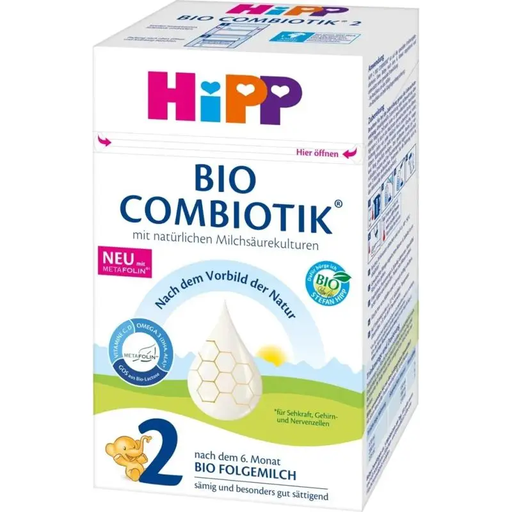
Why this product fits the profile: This follow-on milk is intended for babies from 6 months and combines organic ingredients with stated product features such as GOS, DHA and ALA.
The clear Stage 2 labelling prevents you from confusing a follow-on milk with a Pre-formula from birth. The pack also states specific feeding quantities.
600 g content, ingredients from organic production according to product information, DHA as well as GOS, and a dosage of one scoop per 30 ml of water.
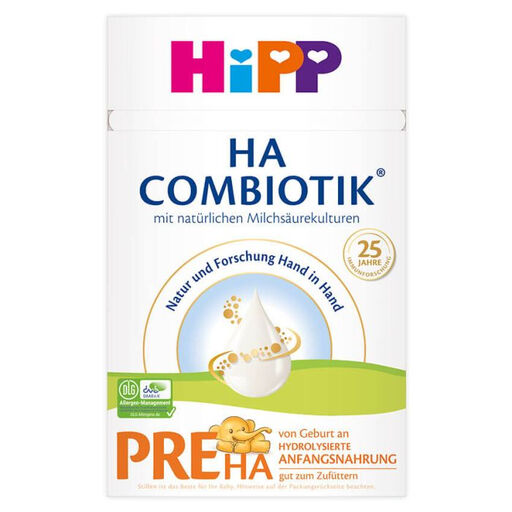
Why this product fits the profile: The 600 g pack is ideal for families looking for an HA Pre-formula from birth and who prepare bottles regularly.
The product description lists hydrolysed whey protein and only lactose. At the same time, it explicitly states that it is not suitable if a cow’s milk protein allergy is suspected.
Lactose as the sole carbohydrate source, GOS, DHA and LCPs according to product information, and a 600 g pack size.
We’ve put together a full, regularly updated list of products that meet these strict selection criteria and fully comply with EU safety regulations.
Products labelled Pre or 1 are generally intended for babies from birth. Whether they can be used as a sole food or as a supplement to breastfeeding is stated in the individual product description. If you are unsure, consult your paediatrician or midwife.
This varies between products. For several HiPP and Bebivita products, use within three weeks of opening is recommended. Milupa and Nestlé BEBA products may state a different timeframe depending on the variant. Always refer to the original packaging. The powder should be stored in a dry place, tightly sealed, and at room temperature.
Toddler milk from 1 year is an optional product as part of a varied diet. It is not the same as Pre-formula or follow-on milk. Before buying, parents should consider how much milk their child is already getting from other foods and check the nutritional values per 100 ml of the specific product.