
Lieferung heute & morgen

Qualitätsgarantie

Willkommens-Angebote freischalten: KOSTENLOSE Lieferung | Bis zu 80 % RABATT | Kostenlose 30-Tage-JoyPlus-Testphase
App herunterladen
Choosing infant milk from birth can seem straightforward at first glance: pre-formula, first infant milk, HA formula, organic baby milk, or a larger pack. In reality, products differ in their protein source, carbohydrates, allergens, pack size, and preparation. For expectant parents and families with newborns, it’s worth taking a close look at the product labelling rather than relying on eye-catching marketing claims.
This buying guide from the Joybuy Product Recommendation Officer outlines the most important criteria and presents suitable products for different needs.
Pre-formula contains lactose as its sole or main carbohydrate source in the products we’ve looked at here. It is intended from birth and can be used as a sole source of nutrition or as a supplement to breastfeeding, depending on the product. Stage 1 formula, on the other hand, may also contain starch, giving it a different consistency.
The key is to check the ingredients list carefully. You shouldn’t switch products based on a marketing claim alone. If you have any concerns about feeding or tolerance, your paediatrician, midwife, or maternity unit are the best people to consult.
HA formula contains partially hydrolysed milk protein. This means the protein structure has been altered or broken down into smaller components. However, this does not automatically guarantee allergy prevention or better tolerance.
If your baby has or is suspected of having a cow’s milk protein allergy, it’s especially important to read the warnings. Several of the HA products listed here state they are not suitable for this condition. In such cases, you should only choose a product after consulting a doctor.
Organic certification describes the origin of certain ingredients and does not replace a comparison of age suitability, allergens, and preparation. DHA infant milk contains docosahexaenoic acid, which may be included in infant formula as required by law. GOS and FOS are terms for specific types of fibre.
These features can be relevant when choosing a product, but they should not be the sole measure of its suitability. The information on the current packaging is what really matters.
For newborns, look for the labelling “from birth,” “0 months+,” or “Pre.” Follow-on milk from 6 months, or products for 7, 10, or 12 months and over, belong to a different age group and are not intended as infant milk for the first few months of life.
Follow-on milk is used as part of a mixed diet alongside weaning foods. Examples from the range include Bebivita Follow-On Milk 2 from 6 months, HiPP Bio Combiotik 2 from 6 months, or Bebivita Follow-On Milk 3 from 10 months.
With a lactose-based infant formula, you should check the ingredients list. Products like Bebivita PRE or Aptamil Pronutra PRE list lactose as the main or sole carbohydrate source, according to the product information. Other varieties may contain starch.
The protein source is equally important: standard recipes are usually based on milk and whey components, while HA products use hydrolysed milk protein. Allergens such as milk, fish, or soya must be taken into account.
500 g packs are a good choice for families who want to see if a product fits into their routine before committing to a larger size. 600 g or 800 g packs can be more practical for regular use. However, once opened, there is a limited shelf life, which is often three or four weeks, depending on the product.
Powder should be stored in a dry place at room temperature, with the pack tightly sealed. Always follow the dosage instructions on the pack for each feed. Typically, you should boil fresh drinking water, let it cool to the specified temperature, and pour it into the bottle first. Then add the exact amount of powder. Allow the prepared feed to cool to drinking temperature, check it, and feed it straight away. Discard any leftovers.
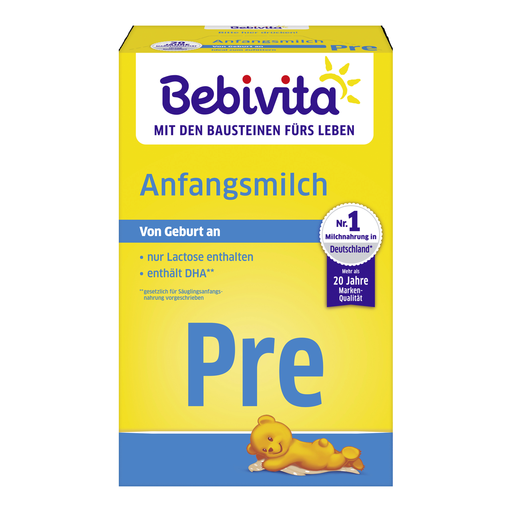
Why this product fits the profile: The 500 g pack offers a manageable starting point for families who need pre-formula in a smaller quantity at first.
The “from birth” labelling and the statement “lactose as the only carbohydrate” make it easy to check against your own selection criteria.
500 g content, suitable from birth, contains DHA; according to product information, contains milk and fish allergens.
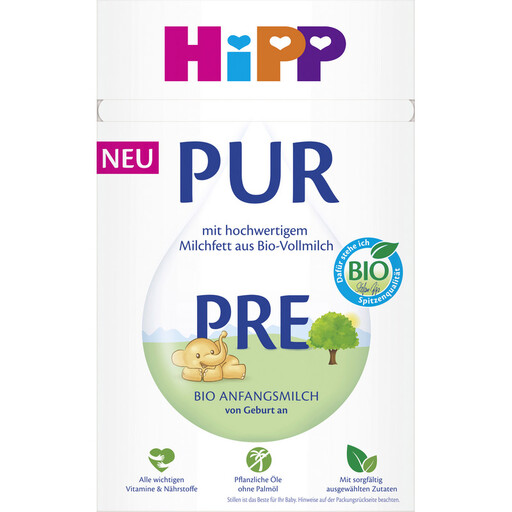
Why this product fits the profile: The recipe is aimed at families who prioritise organic ingredients and clear ingredient labelling.
The product information states the organic origin of certain ingredients, as well as milk, fish, and soya as allergens.
500 g, suitable from birth, according to product information, palm oil-free and contains DHA and ARA.
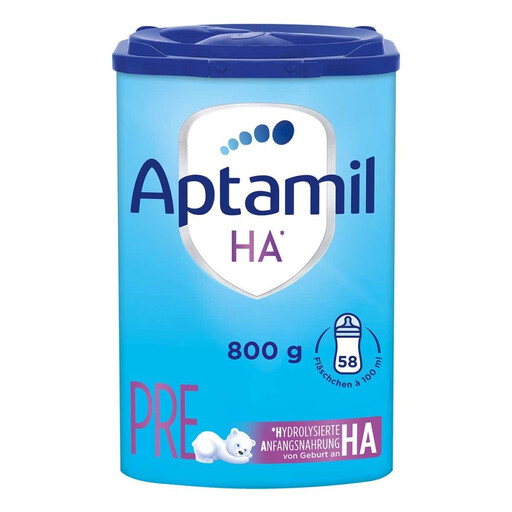
Why this product fits the profile: The 800 g pack is designed for regular use; the HA labelling is aimed at families with specific advice needs.
The product information explicitly states that the formula must not be used if your baby has a cow’s milk protein allergy.
800 g, hydrolysed whey protein, lactose as the carbohydrate source, and GOS/FOS according to product information.
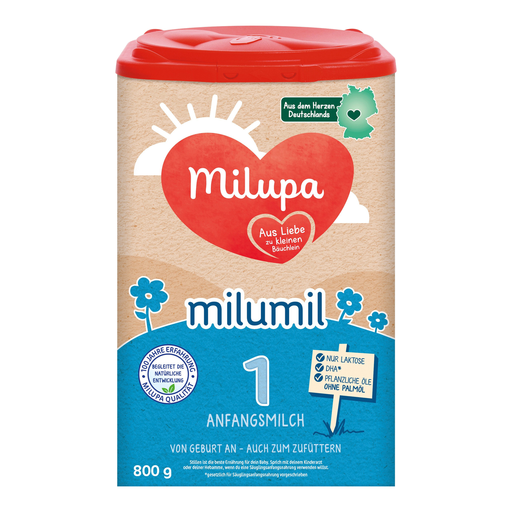
Why this product fits the profile: The large pack and resealable packaging are ideal for households with regular bottle-feeding needs.
The ingredients list includes milk, fish, and soya, so you can check allergens before buying.
800 g, suitable from birth, contains DHA and GOS/FOS according to product information, and the pack has a dosing aid.
We’ve put together a full, regularly updated list of products that meet these strict selection criteria and fully comply with EU safety regulations.
Pre-formula is intended for use from birth. The exact duration depends on the product, your baby’s development, and the feeding method you choose. Switching to follow-on milk is not automatically necessary. The age indication on the pack and the advice of your paediatrician or midwife are what matter.
This varies by product. The information provided often states three or four weeks after opening. Always follow the manufacturer’s instructions on the packaging. Moisture, heat, and a bag that isn’t fully sealed can affect the product quality.
No. HA formula is a special variant with hydrolysed milk protein. It is not automatically necessary for every baby and, according to product information, may not be suitable if your baby has or is suspected of having a cow’s milk protein allergy. If you suspect an allergy or your baby has symptoms, seek medical advice before choosing a product.