
Lieferung heute & morgen

Qualitätsgarantie

Willkommens-Angebote freischalten: KOSTENLOSE Lieferung | Bis zu 80 % RABATT | Kostenlose 30-Tage-JoyPlus-Testphase
App herunterladen
An inflatable stand-up paddle board, also known as an iSUP, offers a great way to explore lakes and calm coastal waters. The advantages are obvious: they're easy to transport in a car and simple to store at home. However, the market is crowded and confusing, and many products don't deliver on their promises. Before you make a decision, it's important to understand the common pitfalls that often lead to disappointment and unnecessary expenses.
A frequent problem is incomplete or low-quality accessories in so-called "complete sets." A paddle that's too heavy or a hand pump that fails after just a few uses can significantly spoil the fun. Another critical issue is unsuitable board dimensions. A board that is too narrow or thin offers inadequate stability, which can be particularly frustrating for a SUP board for beginners and makes getting into the sport more difficult.
To make an informed decision, you should focus on a few essential technical features. These largely determine your board's performance, durability, and user comfort.
A board's dimensions are not just design choices; they are physical properties that directly influence its handling characteristics on the water.
The rigidity of an inflatable SUP board is of central importance. A board that bends like a banana in the water is unusable. Responsible for this rigidity is drop-stitch technology. This involves weaving thousands of polyester threads between the top and bottom surfaces of the board. When inflated, these threads become taut, creating an extremely stiff and shape-retaining structure. Look for models that use this technology, as it forms the foundation for a durable and high-performance iSUP.
A stand-up paddle board set is practical, but the quality of the accessories varies greatly. Pay special attention to the pump. Manually inflating a board to the recommended pressure of 15 PSI is physically demanding and can take 10 to 15 minutes. A high-quality hand pump with a dual-action function can make this easier.
For maximum convenience, an electric SUP pump is a worthwhile consideration. Models that run on your car's 12V socket save time and energy. A battery-powered SUP pump offers even more flexibility, as it works independently of an external power source, allowing you to get your board ready to go right at the water's edge.
Based on the criteria mentioned, we have identified a few models that are well-suited for different needs and preferences.
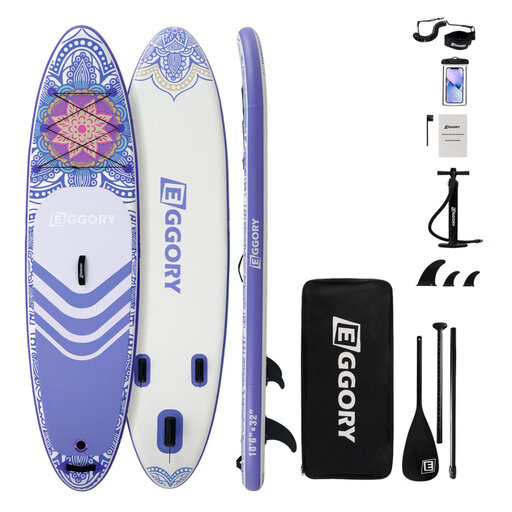
Why This Fits Their Persona: Ideal for beginners looking for a stable and straightforward board for their first trips on the lake. The set includes all the necessary accessories to get started right away.
With a width of 81 cm and a thickness of 15 cm, this board avoids the pitfall of unstable entry-level models. It provides a secure platform for finding your balance.
Good all-round dimensions for high stability. The 320 cm length makes it agile and easy to handle.
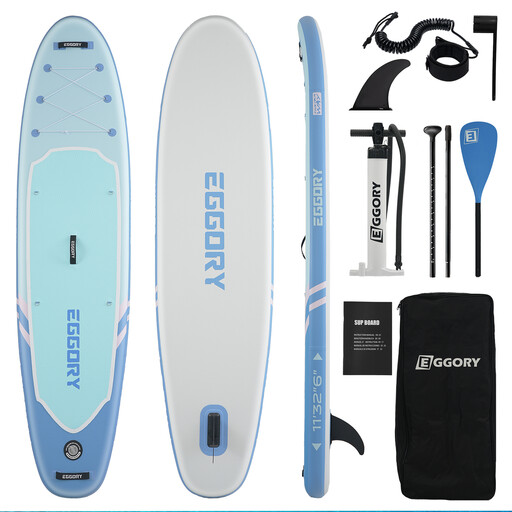
Why This Fits Their Persona: For paddlers who are regularly on the water and value well-rounded performance. Its generous dimensions make it a versatile companion for longer tours.
At 335 cm long and 83 cm wide, this is a full-fledged all-round board that remains stable even in light chop and won't be pushed to its limits.
Excellent balance of stability and glide. A solid foundation that is ideal for pairing with an electric pump for maximum convenience.
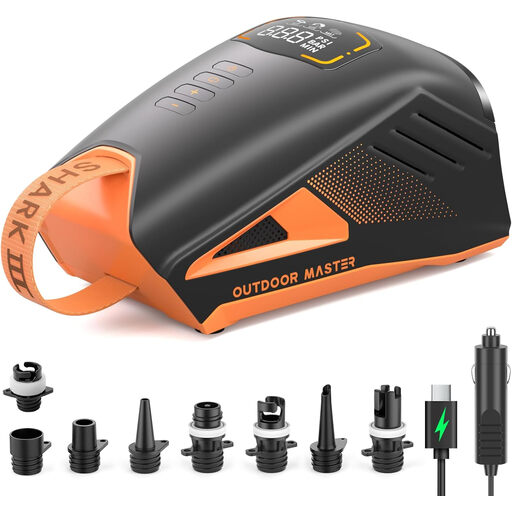
Why This Fits Their Persona: For anyone who wants to skip the tedious part of inflation and maximise their time on the water. This accessory solves one of the biggest convenience issues with iSUPs.
Instead of struggling with an inefficient hand pump, this device automates the process. The digital pressure setting with auto-shutoff also prevents damage to the board from over-inflation.
The integrated 74 Wh battery can inflate up to four boards per charge. Fast charging via Type-C and its function as a power bank are practical extra features.
We have compiled a complete, up-to-date list of products that fully meet these strict selection criteria and applicable safety regulations.
1. How long does it take to manually inflate an iSUP? With a standard hand pump often included in sets, inflating to 15 PSI typically takes 10 to 15 minutes and requires significant physical effort, especially for the last few PSI. A dual-action pump can shorten this time slightly. An electric SUP pump can do the job in 5 to 10 minutes, depending on the model, with no physical exertion.
2. How do I properly store my iSUP during the winter? Clean the board thoroughly with fresh water and let it dry completely to prevent mould growth. Store it either slightly inflated (not at full pressure) or loosely rolled in a cool, dry place protected from direct sunlight. Avoid storing heavy objects on top of it.
3. What board size is right for me as a beginner? For a safe start, an all-round board with a width of at least 81 cm (32 inches) and a thickness of 15 cm (6 inches) is recommended. The length should be between 320 cm and 335 cm. This combination offers high stability and sufficient buoyancy for most adults, making it much easier to learn the basics.