
Lieferung heute & morgen

Qualitätsgarantie

Willkommens-Angebote freischalten: KOSTENLOSE Lieferung | Bis zu 80 % RABATT | Kostenlose 30-Tage-JoyPlus-Testphase
App herunterladen
By: Joybuy Product Recommendation Officer Date: August 29, 2026
Neck tension after a long day at work, joint discomfort in damp, cold weather, or the tell-tale signs of an oncoming cold—many people are looking for a simple heat therapy solution for home use. An infrared lamp often seems like the perfect answer. However, the market is confusing and filled with products whose marketing promises often create more confusion than clarity.
Before you make a purchase, it's crucial to understand the most common pitfalls that can lead to choosing an unsuitable or even unsafe device.
To ensure you get a functional and safe device, you should carefully examine three technical features. These parameters are crucial for the effectiveness and safe use of an infrared lamp for muscle tension or as a supportive treatment for cold symptoms.
The power of an infrared lamp is measured in watts (W) and indicates the intensity of the heat it generates. For effective deep heat that reaches the muscles, models with an output of at least 150 watts are recommended. Higher-quality devices, such as models with 300 watts, offer more intense heat radiation, allowing for shorter treatment times. Also, pay attention to the manufacturer's specifications regarding UV protection. Quality devices use a ceramic glass filter to ensure that only the warming infrared rays, and no harmful UV radiation, reach your skin.
An infrared lamp with a timer is not a luxury, but a necessity. A built-in timer that limits the treatment duration to, for example, 1 to 15 minutes and then automatically switches the device off prevents overexposure. This is especially important because it's easy to relax under the pleasant warmth and lose track of time. Additional overheat protection, often in the form of active ventilation, ensures the device itself doesn't overheat during extended use and protects the internal components.
The flexibility of use depends directly on the device's design. A continuously adjustable lampshade (e.g., with a tilt angle from 0 to 50 degrees) is crucial for directing heat precisely to different body regions—be it the lower back, the shoulder area, or the joints. A large treatment surface (e.g., 30 x 40 cm) ensures that even larger areas like the entire back can be warmed evenly, which significantly increases the application's effectiveness.
Instead of presenting a confusing list, we have selected products that correspond to clearly defined user profiles and their needs.

Why It's a Good Fit: This device is specifically designed for heat therapy for muscle tension and joint pain. It is aimed at users looking for a targeted and intensive heat treatment at home.
The Beurer IL 50 is a pure infrared heat lamp, not a daylight lamp. It features an adjustable timer (1-15 minutes) with automatic shut-off and active ventilation to prevent overheating. The large, tilting shade avoids the problem of an inadequate and inflexible application.
The combination of a powerful 300-watt output for deep heat, a large treatment area (approx. 30 x 40 cm), and comprehensive safety features makes it a practical and effective device for home use.
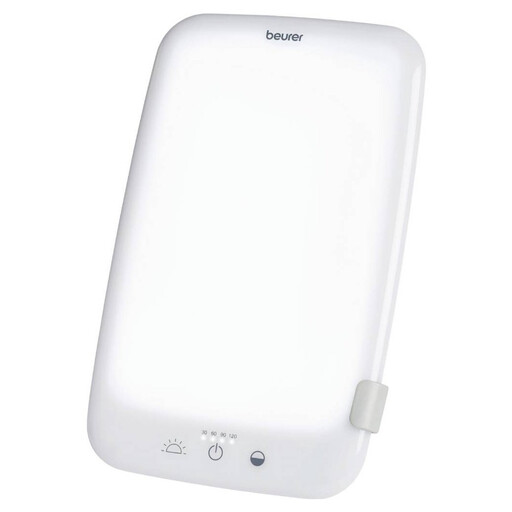
Why It's a Good Fit: This product is aimed at users who suffer not from physical pain, but from symptoms like winter fatigue or low mood. It is intended for use at a desk or in a living area.
This model clears up the confusion about the "wrong type of lamp." It is explicitly not a heat lamp. It produces bright, UV-free light (up to 10,000 lux, according to the manufacturer) to compensate for a lack of natural sunlight and is not used for heat therapy.
The lamp simulates daylight to support the circadian rhythm and can help boost well-being and energy. It is compact, flicker-free, and includes a timer for application sessions.
We've compiled a complete, up-to-date list of products that meet strict selection criteria and safety regulations.
The recommended duration of use depends on the device and your individual sensitivity. As a general guideline, start with shorter sessions of 5 to 10 minutes to observe your skin's reaction. A typical treatment should not last longer than 15 minutes per session and can be repeated once or twice a day. Always maintain the minimum distance recommended by the manufacturer (usually 30-50 cm). Be sure to read your device's user manual before the first use.
The terms red light lamp and infrared lamp are often used interchangeably in everyday language. Technically, "red light" refers to the visible part of the light spectrum, while the therapeutic heat is generated by invisible "infrared radiation." A high-quality heat lamp is optimized to emit effective infrared-A rays, which can penetrate deeper into the tissue. The visible red light is often just a byproduct of the heat generation.
Using a red light lamp for a cold can serve as a supportive measure to alleviate symptoms. The heat can promote blood circulation in the sinus area, which many users find pleasant and helpful for clearing congestion. However, it is important to understand that an infrared lamp does not replace medical treatment and does not cure the cold itself. It only serves to relieve symptoms. If you have a fever or severe symptoms, you should seek medical advice.