
Lieferung heute & morgen

Qualitätsgarantie

Willkommens-Angebote freischalten: KOSTENLOSE Lieferung | Bis zu 80 % RABATT | Kostenlose 30-Tage-JoyPlus-Testphase
App herunterladen
An infrared thermometer can measure temperature quickly and without direct skin contact. This is particularly practical for babies, sleeping children or households with several people. However, not every contactless thermometer is suitable for every purpose. Focusing only on terms such as “instant”, “multifunctional” or “clinically tested” can easily mean overlooking important details.
The Joybuy Product Recommendation Officer’s selection therefore focuses on clear, practical features: measurement methods, operation, memory, power supply and intended use.
A contactless fever thermometer’s readings depend on the distance, measurement site and surrounding conditions. If a forehead thermometer is held too far away or used immediately after spending time outdoors, the result may vary. Sweat, headwear and warm room air can also affect forehead temperature readings.
That is why you should look for:
A thermometer for room temperature and liquids can be versatile in a family household. However, measuring body, surface, room and liquid temperatures is not technically identical. Buyers should check whether the modes are clearly labelled and whether the device distinguishes between body and object modes.
An ear thermometer may be practical for some users, while a forehead mode can be less disruptive when measuring sleeping babies. A device with multiple functions is therefore not automatically the right choice if it is awkward to operate.
Colour displays, sound signals and vibration alerts make an initial assessment easier. However, they do not provide a diagnosis. Thresholds and interpretation should always be considered based on the instructions for use and the age of the person concerned.
If readings remain high or appear unusual, you should contact a medical professional. The devices mentioned here are intended for private or supplementary temperature monitoring.
For families, a thermometer for children and adults with forehead measurement is usually straightforward to use. If it also has an ear mode, this provides greater flexibility. With babies, it is important that the measurement can be taken calmly and that the device does not necessarily have to be inserted into the ear canal.
A contactless thermometer should be correctly aligned and used at the recommended distance. Measuring without contact is hygienically convenient, but it does not make it unnecessary to follow the manufacturer’s instructions.
A clear digital display is helpful at night or for carers. Some devices use coloured backlighting, while others use audible signals. A silent mode can be useful when you do not want to wake a sleeping child.
The memory function is particularly useful when taking repeated measurements. Depending on the model, it may store 20 or 35 readings, for example. Check whether the date and time are also displayed if you want to track changes in readings.
Many contactless thermometers use two AAA batteries. A classic pen-style digital fever thermometer often requires a button cell. Look out for:
The device must generally not be immersed in water. A soft, dry cloth is usually sufficient for cleaning; the instructions for use supplied with the specific product take precedence.
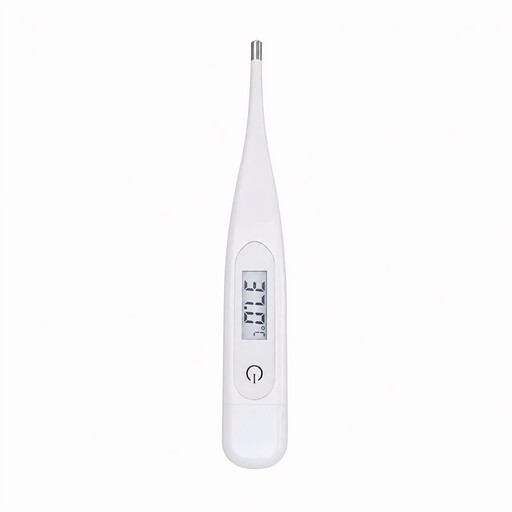
Why this product suits this profile: This pen-style digital thermometer focuses on classic body temperature measurement and can be stored neatly in a home medicine cabinet or travel bag.
It avoids confusing additional modes and displays the temperature in 0.1 °C increments. The measurement ranges and stated margins of error are listed in the product description.
Mercury-free design, °C/°F switching and a compact form.
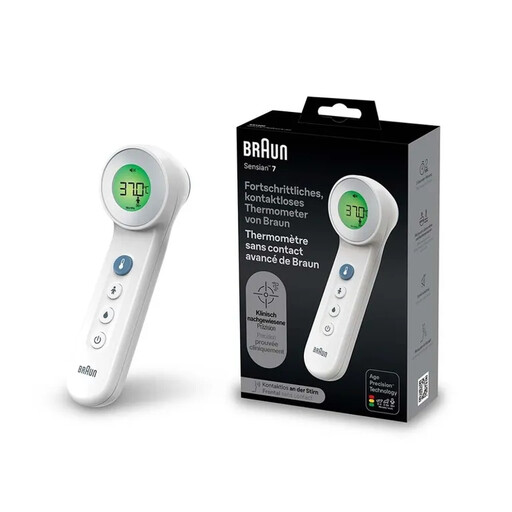
Why this product suits this profile: This model combines contactless and contact-based forehead measurement. An age-based display for babies, children and adults helps you interpret the reading in line with the manufacturer’s instructions.
The positioning guide is designed to help you place the thermometer correctly. Silent mode reduces audible disturbance during measurement.
According to the product description, readings are taken in around two seconds, with a colour-coded LCD and an additional object mode for liquids and surfaces.
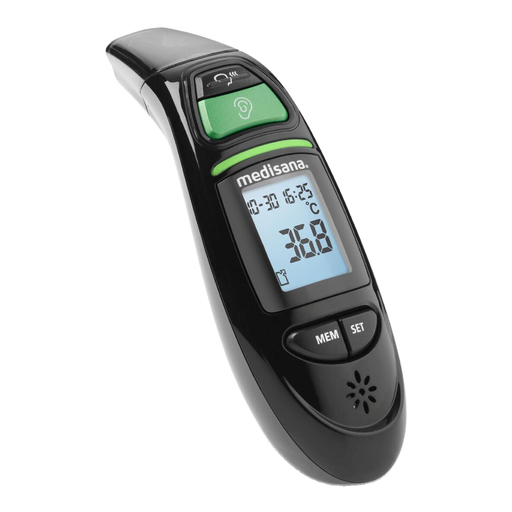
Why this product suits this profile: This 6-in-1 device is designed for households that want to monitor body, room, surface and liquid temperatures with a single thermometer.
The different measurement methods are explicitly listed as forehead, ear, surface, liquid and room temperature measurement. This helps prevent confusion between body and object modes.
Ear and forehead measurement, memory function, date and time display, plus a visual fever alert.
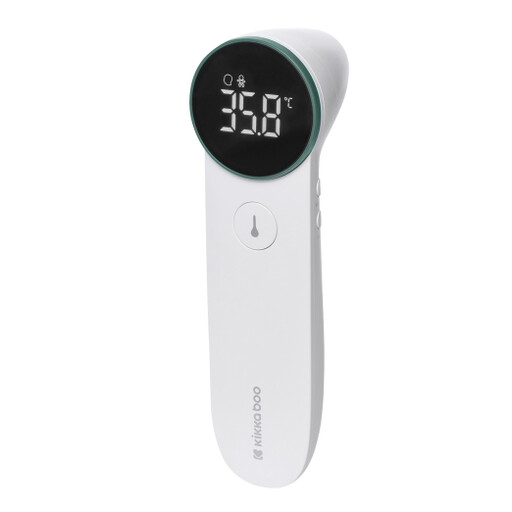
Why this product suits this profile: According to the product information, this contactless thermometer is suitable from birth and features a silent mode as well as three measurement methods.
According to the description, the magnetic cover helps you switch between measurement modes. Automatic switch-off after ten seconds can help limit unnecessary battery consumption.
Memory for up to 20 readings, LED display, and forehead, ear, object and room temperature measurement.
To make readings easier to compare, measurements should be taken under similar conditions whenever possible:
Depending on the situation, different medical assessments apply to babies, children, adults and older people. A measuring device provides a temperature reading, but it does not replace medical advice.
We have put together a complete, regularly updated list of products that fully meet these strict selection criteria and the safety regulations applicable in the EU.
An infrared thermometer detects the heat radiation emitted by a surface and converts it into a temperature reading. For body measurements, the forehead or ear is usually used. The distance, position, ambient temperature and measurement mode must comply with the manufacturer’s instructions.
Its service life depends on the batteries, cleaning, storage and mechanical wear and tear. Models with automatic switch-off can reduce battery consumption. Keep the device dry, protected from direct sunlight and out of children’s reach. If the thermometer is not used for an extended period, check the batteries in accordance with the manufacturer’s instructions.
Many devices are designed for babies, including contactless forehead thermometers and models with a quiet mode. The key factors are the recommended age range, correct use and adherence to the measuring distance. If you are unsure or readings appear unusual, seek advice from a medical professional.